Podcast: Play in new window | Download (Duration: 56:33 — 129.4MB)
Subscribe: Apple Podcasts | Spotify | Amazon Music | iHeartRadio | Email | RSS | More
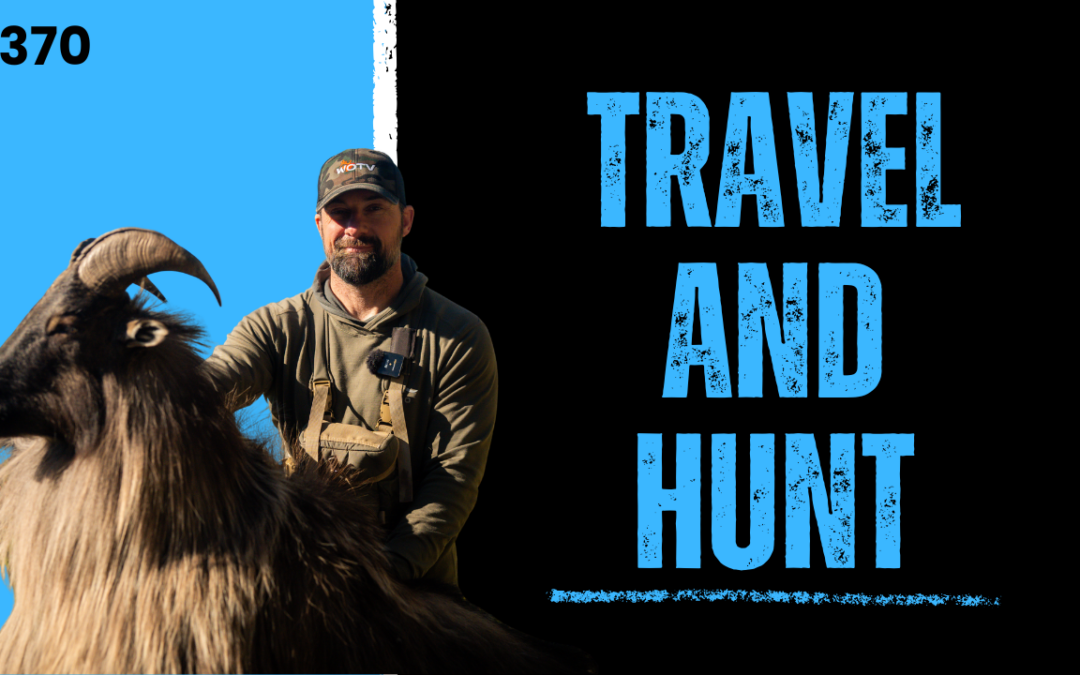
Kurt Belding – Western Obsessions TV
On the Ar: “How fast can I calm down, slow my breathing, slow my heart rate to make a good shot?”
Building a business around your passion is a dream of most entrepreneurs. Kurt Belding has done it with Western Obsessions TV.
By combining his love of hunting and travel, Kurt can bring real life dramatic hunts to hunting enthusiasts and armchair travelers across the world.
Kurt Belding, founded Western Obsessions TV to explore the thrilling world of hunting adventures, content creation, and entrepreneurship. Kurt shares how his love for fitness and the outdoors led him from running multiple businesses in the sports nutrition industry to launching a media and booking company dedicated to epic hunting experiences around the globe.
Listen as Kurt details how he navigates the evolving landscape of video production—leveraging YouTube, social media, and AI-powered tools to scale his brand—and hear candid stories about the challenges and successes of turning passion into a profitable business.
Enjoy!
Visit Kurt at: https://westernobsessionstv.com/
Sponsors:
Calls On Call Extraordinary Answering Service, phone answering for small businesses: https://callsoncall.com

Some videos have been recorded with Riverside: https://www.riverside.fm/?utm_campaign=campaign_5&utm_medium=affiliate&utm_source=rewardful&via=james-kademan

Podcast Overview:
00:00 Running a Hunting TV Show
05:17 Practicing archery under pressure
09:24 Understanding Caliber Sizes for Hunting
12:49 Understanding Scope Dial Systems
14:27 Adjusting to Western hunting distances
18:26 Learning to Focus and Hunting Ventures
22:55 YouTube content strategy
24:08 Increasing YouTube video engagement
27:06 Starting a Hunting YouTube Channel
32:55 Challenges of wildlife filmmaking
36:52 Dealing with online negativity
40:13 Researching reliable outfitters
41:58 Older clients fulfilling lifelong dreams
47:13 Customizing Elk Hunts for Clients
48:53 Importance of quality content
Podcast Transcription:
Kurt Belding [00:00:05]:
Look, you’re traveling, your heart rate’s up, you’re out of breath. Now you got to calm yourself to make a good accurate shot. That adrenaline hits and you get very nervous and anxious, and your heart rate goes up and your breathing increases. You got to calm yourself down to make a good ethical shot. Called DOPE, it’s Data on Previous Engagement. And after so many rounds of so much practice, it’s almost like breathing. You just naturally automatically do it. Let’s film it and we’ll produce it and we’ll put it out there for people to watch.
Kurt Belding [00:00:31]:
And we did That, and I just fell in love with it. It was so much fun. So huge adjustment, like got rid of everything I was doing just to go on these cool hunting adventures and film them. And when you hit 40, you realize like life is well over half done. What did I do the last half of my life? I wanna, I wanna live it the way I really wanna live it. So I changed everything and started doing that. Entrepreneurship, just getting punched in the face every day. I just went down that path, but I just loved what I was doing.
Kurt Belding [00:00:59]:
So eventually I figured out a way to monetize.
James Kademan [00:01:01]:
Mm-hmm.
Kurt Belding [00:01:03]:
to live— man, I am living the exact life that I have dreamt of living.
James Kademan [00:01:14]:
You have found Authentic Business Adventures, the business program that brings you the struggle stories and triumph and successes of business owners across the land. Downloadable audio episodes can be found on the podcast link found at drawincustomers.com. We are locally underwritten by the Bank of Sun Prairie. Calls on Call Extraordinary Answering Service, as well as the Bold Business Book. And today we’re welcoming slash preparing to learn from Kurt Building of Western Obsession TV. So Kurt, how is it going today?
Kurt Belding [00:01:43]:
Hey, I’m doing great. Thanks for having me on. I appreciate it.
James Kademan [00:01:47]:
Yeah. Yeah. Let’s start with the foundation here. What is Western Obsession TV?
Kurt Belding [00:01:54]:
So Western Obsessions TV is a hunting company. I do two— there’s two major parts of the, of the company. The TV side is I go on these really cool adventures, which is a hunting adventure. I get to film them and produce an episode or a film to try to entertain others, which also helps me a lot with the marketing and content creation side. And then on the other side of the business, I am a booking agency. I consult for hunters that want to go on these cool adventures, and I connect them with outfitters that will fulfill their bucket list hunts or what they really want to do. And, um, so it really plays well into each other for sure.
James Kademan [00:02:36]:
That’s awesome. So are you, where are you located at, Kurt?
Kurt Belding [00:02:42]:
I live in Colorado, uh, just outside of Denver, just out on a little acreage out east.
James Kademan [00:02:50]:
Okay. So I was looking at the content that you have and you’re traveling all over the world. Is that safe to say?
Kurt Belding [00:02:58]:
Yeah, I mean, I’ve been to Africa and I’ve been to New Zealand and Canada and Mexico. Um, pretty much, you know, the only places I haven’t reached yet would be like Europe and hunting in Europe or like Greenland. Um, you know, stuff like that. But Alaska, you know, I’ve been all over the place.
James Kademan [00:03:19]:
That’s awesome. So it’s funny you mentioned Europe and Buddy and I were talking about different Olympic sports and I didn’t realize that there’s an Olympic sport where you cross-country ski and then shoot.
Kurt Belding [00:03:32]:
Oh yeah.
James Kademan [00:03:33]:
And you have to, you keep your skis on and lay down, shoot, and then have to get up and keep doing it.
Kurt Belding [00:03:40]:
For sure. No, it’s a pretty big sport.
James Kademan [00:03:42]:
Okay. And I wonder, is that what happens in reality when people are hunting in these places?
Kurt Belding [00:03:49]:
Well, they, they probably don’t have skis on, but, uh, but there is a lot of times that I don’t know. Yeah, no, there’s a lot of times that, you know, the premise of that is like, look, you’re traveling, your heart rate’s up, you’re out of breath. Now you gotta calm yourself to make a good, accurate shot. That’s very common in hunting. Even if, obviously, if you’re moving and you got, and you stop and you gotta calm your heart rate and calm your breathing. But a lot of times when you’re sitting still and you’re, that adrenaline hits and you get very nervous and anxious and the, your heart rate goes up and your breathing increases, you gotta calm yourself down to make a good ethical shot.
James Kademan [00:04:25]:
Yeah. So tell me about that, because that sounds like you have some skills or had to learn how to calm yourself down when you’re in those situations. So how do you do that?
Kurt Belding [00:04:38]:
Yeah, fitness. I’ve always had a big affinity for fitness. I love fitness. I’ve been doing that pretty much my entire life. And so, you know, every day I practice that, right? So every day I do a workout, and every day that I increase my heart rate, my breathing, and I try to keep myself calm while I’m working out. And there’s a lot of times I’ll actually train while I’m shooting. I’ll increase my heart rate and then try to calm my heart rate and calm my breathing well enough, fast enough to be able to make a good shot under stress. Super important.
James Kademan [00:05:12]:
And is this raising your heart rate, like going for a jog or something else?
Kurt Belding [00:05:17]:
Yeah. As I’m practicing and training, I’m, you know, I might be a, I have a little archery range out here in my house with my bow and I may just do like 10 burpees real quick or some air squats and lunges or jumping jacks or something right there. where I’m next to my bow where I feel like, okay, my breathing’s hard, my heart rate’s up pretty high. Cool. Grab the bow. How fast can I calm down, slow my breathing, slow my heart rate to make a good shot? But how that transitions into the real world, I do a lot of mountainous backcountry hunting where it’s very physical, it’s very hard. So I may have to make a move, a stalk on an animal where I have to cut them off or I got to get into a position fast and I’m climbing a mountain. to do it.
Kurt Belding [00:05:57]:
So by the time I get to that position, I am pretty wiped out. You know, I’m breathing very heavily, my heart’s pounding very fast, plus my adrenaline’s going. I’m very excited because I’m in that position. So that translates very well. You have to calm down, you got to lower your heart rate, lower your breathing to make a good ethical shot on the animal.
James Kademan [00:06:17]:
All right. You know, it’s interesting, I just got into shooting, I should say, the past couple years, not I haven’t gone on any hunts, or at least nothing of that scale.
Kurt Belding [00:06:26]:
Mm-hmm.
James Kademan [00:06:28]:
Uh, tell me, so I didn’t realize, I just figured you look through the scope, you pull the trigger, you move on with your life. But I didn’t realize when you move your head or move the, the rifle, whatever, a billionth of a degree, when you’re looking at something way in the distance, that’s really 5 yards or something like that. So how do you steady yourself? To that point where you can actually make an accurate shot like that, especially with an animal that may be moving?
Kurt Belding [00:06:54]:
Well, it’s just practice. You got to practice a lot, right? So for your example of on a rifle shooting, you know, that’s why you go to the range and you practice out to whatever range you want to be competent at and feel comfortable at. It’s called DOPE. It’s data on previous engagement. So now that, like, just say you’re shooting out at 300 yards and you know what your bullet does at 300 yards, so you have to adjust the scope or whatever, you know the positioning that your body needs to be in. And after so many rounds of so much practice, it’s almost like breathing. You just naturally automatically do it. Now, what, where it really comes into play is you put pressure on that shot.
Kurt Belding [00:07:32]:
So I’m assuming when you’re out having fun shooting at a range, there’s not a lot of pressure. You know, if you miss a shot, no big deal, right? There’s no anxiety. Now do something that puts a lot of pressure on it. Maybe you put down, like, with your buddy, say, all right, on this next shot, here’s $1,000 down. Like, if I miss this shot, I lose $1,000. I don’t know, that’s an extreme case, right? But with some pressure and some anxiety there, you’d be surprised what your body does when that, when that starts to happen. You know, like that normal thing of just moving your finger to pull a trigger becomes a little bit more difficult. You know, you may start to shake a little bit and things get a little bit more hard.
James Kademan [00:08:10]:
Interesting. I like that idea. I love that idea. That’s funny. Tell me a story about, uh, bullets and rifles and all that kind of stuff. Because I just got into this, like I said, a couple years ago. I had no idea the variety that there was. No clue.
Kurt Belding [00:08:25]:
Huge variety.
James Kademan [00:08:26]:
And the, uh, number of, um, I mean, even just the nomenclature of the bullets and how they— I don’t know who started with the first bullet and where it went from there, but it seems like we got millimeters, we got gauges, so Tell me the, essentially the CliffsNotes version of how people can understand all that, if there is a version of that.
Kurt Belding [00:08:49]:
Sure. Yeah. I mean, I’ll just kind of apply this to a rifle setting. You know, the smaller the caliber of rifle is, a smaller bullet you have also, right? So you have a single bullet rather than a shotgun. You have pellets that typically come out, be metal or copper pellets that come out. Or lead pellets. With a rifle, you have one that come out down your barrel, right? And, the smaller it is, typically the less powerful. So, if you go all the way down to a .22, it’s a .22 caliber, right? You have a much smaller bullet.
Kurt Belding [00:09:24]:
And then, as you move up from the .22 up into the .30 caliber type of stuff like your 7mm, .300 Win Mags, and then you go all the way up to your Africa grade over your .400 stuff, it just gets Bigger as it goes and the bigger the bullet, the more typically, the more gunpowder is also in through the cartridge, the more impact it has on the animal that you’re shooting, the more power that it hits with. So smaller animals need smaller calibers, bigger animals typically need bigger calibers and so on and so forth, right? So that’s really the high-level premise of it all. And you can get in the weeds and the experts, and there’s definitely arguments that may happen like which size is better for what and who thinks what size of a gun or caliber is most efficient for a certain type of hunting. And you could definitely get into some arguments over that for sure in this industry.
James Kademan [00:10:21]:
It’s funny because I was looking for a rifle and I went down the rabbit hole and I’m going to say I went down the rabbit hole pretty deep and I don’t think I was any smarter after I came out of that rabbit hole than when I went in. I’m like, apparently everyone’s confused and there’s no definitive answer. Every article ends with, you know, the choice is up to you.
Kurt Belding [00:10:42]:
Yeah. Well, that’s, you know, it is everyone’s opinion. You know, there’s scientific mathematical, you know, numbers of like, okay, this is how fast this cartridge travels. There’s, this is the trajectory, the drop of this bullet over this many yards. Like you can measure that. That’s measurable. But as far as what Someone likes to use better. That’s all opinionated.
Kurt Belding [00:11:04]:
For me personally, I like a trajectory of a bullet that’s faster and flatter. In my opinion, I like that because it gives me less error, less variable for error when my bullet starts to drop a lot. And if I misrange something or the wind’s pushing a little bit, or, you know, there’s just more variable for error in my mind. I like that. But some people like to go with a heavier, bigger caliber because they want that impact on the animal. And they’re okay giving up the trajectory of like having a little bit more drop in their bullet. Right. So it just comes down to your own opinion.
James Kademan [00:11:40]:
Yeah. Sure. Makes sense. Tell me a story about scopes. So our backyard actually has Vortex, their headquarters, and it’s a big brand, but there’s hundreds of other, maybe thousands, I don’t know, many scope manufacturers. So tell me about scopes, because that’s another thing I went down the rabbit hole and I haven’t even scratched the surface and I’ve probably spent hours digging into that. So tell me, I guess, what you think people should look for when they’re looking for a scope for a particular weapon.
Kurt Belding [00:12:13]:
It 100% depends on the situation of what you’re hunting and, and what you’re doing. So I grew up in the Midwest, I grew up in Nebraska, and there’s really no reason to ever shoot more than 200 to 250 yards in, in the Midwest because it just doesn’t call for it. Like there’s not open areas that allow for that. So you don’t need a very fancy scope with a dial, um, you know, and doping out to 1,000 yards. It’s not necessary at all. Where some guys buy that because they want to have the best of the best, quote unquote, uh, but it’s not necessary at all. You don’t need to spend $1,500 on a scope when you’re only shooting 150 yards. It’s just not necessary.
Kurt Belding [00:12:49]:
So you can save quite a bit of money and you don’t need the dial system. James, you know what I’m talking about when I say dial system? Like, if they have these knobs on top and knobs on the side, the knob on top will then adjust your trajectory up and down of the bullet. And then the knob on the side can then adjust your windage left and right of a bullet, and which comes into play longer distance shooting where the wind may be blowing left to right. You may have to compensate for that. You can turn the dial or you can hold more left to allow the wind to blow it to the right, right? So that’s, that’s what I’m talking about when I mean dial. But, you know, let’s say you’re just going in for bear protection. You don’t need a high-powered dialed scope for that. You actually want something much lower, like a, you know, up to 5 power.
Kurt Belding [00:13:36]:
You don’t need anything more than that because if you’re, if you’re trajectorying too far out in a scope, you’re not going to see the bear anyway. And you want to see the bear. So sometimes not even using a scope in that would be better. Like not even have a scope is called open sights on a gun or a very small power scope. If you’re hunting whitetails in the Midwest, you don’t need a 20 power scope.
James Kademan [00:13:56]:
Yeah.
Kurt Belding [00:13:57]:
You know, but if you come out west, if you’re hunting elk, mule deer in the Rockies, you’re going to need a better scope that allows you to shoot distance. And to be honest with you, yes, you need to have the basic mechanics of how to shoot accurate. You know, like you have to understand your breathing and understand the squeeze of a trigger, not to jump, not to punch the trigger, you know, et cetera, et cetera. But really what makes a shooter better than the other, and I might get some flack on this, but this is my opinion.
James Kademan [00:14:26]:
Yeah.
Kurt Belding [00:14:27]:
is the equipment they’re using. When I moved out here to Colorado from the Midwest, I did not have a scope that could dial, and I needed it to hold over a longer distance. So my max shot was like 250, 300 yards. And in the West— when I say West, I mean Western United States— your average shot is 400 yards. So the first time I got a shot at a bull elk was at 400 yards. Not just average, But I, my max was pretty much 300. So I, I tried the shot and I had to just, instead of being, I don’t have, didn’t have the scope that could dial. I just held over what I believed was 400 yards.
Kurt Belding [00:15:04]:
I never even practiced out to that, which in hindsight, that’s a really bad idea to take that shot. Like the chances of me wounding that animal were pretty high. I should not have taken that shot, but I’m just letting you know, like I didn’t have the equipment to be able to take that shot. Now, fast forward 20 years later. I have the equipment to take the shot. I’ve practiced out those distance many, many times. I feel confident out to about 700 yards. And if I can shoot out to 700 to 800 yards, that 400-yard shot will now feel very easy for me.
Kurt Belding [00:15:35]:
Plus I have the equipment to be able to do it. So, you know, obviously you don’t ever want to shoot an animal out past your comfort zone, but that’s why we practice to push that comfort zone out further.
James Kademan [00:15:46]:
Right on. Are there shooting ranges that go out? 700, 800 yards? That seems way far out there.
Kurt Belding [00:15:54]:
Yeah, here, I mean, I’ve got one in Colorado that will go out to 1,000 yards, and there’s plenty of guys in the hunting industry that are very dug into the long-range shooting that shoot well over 1,000 yards, 1,500 yards, like 1,800 yards. Like, that’s a common practice for these long-range shooters. I am not one of those guys. Um, you know, I, I just don’t have the confidence and faith in myself and the equipment to To even try something like that, but a lot of guys do it, you know? Yeah.
James Kademan [00:16:23]:
I have a, I’ll call him a business buddy of mine that’s in an industry where they, the size of scopes that they have, they’re doing mile-plus shots, but they have all these guys coming with their private jets to shoot this stuff.
Kurt Belding [00:16:36]:
Yeah.
James Kademan [00:16:36]:
And they have radios to tell them if they actually hit or not, cuz it’s so far away.
Kurt Belding [00:16:41]:
Yeah.
James Kademan [00:16:42]:
It’s surreal talking to them and the power. Yeah.
Kurt Belding [00:16:45]:
Yeah. When you’re, when you’re shooting that far away, you actually have to take in the, the rotation of the earth as a calculation when you’re shooting that far away, cuz your bullet’s in the air that long that the earth’s going to be rotating and however long it’s in the air, you’ll have to calculate for that, which is crazy, right?
James Kademan [00:17:03]:
Wow. That is surreal.
Kurt Belding [00:17:05]:
Mm-hmm.
James Kademan [00:17:06]:
That is surreal. Okay. That makes my 100-yard shots, uh, seem All right. Let’s shift gears, Kurt, into the Western Obsession TV. How did you get in the TV business?
Kurt Belding [00:17:20]:
I just stumbled into it and, and I have some episodes on what’s quote unquote a TV platform like Carbon TV. I’ve had some stuff on Waypoint TV, but I’m not full-blown into the TV space. So really where I focus at is YouTube. I really, that’s like where I house my long-form videos. And then obviously I’m start, hitting social pretty heavy. But how I got into it is I actually owned a lot of businesses through my late 20s and all the way up to 40, and I was very heavy in the sports nutrition and fitness realm. So I own a bunch of sports nutrition stores that were on my own brand. I franchised them, opened up many locations.
Kurt Belding [00:17:57]:
I started to manufacture my own supplement lines. I had a meal prep company, which is health— healthy meal prep foods. Um, I had my own content creation company. I had a gym. I actually had an outfitting business. So I owned a lot of businesses. And I don’t know, James, if you could relate to this, but when you’re early on in your career of entrepreneurship and you find success and you taste a little bit of success, you’re like, man, I know business. I want to do all the businesses, right? I want to try that.
Kurt Belding [00:18:26]:
I want to try this and I want to try that. And like, that was me, right? I just kept spinning off into businesses and One, one major lesson I learned was you could do a lot of stuff, but you’re probably not gonna do a lot of stuff well, that you need to focus in on one thing and go hyper-focused and put all your time and energy into one thing rather than putting your time and energy into 10 things. So learned that the hard way. And when I hit around 40, I loved hunting. I still want hunting. And so I took one of my videographers, so I had a content creation side of the business, but I took one of my videographers and I said, hey, let’s go on this hunt. It’ll be fun. Let’s film it and we’ll produce it and we’ll put it out there for people to watch.
Kurt Belding [00:19:03]:
And we did that and I just fell in love with it. It was so much fun and I just kind of got addicted to it, which was the obsession part of it. So I ended up, we’ll call this a midlife, I call it a midlife adjustment. It’s actually a midlife crisis. I just like to mitigate it a little bit. I closed every business that I owned or sold anything that I could just to make some money.
James Kademan [00:19:28]:
Cut them off.
Kurt Belding [00:19:30]:
Closed.
James Kademan [00:19:30]:
Not sold, but closed.
Kurt Belding [00:19:31]:
I sold a couple, not for a lot of money. I mean, I wasn’t making a lot of money because I was doing too much stuff and some things would make money, some things would lose money, and it all kind of just balanced out. Right. So, so yeah, the businesses that lost money, I couldn’t sell it for anything, but some of the businesses that made money, I could sell it for a little bit. So I had enough money to like last me a couple years and I called it my early retirement. Right. So huge adjustment. Like got rid of everything I was doing just to go on these cool hunting adventures and film them for other people to watch and try to entertain them.
Kurt Belding [00:20:04]:
And I didn’t know how to monetize it going in. Like, well, I’m just gonna go down this path. This is what I really wanna do in life. And I’m tired of living life doing things I don’t really enjoy. ‘Cause when you hit 40, man, you realize like life is like, holy cow, life is well over half done. What did I do with the rest, the last half of my life? I wanna, I wanna live it the way I really wanna live it. So I changed everything. And started doing that.
Kurt Belding [00:20:29]:
And, and yeah, like entrepreneurship, just getting punched in the face every day. That’s why I really like relate it to like, it sucks. It’s hard. So I just went down that path, man, and I failed and failed and failed. And the learning curves were terrible and pretty tough, but I just loved what I was doing. So eventually, now I’m 46. So 6 years after that, I’ve definitely figured out a way to monetize, make money, and to live a Man, I am living the exact life that I have dreamt of living. And let me say one more thing.
Kurt Belding [00:21:00]:
I know I’m rambling, James, but back when I was 40—
James Kademan [00:21:02]:
No, you’re good.
Kurt Belding [00:21:04]:
I did a little exercise and I said, look, if I had millions of dollars in the bank, all the money in the world in the bank, what would I really be doing? And I was like, man, I just want to go on cool adventures. That’s what I would be doing. And I thought, well, shoot, I don’t need millions of dollars in the bank. Let’s just start doing it, start living the life the way I want to live. So that’s what I did. That’s how it started.
James Kademan [00:21:26]:
That’s incredible. Tell me a story about the YouTube channel, because you start from zero, right? Just like everybody else. How do you get the audience and the following and get them to keep coming back? How do you build that? I am still obviously trying to learn that. So I don’t have the answers there. And I would love to hear your story.
Kurt Belding [00:21:45]:
Sure. I’ll go high level and then I’ll go tactical so I can give you like some actual things that you guys can implement if you have a YouTube channel. But high level is just like everything else. You start down a path, you start doing something, and you don’t know hardly anything about that topic of whatever you’re doing. And you just got to keep pushing in. And every time that you fail or like mess up or didn’t go well, you learn from that experience and just keep going and keep going and keep learning and keep learning. That’s YouTube, right? So YouTube is like, okay, I, first I had to learn how to use the platform. How do I get a video onto the platform? How do I even create an account? Right? Like that’s a learning curve.
Kurt Belding [00:22:19]:
And then it was, how do I go out in the field and film this and put it together so someone’s actually entertained? Like the first time I filmed, I didn’t film any B-roll. I didn’t film any, like, you know, me walking around. I just filmed some animals and I filmed me trying to shoot something. Well, you can’t entertain someone like that, right? So like that was a huge learning curve, but You know, after many, many, many, a lot of time and time and time and energy, then I started figuring out how to actually film something, how to upload it on YouTube the correct way. And then you had to get tactical. It’s like, okay, wait a second. Like, these videos are not getting much attention. I’m not getting views.
Kurt Belding [00:22:55]:
Why is this happening? And I have a background in counseling psychology, and that’s really what advertising is. And that’s what YouTube is too. So as a user of YouTube, I watch YouTube. What do I look for? What do I swipe away on? What do I watch? And then obviously I watch a lot of videos and read everything I can get my hands on to get better. But the real, the tactical part of YouTube is there’s 3 major things that you need. You need a very good thumbnail. You need something that says that, that invokes curiosity, that stops the scroll. Because when you watch YouTube, when James, when you go on YouTube, you just start scrolling, right? Maybe you search for something you want to know, but like if you’re just kind of killing time, you just start scrolling, but something needs to catch your attention.
Kurt Belding [00:23:37]:
that you would enjoy seeing, or something’s like, huh, what is that? That’s going to stop the scroll. And then you’re probably going to read the title. Well, what’s this about? Or maybe there’s some text on the thumbnail that’ll give you a little bit better inclination about what the video is about, which is also called a hook, right? You have to hook the viewer to say, stop, read this. Then you read the title. That title has to hook the viewer to click into the video. So that’s the secondary, or probably a third hook. The first hook is Imagery on the thumbnail. The second hook is the text on the thumbnail.
Kurt Belding [00:24:08]:
The third hook is the title. And then if you can get someone to actually click the video to watch, now you have a fourth hook that you need, which is in the first 5 seconds of the video, you also need to give them something that says, huh, I definitely want to watch this video, or I need to watch to this moment of the video that hooks them into the video because YouTube looks at couple things for their metrics. They look at click-through rate, which is thumbnail and title, right? How many people clicked versus how many people scrolled away? And then they look at watch time. How many people stayed on the video and continued watching the video? Super important. And then they look at engagement. How many people engaged with it? Did they like it? Did they comment on it? Did they share it to a friend? So like, that’s all things that you need to accomplish when you do a video on YouTube. And then you probably should put in a secondary hook into the video. So as someone’s watching, that first primary hook got them to watch, but they may start getting bored if you’re not entertaining and engaging.
Kurt Belding [00:25:06]:
So you may want to put in another hook to get them to watch into the end of the video, right? So there’s a lot that goes into it, man. It’s not just like, let me film something and put it out and see what happens. Like, there’s a science behind it. And, and I’m still learning, you know, I’m still learning, okay, what thumbnails work better for my audience? What, you know, you don’t want to put a title that’s clickbait that doesn’t give them what they’re— you don’t want to put a title, say, you know, in my industry, like, you know, 400-inch elk, biggest elk in the world. And then they click in and there’s no elk in the video, right? Like that doesn’t— that loses audience and loses trust in your, in your community. So, you know, that’s another thing you need to be aware of. And, and then you need to put together high-engaging stuff that keeps people engaged. Like if you’re just rambling like I am right now, That might not be interesting.
Kurt Belding [00:25:56]:
People are gonna flip away from it, right? But you gotta give them value or, and something like how you edit the video, like quick cuts, you know, rather than it be a stagnant shot, you need to cut to a B-roll, cut to this, cut to that. Keep your mind engaged on what’s going on visually. And then give, you know, that man, James, I’m, I’m rambling, but there’s so much to like, to look at on YouTube. And then if you can, if you can score well with YouTube’s algorithm, you got good click-through rate. You got good watch time and you have good engagement, YouTube’s gonna do all the work for you. They’re gonna continue to put that out to you, to audience like yours, to, to, and then you start getting the subscribers. That’s where it really works, man. So anyway, that’s, that’s YouTube, I guess, in a nutshell.
James Kademan [00:26:41]:
That’s fair. I think you nailed it. So your first few subscribers, I imagine those may have been more difficult to get than The last few subscribers as your audience grows, it snowballs, right?
Kurt Belding [00:26:54]:
For sure.
James Kademan [00:26:56]:
So how, how did you get those first few?
Kurt Belding [00:26:58]:
I mean, the first few is like my mom and my friends and like, you know what I mean? Okay.
James Kademan [00:27:03]:
Let’s say the first 100. Let’s do it. Yeah.
Kurt Belding [00:27:06]:
Well, the first 100 just by happenstance, man. Like, you know, people that like hunting and I had a little bit of a following in the sports nutrition realm. So I, I kind of tapped into the base that I already had, but it was a completely different topic and different industry, right? Sports nutrition’s about working out and taking supplements. That’s where I was really into. Now I’m hunting and killing things. Like, that’s a completely different topic where a lot of my followers did not like that, right? So I went way against the grain on that. And I got a few, I got up to 1,000, but to be honest with you, James, I still don’t feel like I’m good at YouTube. Like, I have to figure out how to produce more content on YouTube.
Kurt Belding [00:27:41]:
I could get better at the hooks. I could get better at storytelling. Like, I just had burnout. You know, probably about 45 days ago. I’m just starting to get back into getting over burnout on content. So, you know, I am not an expert by no means, but I have found some success there. But no, to your point, like that first, let’s call it, I don’t know, 36 months, it’s gonna be pretty hard. You know, you’re gonna learn and learn and learn and learning, and you’re going to do things that are not going to work.
Kurt Belding [00:28:08]:
And you just gotta learn from the things that you’re doing that don’t work. And then once you found something that worked, you just compound on it. But after say 36 months, you should have some sort of like a formula of like, okay, these things work. This is what I’m going to do. And then the, then the subscribers and the views get way easier once you figure that stuff out.
James Kademan [00:28:26]:
All right. That makes sense. You know, you raised an interesting point, I guess, about the hunting videos. My brother-in-law is very big into hunting, has gone on hunting trips and worked at Shields. I don’t know if they have Shields. Oh, maybe they do in Colorado. Um, selling guns and all that stuff. Huge, huge, huge hunter guy.
James Kademan [00:28:47]:
And I remember him buying videos, DVDs way back in the day of different hunts when he was preparing to go on, let’s see, an elk hunt or a bear hunt or something like that. And now I’m thinking about with your channel, I don’t know if people have to buy these DVDs anymore or Blu-rays. They could just go to your channel and watch these hunts. That’s right.
Kurt Belding [00:29:06]:
It’s all free.
James Kademan [00:29:07]:
So has the industry shifted that way?
Kurt Belding [00:29:10]:
Yeah. Yeah, for sure. It’s a huge shift that started happening where, yeah, you don’t buy, you don’t buy DVDs anymore to watch a hunt. And a lot of guys nowadays are not going buying a subscription like My Outdoor TV or the Sportsman’s Channel and, and just watching whatever they’re playing. Right. It’s not static television anymore. Now it’s, now it’s, um, streaming. So now you could jump on YouTube or some of these other streaming apps.
Kurt Belding [00:29:36]:
and watch whatever you want to watch whenever you want to watch it. So you just type in, like, it’s a search engine, right? You type in elk hunting Colorado and you have all these elk hunting videos that come up. So it’s great. It’s free for you, you know? So you don’t, so like as a creator, you don’t make money anymore selling CDs and DVDs. So you have to figure out different ways to make money, which is fine. Now you build an audience and you monetize it through, like I said, monetize it through merch, right? Shirts and hats and hoodies and whatever. For me, that’s not my game. My game is like, hey, look what I’m doing.
Kurt Belding [00:30:06]:
I’ve already done it, been there, done it. So that builds trust with my audience. And then when my audience trusts me and my team, they come to us and say, hey, I wanna do something similar. What would you recommend? And I get ’em connected with a trusted outfitter to take them on that cool adventure, you know?
James Kademan [00:30:23]:
Right on. Let’s, I wanna finish up talking about the videos, then we can shift into the actual bookings and all that kind of stuff.
Kurt Belding [00:30:31]:
For sure.
James Kademan [00:30:31]:
Tell me really quick about the editor or editors that you use and how you found them and how they’ve worked out for you.
Kurt Belding [00:30:38]:
Well, I’m a big pro— I’m a big advocate in learning how to do things myself before I scale and hand it off to somebody else. So, um, you know, while I, I had a content team and I would hand the edits off to them, but if I didn’t know what they were doing, It’s pretty hard for me to put in my own opinion on things. I may say I don’t like something, but I don’t understand the process. So I had to learn how to edit also to be— say, to understand, oh, well, I’m in the field. I need, I need shots of the grass blowing. I need the trees. I need the sunshine and I need the water flow. I need like the B-roll to immerse someone into this, you know, experience that I’m trying to give them.
Kurt Belding [00:31:19]:
Um, so I needed to understand that. And really the only way to understand that is by me doing my own editing.
James Kademan [00:31:23]:
Yeah.
Kurt Belding [00:31:23]:
So I edited a lot of stuff myself to learn how to do it. Which, if you think about it entrepreneurial-wise, that’s not scalable, right? You’re in the, you’re doing the tactical thing yourself. But in my opinion, I need to learn it, maybe not as good as a professional editor, but I had to have at least have the understanding of what’s happening and why do they need certain shots to be able to edit something in a certain way, right? So yeah, hopefully that answered your question.
James Kademan [00:31:47]:
Yeah, that’s fair. Yeah, that’s, that’s definitely fair, especially I suppose when you do get the editor When you have your editor and your editor says, hey, we need this, you can speak the language that they’re speaking, or at least you have a vague understanding of what they’re talking about. Mm-hmm.
Kurt Belding [00:32:02]:
Exactly.
James Kademan [00:32:03]:
Kind of know what they’re looking for. And because I suppose if you do your trip, you get your content, and then you bring it back to the editor and they’re like, hey, did you get this shot? Like, no, I guess we have to go back to Africa to get that shot. Yeah.
Kurt Belding [00:32:15]:
There’s no going back.
James Kademan [00:32:16]:
Difficult to do. Yeah. Maybe a good reason to go back to Africa, but yeah, it’s gonna be challenging for sure.
Kurt Belding [00:32:24]:
Which is another—
James Kademan [00:32:25]:
you raised—
Kurt Belding [00:32:26]:
go ahead. Go ahead. Well, I just wanna bring up the point of like, like if, if you’re gonna create a movie, right? Like let’s say you’re gonna film a movie. Well, you can create this, the set of the movie, and if you don’t like the shot, you just redo the shot, right? You just adjust things and tell the actors to do something different. When you’re on a hunt, that is the set. If things don’t go right, There is no redoing it. If you, if that animal runs away, you can’t tell that animal to come back and let’s do take number 3, right? Like that’s not gonna happen. So it’s much harder.
James Kademan [00:32:55]:
Yeah, I was watching, I’m trying to think a few years ago, was it Earth or World, something like that? It was a big, uh, movie Blu-ray thing that was a big deal. And I was watching it with my buddies and I’m like, what did it take for them to get that shot? Right. Of that animal or that, uh, whatever lion chasing the elk or whatever it is. Like, how many times did they have to fly around, see an empty field, empty field, finally find a group of elk and then wait for— or maybe elk, whatever, mule deer, whatever it was, some predator chasing some prey. And they had to catch that. And then, oh my gosh, the— had to make sure that the lighting was okay. The Venn diagram of all the things that have to line up for that one shot. Then we were entertained, like, that was neat, keep going, what else you got? It’s so interesting.
James Kademan [00:33:48]:
Like, we just take these incredible shots for granted, or the whale jumping out of the water and splashing down. It’s insane what has to happen. So to your point, I mean, that probably takes hours, maybe even days to get—
Kurt Belding [00:34:02]:
James.
James Kademan [00:34:02]:
Whatever, 10 minutes worth worth of content?
Kurt Belding [00:34:05]:
It could take years.
James Kademan [00:34:07]:
All right. Yeah.
Kurt Belding [00:34:09]:
I mean, think about it like a predator, like we’ll take a mountain lion killing an elk to be, to see that and get that on film. That could take years to happen. Yeah.
James Kademan [00:34:22]:
All right. And then tell me about camera, or do you do camera through scope? Because that’s gotta be a challenge right there. Yeah.
Kurt Belding [00:34:30]:
And they, they create, they call digiscopes stuff. There’s companies that actually built a whole company around it. Um, that will, and they connect your phone to their device and it’ll lock onto a spotting scope. So like, you know, when an animal’s pretty far away, really the only way to get it without that is these huge lenses that connect onto your camera. Right. So like, you don’t want to be carrying around these huge lenses everywhere in the backcountry climbing mountains. So.
James Kademan [00:34:57]:
Yeah.
Kurt Belding [00:34:58]:
They, they make these things called these, uh, little, you know, they’re digiscope things. There’s a, there’s a couple companies that do it. All Inns. Uh, there’s, um, gosh, I can’t remember the brands, but anyway, they hold your phone and you connect it to your spotting scope. And it’s not as good as footage as you would be like a really nice professional camera, but it’s good enough for the viewer to understand and see the animal and know that it’s a long ways away.
James Kademan [00:35:23]:
You know, tell me a story about comments on YouTube. ‘Cause with hunting, I imagine you got people that are super into it, people that are maybe anti and maybe some psycho people either direction.
Kurt Belding [00:35:36]:
Mm-hmm.
James Kademan [00:35:36]:
So it’s interesting ’cause I think of ours with business, I get some, sometimes you get negative comments and you’re like, oh, you know, they’re actually right. Or sometimes you’re like, eh, I don’t know if you are actually correct, but with hunting, That’s a whole different realm and can get political and all that. So tell me about the fun you’ve had with YouTube comments.
Kurt Belding [00:35:55]:
Yeah, it gets pretty crazy, man. Like not only YouTube, but on social media too. Right. So, okay. You know, there’s, you know, there’s, there’s negative comments within the hunting world also. Like there’s a lot of, I call it just keyboard warriors that are sitting on their couch, not doing anything, but they want to like tell me how to Oh my God, I would never have done that. Like, what an idiot. You missed that animal at whatever, right? Like, um, so I get a lot of that from the hunting community, which I actually feel more like disappointed there because I want us to come together as a community.
Kurt Belding [00:36:35]:
And, uh, so—
James Kademan [00:36:36]:
No, you’re good.
Kurt Belding [00:36:38]:
Um, but like the major thing that’s really probably crazy that other industries don’t get is death threats. Like, I actually get death threats from anti-hunting, and a lot of them, not just one here or there, a lot of death threats.
James Kademan [00:36:51]:
Really?
Kurt Belding [00:36:52]:
Oh my gosh, yeah. And at first, when I first started getting these negative comments, whether it be from other hunters or anti-hunters, I, I, it was, it was pretty emotional about them. Like, I didn’t like it. Like, I wanted to defend myself and like, you know, but after so long, man, you just know that like most of the people are saying something negative have pretty bad lives. Like, their life must be really poor to spend the time and energy to get on to comment something super negative. I just understand that and realize that. And I mean, I’m even pretty like immune to the death threats. So in the death threats typically are like, oh my God, you killed that animal, you deserve to die, that animal needs to kill you, like someone should shoot you.
Kurt Belding [00:37:30]:
And like, those are like legit death threats, right? So I just kind of become numb to that stuff. But on the flip side of this, on the As people get in arguments in the comments, like arguing what caliber is better, who should have shot what, or what was the shot placement, or like anti-hunters going back and forth with hunters, back and forth with hunters, just helps my algorithm. So like, go ahead.
James Kademan [00:37:54]:
That is, that is very true. That is, I figured there was going to be negative comments of some kind just because it’s like cooking over a campfire and the rest of the camp is judging you cooking, right? Flip the burger.
Kurt Belding [00:38:05]:
Yeah.
James Kademan [00:38:06]:
I didn’t realize there’d be death threats. That’s, um, that’s not ideal.
Kurt Belding [00:38:11]:
All right.
James Kademan [00:38:11]:
No. Yeah. It’s safe to say I’ve never had anyone threaten my life, I guess, as far as that goes.
Kurt Belding [00:38:16]:
Yeah.
James Kademan [00:38:17]:
That’s a podcast.
Kurt Belding [00:38:17]:
That’s on a regular basis, man.
James Kademan [00:38:20]:
Yeah, man. Wow. They, all right. All right. Well, I guess you gotta deal with some junky stuff. That’s crazy. You’re totally right though. As, as people get in arguments, I mean, that’s If it bleeds, it leads kind of thing.
James Kademan [00:38:33]:
So you want that to boost your views up and all that kind of stuff. On the flip side, you also don’t want people to be psycho. No.
Kurt Belding [00:38:42]:
Well, and I don’t—
James Kademan [00:38:42]:
just get along.
Kurt Belding [00:38:44]:
And I don’t like what’s called rage bait, right? There’s a lot of rage bait out there. Like you post things on purpose to get people crazy in the comments. I don’t do that. Um, but it happens a lot with the hunting industry, whether it be anti-hunters or other hunters just thinking they’re better hunters or something. I don’t know.
James Kademan [00:39:03]:
I remember I was reading some Reddit posts where people got pretty fired up and I’m like, we’re just talking about bullet caliper for hunting deer. That’s all the topic is, right? It was nothing beyond that. Essentially, it’s a chunk of metal coming out of a tube. We’re getting awfully excited about this.
Kurt Belding [00:39:21]:
Oh yeah. But I suppose if they have nothing else going on or they get all fired up for whatever reason, that’s That’s, that’s, uh, yeah, I just go back to like, I, I don’t have the time and energy to do that. And I don’t have those negative thoughts. If I see something online I don’t agree with, I just move on. Like, I don’t spend the time and energy to like, feel like I need to reply back in some negative hatred way. Like, God, you must be living in just a terrible life. I feel bad for them.
James Kademan [00:39:48]:
Totally agree. Totally agree. Let’s shift gears into the booking stuff. Because I imagine there’s, I don’t know, hundreds, maybe even thousands of places and people that offer these. I’m going to call them adventures. I don’t know if that’s the right nomenclature.
Kurt Belding [00:40:03]:
Sure. No, that’s fine.
James Kademan [00:40:04]:
How do you, how do you find ones that you trust enough to, to promote or to speak about or to learn about the video?
Kurt Belding [00:40:13]:
Um, so then there’s, I’m not the only company that does the consulting thing, right? There’s other companies and there’s a lot of outfitters out there in the world and there’s some really good ones. And there’s some of them that aren’t that great, that might be a little shady about it, right? So for the consumer, it’s pretty important to be able to do that knowledge, that research. And a lot of guys try to research themselves, but no matter how much research you do on Google, looking at a website or finding or asking for a reference, like an outfitter’s only going to give you the best references that they have. They’re not going to give you any negative references, right?
James Kademan [00:40:51]:
Right.
Kurt Belding [00:40:52]:
A guy, guy like me or like my team, we’ve actually been there. We’ve experienced it so we can speak upon it and say, here’s what you’re going to experience. And we would never represent someone that doesn’t have a good business on that side. So either I’ve hunted with them or my colleagues have, or it’s an outfitter we trust that recommends, hey, you should also book for this guy. He’s a standup guy, runs a good operation. You know, that’s as far as we go to book or represent an outfitter.
James Kademan [00:41:24]:
Gotcha. All right. And are these, these outfitters are all over the world?
Kurt Belding [00:41:28]:
Yeah, all over the world from Africa to New Zealand to Greenland to Canada, Alaska, Mexico, everywhere.
James Kademan [00:41:38]:
Well, that’s awesome. That is super awesome. So tell me about some of these hunts. So I guess my brother-in-law was teaching me a little bit about this. That some of these guys are scheduling them years in advance and there’s sometimes there’s paperwork involved and it’s a way bigger deal than I ever dreamed it would be. So tell me a little bit about that.
Kurt Belding [00:41:58]:
Yeah. Well, a lot of the clientele that we deal with are older guys that finally have some money cuz they’re older and the kids are outta the house and they’re about to retire and they’ve been wanting to go on this adventure their entire lives, but finally got to the point where they can, they can do it, right? So this is a lifelong dream for somebody. And on average, on average, our hunts typically are about $10,000. So it’s not a cheap thing to do. You know, they go all the way up to like $75,000, $100,000 hunts. Like these are very expensive stuff, you know? And, uh, so. For them to do that, you know, they, they’re gonna have to trust us quite a bit to put down that type of money. And there’s contracts involved.
Kurt Belding [00:42:48]:
And the outfitters that are good are not usually the ones that have a lot of openings. Like, oh, you just want to go next month? Cool. Here, come go. No, they’re booked out. Like, a lot of people want to do them. So there’s a waiting list of guys that want to jump in there and do that hunt. So that’s why they’re booked out 2 to 3 years in advance.
James Kademan [00:43:05]:
Yeah. You know, that is, that is interesting, man. You really gotta plan your life there.
Kurt Belding [00:43:12]:
For sure.
James Kademan [00:43:12]:
Yeah. So when you get introduced to a new outfitter, do you schedule something so you can see like, hey, is this, are these guys cool? And when you do visit them or go on these, these hunts, what are you looking for to tell if this is a good hunt or a not so good hunt?
Kurt Belding [00:43:32]:
So I’ll give you an example. I just, I just came back from New Zealand in the spring to vet an outfit. And, um, you know, he reached out, said, hey, will you guys help me book? He’s brand new into the industry. He’s been guiding and outfitting for a long time, but this is brand new, his own business. So I’m like, yeah, the best way to do it is me to come spend 10 days with you and see how you operate. So while we’re there, I’m looking at multiple things. I’m looking at animal quality.
James Kademan [00:43:58]:
Yeah.
Kurt Belding [00:43:59]:
So are we seeing animals? What are the quality animals that we’re seeing? I’m looking at how he treats a client. What kind of accommodations are there? Where are we staying? What kind of food are we eating? How hard the hunt is, you know, because I’m thinking about the clientele that might be able to do this type of hunt. So I’m taking all this into account. But one of the major things is the guy has to care about his hunter. You know, there’s a lot of outfitters that are in it just for the money and you’re just a number and a paycheck. And they run you through just like a— you’re just a number of a guy. And if you kill something, you kill something. If you don’t, whatever, they got their paycheck.
Kurt Belding [00:44:34]:
I don’t really want to represent those guys. I like the guys that actually care about their hunters, that will like do anything, go above and beyond to make sure they have a good experience, a good trip, and have a really good opportunity to take home or kill what they’re looking to kill, you know? Because this is— the killing of an animal is a very small part.
James Kademan [00:44:51]:
Yeah.
Kurt Belding [00:44:52]:
of this trip. That’s the end goal. But all the other parts is sitting around the campfire, hanging out, having a good time, good story, interacting with your guide or your outfitter and your buddies, like seeing beautiful country. You know, that is also a very big part of the experience that someone’s paying to have.
James Kademan [00:45:15]:
I imagine there’s a camaraderie, whether you’re going with just you and the guide or if there’s a group of people that’s going. That there’s a, I don’t know, it’s just fun when you’re hanging out with people that are all focused on the same thing, but you’re still spending time with them, hours, days. That it’s a, it’s a very big deal. You don’t wanna hang out with someone that’s maybe very skilled at what they’re doing, leading, but they’re a terrible conversationalist. It’s probably a rough time.
Kurt Belding [00:45:44]:
Yeah. And then you have a, a terrible 7 days on the side of a mountain with just you and this guy, right? That’s no matter what kind of animals are in front of you, that’s not a good experience. to have. So all that, we take all that into account, you know, also success rates. So I don’t want to send— I don’t want someone to spend $15,000 when they have a 20% chance of killing something. That’s not a good way to spend that money, you know?
James Kademan [00:46:08]:
No, I mean, yeah, right. Tell me a story about— there must be new hunters or people that aren’t necessarily hunters, but they want to go on these, let’s say African safari or go to New Zealand and go hunting there as an adventure, but it’s not something that they have a whole lot of experience with versus the people that hunt every year for deer. They do their thing and they have lots of experience. Are there different outfitters for different skill sets?
Kurt Belding [00:46:37]:
Not really. Where there’s different outfitters for different types of people more comes down to a physical capability than, than a novice versus a veteran hunter. So novice versus veteran. And it’s still the same hunt, but we on our side, we just spend a little bit more time handholding the novice on things they’re going to need to know and how they need to prep before the hunt, what kind of gear that they need, and really give them the right expectation of the hunt. Hey, here’s what you’re going to be experiencing. You know, so you know it may rain on you. So you know, you may, it may be physical. For a veteran hunter, he already knows all that stuff.
Kurt Belding [00:47:13]:
He’s just looking for the right opportunity, the access. He’s like, I’m looking for this type of hunt. If you have it, that’s what I’m looking for. So it’s a very different conversation. Now, what really makes a difference is how physically capable someone is. So if you want to go on an elk hunt and you’re not, you can’t walk very good, you’re probably not going to go on a backcountry backpacking elk hunt where you got to hike 10 miles a day. We’re going to put you more on a private land elk hunt where you can ride ATVs and trucks. just come back to a lodge each night, stay, get homemade meals and a bed and where you don’t have to hike and be that physical, right? So we’re going to adjust that based upon your needs.
James Kademan [00:47:56]:
You know, that is a good point. I remember my brother-in-law practicing, I think he went on a hunt in Wyoming and he was talking about carrying this 40 or 50-pound bag up mountains and stuff like that. So I remember him training for that. I forgot all about that. That’s interesting.
Kurt Belding [00:48:14]:
Yeah.
James Kademan [00:48:14]:
Huh. Yeah. So I know, Kurt, we don’t have a ton of time left, so let’s just start with our, um, keep going with where can people find you?
Kurt Belding [00:48:23]:
Yeah. So our website’s the best place to go, which is https://westernobsessionstv.com. Uh, that has all our episodes and our hunt adventures on there, blogs, a lot of cool stuff. Um, but if you kind of wanna see what I do day to day, I’ll post stuff on Instagram stories and Facebook, TikTok. You know, just look up Western Obsessions and you’ll find me somewhere.
James Kademan [00:48:43]:
All right. That’s awesome. Tell me a story really quick about the social media side. We talked about YouTube quite a bit. The social media, Instagram, TikTok, all that jazz. How has that done for you?
Kurt Belding [00:48:53]:
It’s a great tool. And I think every business needs it and you need to figure out how to do it at scale. So nowadays it’s not about the following you have. It’s about the type of content you produce. If your content is good enough, you can reach a lot of people and that’s top funnel. Right? So it’s like brand new people you can reach that get pulled into your funnel. Then they start watching a little bit more of your content and they start to get curious about actually what do you do? You know, that pulls them down a little bit further in the funnel, then you give them more value, and then eventually they may end up on your website. But it’s just a great tool.
Kurt Belding [00:49:27]:
And I’m right now smack dab in the middle of figuring out how to scale it from, okay, I can post, you know, 4 or 5 times a week to like, how do I post 30 times a week now to scale. That is really the major thing that I’m looking at now.
James Kademan [00:49:42]:
All right. What have you discovered so far in that realm? I’m really curious about that.
Kurt Belding [00:49:48]:
Well, the traditional thought is you need people to do it, right? You need labor. You need people. I need to film the content. So I need film days, whether it be out in the field on a hunt or me just putting together a concept and then filming it. You need film days and then you need people to edit it. cut it, and then need people to deploy it onto the platform. So you need a lot of people. Now with AI, you don’t need all the people.
Kurt Belding [00:50:14]:
Like you can do most of the stuff. Like the only thing, the only time I actually need a person is when I’m in the field pointing a camera. And right now I’m still using a person to edit the episode. The rest of the stuff is all automations and all AI.
James Kademan [00:50:31]:
That is incredible. Is this stuff that you’ve built with AI or that you purchased essentially out of the box that was built or uses AI?
Kurt Belding [00:50:39]:
Both. There’s a lot of platforms out there that help. Like, let’s say you put a, this podcast, right? Like, I know Riverside does this really well. That’s what you’re hosting on. It’ll cut it up into small clips that they think is more viral content, and then you can take it and put it out, right? That’s one tool. Now there’s scheduling tools that you can schedule your posts, right? So that’s another really good tool. But I use Claude Code, which is a little hidden secret, by the way. It’s not so much a secret.
Kurt Belding [00:51:04]:
A lot of people use it now, but I’m building AI automations where I built my own platforms to clip the way I want ’em clipped. And then Claude will then take my clips and put ’em into my scheduler to schedule it for me. And then my scheduler would then also post it on my social media. So there’s very little of me touching things and human interaction with my scale. So if I wanted to, as long as I have the content filmed, I could, like right now today, I could put out 100 posts today if I wanted to. And I don’t have to really touch hardly anything.
James Kademan [00:51:39]:
Oh my gosh. That’s incredible. That is amazing.
Kurt Belding [00:51:42]:
Yeah.
James Kademan [00:51:43]:
I love that. Yeah. I just got into the Claude code. I don’t know. What are we talking about? 2 weeks ago? I mean, really into it.
Kurt Belding [00:51:50]:
Pretty amazing, man.
James Kademan [00:51:52]:
It’s, uh, it’s amazing. It’s one of those things where I suppose it’s like starting a business where you’re like, I have all these ideas. Where do I start? I’m like, well, just pick somewhere and run with that.
Kurt Belding [00:52:03]:
I tell you what, I didn’t sleep for 30 days after using Claude Code. Lit, I swear to God, maybe 2 hours a night, uh, sleeping. I built my entire business on Claude Code, my website, my automations, marketing, Um, pretty much all my sales material. I have dashboards. I have my, like, I have AI agents that appointment set for my sales guys. Like, it’s just me and Claude, dude.
James Kademan [00:52:30]:
That’s it. That, that is awesome. Kurt, I appreciate you being on the show. Yeah.
Kurt Belding [00:52:38]:
Thanks, James.
James Kademan [00:52:38]:
Appreciate it.
Kurt Belding [00:52:39]:
Having me.
James Kademan [00:52:39]:
Thanks, James. Appreciate it. Having me. Yeah. This has been Authentic Business Adventures, the business program that brings you the struggle stories and triumphant successes. of business owners across the land. My name is James Kademan, and Authentic Business Adventures is brought to you by Calls On Call, offering call answering and receptionist services for service businesses across the country, on the web at https://callsoncall.com. And of course, The Bold Business Book, a book for the entrepreneur in all of us, available wherever fine books are sold.
James Kademan [00:53:06]:
If you’re listening or watching this on the web, if you could do us a huge favor, give us a big old thumbs up, subscribe, and of course, share with your entrepreneurial friends. Especially those friends that maybe need some adventure, which, I mean, who doesn’t love adventure? Would like to learn more about hunting, go hunting, just have them check out Kurt’s channel. Kurt, can you tell us that website one more time?
Kurt Belding [00:53:26]:
Yep, westernobsessionstv.com.
James Kademan [00:53:29]:
Awesome. Past episodes can be found morning, noon, and night at the podcast link found at drawincustomers.com. Thank you for joining us. We will see you next week. I want you to stay awesome, and if you do nothing else, enjoy your business.