Podcast: Play in new window | Download (Duration: 1:00:42 — 138.9MB)
Subscribe: Apple Podcasts | Spotify | Amazon Music | iHeartRadio | Email | RSS | More
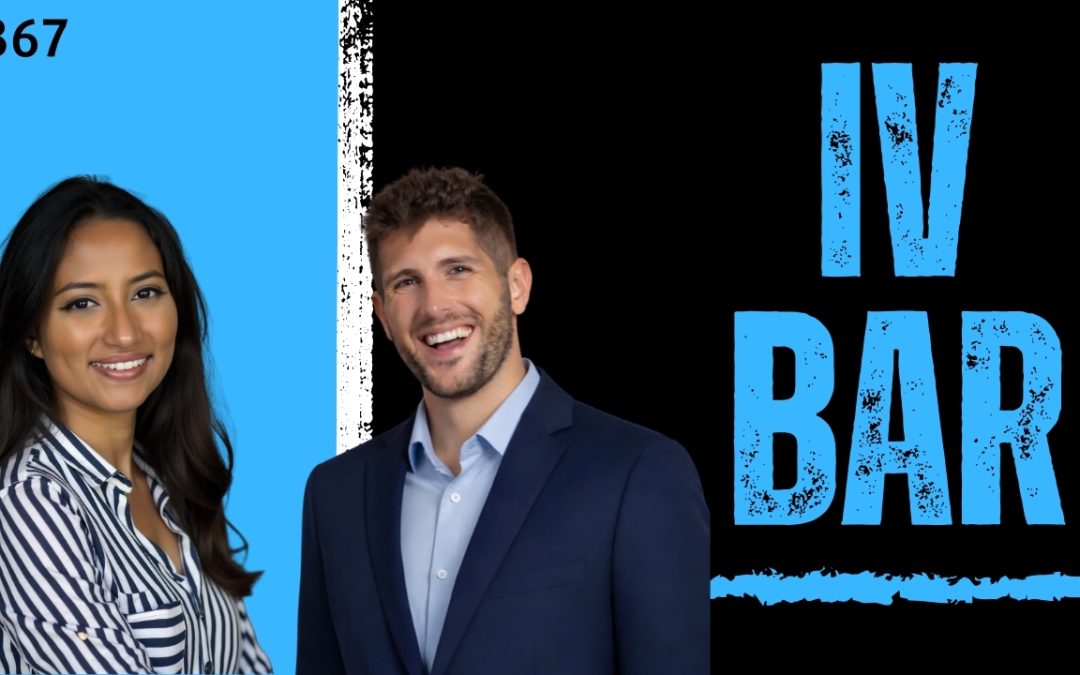
Shahayra Majumder and Jonathan Chizever – Hydrate IV Bar Madison, WI
On Focusing on What Really Matters: “They’re passionate about their health, which is your only wealth at the end of the day.”
What good is money if you’re spending your time hurting and not able to enjoy this great gift of life that we have all been given? Health is arguably the most important thing to focus on, to make sure you can do the things you want to do. Whether that is growing a business or enjoying time with friends.
Shahayra and Jonathan set out to help boost the health of the midwest by starting a Hydrate IV Bar franchise in Madison, Wisconsin.
Through our candid conversation you will learn what is a IV bar, why do people get IV drips and how they started this business in the IV drip world.
Learn how they identified a gap in the Midwest’s wellness market, navigated the highly regulated and rapidly evolving IV bar industry, and brought a community-focused approach to health and hydration. Are you curious about how IV therapy went from hospital wards to vibrant wellness lounges? Or what it takes to build a franchise rooted in both science and local values? This conversation will open your eyes to the business challenges, customer stories, and passion that drive this growing trend.
Shahayra and Jonathan share some great insights into franchise selection, the science behind vitamin infusions, building a winning team, and the power of connection within a unique new “third space” for health-minded people.
Listen as they explain the power of IV drips and how they can help you in your health and life journey.
Enjoy!
Visit Shahayra and Jonathan at: https://hydrateivbar.com/locations/madison/
Sponsors:
Calls On Call Extraordinary Answering Service, phone answering for small businesses: https://callsoncall.com
Some videos have been recorded with Riverside: https://www.riverside.fm/?utm_campaign=campaign_5&utm_medium=affiliate&utm_source=rewardful&via=james-kademan

Podcast Overview:
00:00 Bringing IV therapy to Madison
05:39 Navigating Franchise Regulations
07:47 IV therapy goes mainstream in Tokyo
12:50 Curated med spa offerings
14:44 Choosing Hydrate IV Bar for Madison
19:02 Starting with franchise questions
20:37 Building a Health-Focused Community
24:53 Benefits of Vitamin D Supplementation
27:55 Challenges with supplement patents
32:20 Functional medicine consultations at Hydrate
34:08 Patient advocacy and safe care
39:05 Frequency of sessions per week
41:33 Supplements and their credibility
47:04 Choosing the right location
48:42 Optimizing franchise location space
52:48 Hiring nurses for IV procedures
56:16 Spa services and mobile options
Podcast Transcription:
Jonathan Chizever [00:00:00]:
This gentleman with Parkinson’s started supplementing the NAD with us, and the results we’re seeing are just, like, amazing. He’s not perfect in running marathons, but he’s walking around without his hunch in his cane. I check in with his wife the next day, like, hey, how’s he doing? And she’s like, I couldn’t believe it. I woke up and I walk out and he was up before me, which is rare. And he’s sitting in his chair in the living room, giant smile plastered across his face. And. And it’s like, what’s going on? And then I see him get out of the chair, stand up with no cane, no hunch, and he’s like, I feel better than I felt in a long time because of something that we all.
James Kademan [00:00:41]:
You have found authentic business adventures business program that brings you the struggle stories and triumphant successes of business owners across the land. Downloadable audio episodes can be found in the podcast link [email protected] we are locally unwritten by the bank of Sun Prairie, and today we’re welcoming, preparing to learn from Sahara and Jonathan of the Hydrate IV bar. So, Sahara, Jonathan, how are you guys doing today?
Jonathan Chizever [00:01:06]:
Wonderful. Excited to be here.
James Kademan [00:01:08]:
Yeah.
Shahayra Majumder [00:01:08]:
Woot, woot.
James Kademan [00:01:09]:
Let’s talk about Hydrate IV bar. I don’t know what in the world an IV bar is, and I bet a lot of people don’t either. So let’s just start with what is an IV bar?
Jonathan Chizever [00:01:18]:
Happy to tell them you want to go or want me to go?
Shahayra Majumder [00:01:20]:
Um, yeah, I’ll kick it off if you want to add in, if there’s anything that I miss. But have you ever had an IV before?
James Kademan [00:01:28]:
I had. Yes. I had a saline IV thing when I had a. A gut thing, a stress gut thing
Shahayra Majumder [00:01:35]:
way back when, probably in the hospital.
James Kademan [00:01:37]:
Yeah. Yeah. Not a fan.
Shahayra Majumder [00:01:39]:
Yeah.
James Kademan [00:01:41]:
Not a fan of being in the hospital.
Shahayra Majumder [00:01:42]:
Yeah, right. Yeah, I. A lot of people are used to thinking about IVs being something that you get in the hospital or at urgent care in an emerg situation. But an IV bar actually takes those services outside of an emergency situation and lets you be a little more proactive about rapidly rehydrating your body.
James Kademan [00:02:04]:
All right.
Shahayra Majumder [00:02:05]:
For your different health and wellness goals. There’s lots that we can do with supplementing things that you might be deficient in or if you’re just feeling certain ailments that could be improved with additional vitamin supplements, meditation, or hydration. That’s usually why people come to an IV bar. For me, it’s been more of a proactive thing. I realized as I started doing IVs on a regular basis, I felt more energy. I was getting sick less. I didn’t really let anything get me down as much. Like during cold and flu season.
Shahayra Majumder [00:02:49]:
Yeah. Anything that you would add to that,
Jonathan Chizever [00:02:52]:
I think that sums it up. Great. Yeah.
James Kademan [00:02:54]:
All right. How do you get in the IV bar business?
Shahayra Majumder [00:02:58]:
You take that one.
Jonathan Chizever [00:03:01]:
So we both, in our travels, neither of us are from Madison. I’ve been here 10 years. Sahara’s been here seven. And we’ve both, in our travels and living other places, seen this as a more established concept in other places. And, you know, in the Midwest, whether it’s fashion trends or wellness modalities, we’re generally the last to get just about everything. And so here we are. And so, you know, IVs have saved us in numerous occasions from feeling bad, and really, until we got in the business, didn’t yet understand how much it can make you feel good in a consistent and proactive sense. But we just saw this as a market that makes so much sense for it, because, you know, what people traditionally associate it with is hangovers, at least in the selective sense, which it is phenomenal for, I’ve heard, at least.
Jonathan Chizever [00:03:54]:
But. But beyond that, you know, like, the founder of our brand, she got into this. She was a Broncos cheerleader, and she noticed all the guys in the team are doing these IVs routinely, all the time. And that was part of her origin story of getting into this. And so athletes love it, and athletes have been ahead of the curve and, you know, taking advantage of this. So for athletics and drinking Madison, we have a lot of bubbles, and turns out.
James Kademan [00:04:24]:
Yeah, yeah.
Jonathan Chizever [00:04:25]:
So. And then beyond that, we also have a very vibrant wellness scene. You know, we have a population that likes to take care of themselves. And, I mean, in so many ways, it made sense, but it was something that we saw being severely underserved. So it wasn’t like we wanted to start a business. And we’re like, what business do we do? It was like we noticed that there was a gap in the availability of these types of services in a place that it makes so much sense to have them. And the rest kind of naturally came from there.
James Kademan [00:04:55]:
Right on. So did you hunt down a franchise, or did you get introduced to the franchise? And you’re like, yes, that’s what we want.
Shahayra Majumder [00:05:03]:
Little column A, little column B. I did interview, like, every franchise under the sun doing IV stuff.
James Kademan [00:05:09]:
All in the IV stuff.
Shahayra Majumder [00:05:10]:
Yes.
James Kademan [00:05:11]:
Okay, how many are we talking here?
Shahayra Majumder [00:05:12]:
Oh, my God. I think I Started talking to folks in September of 2024, and then we signed our franchise agreement February of 25. So, yeah, I mean, that gives you a little gauge. It took me months and months of.
James Kademan [00:05:27]:
So just talking like, I don’t know how many franchise I’ve seen. Are we talking five? We talking 50?
Jonathan Chizever [00:05:32]:
Oh, no, I’d say a dozen and a half maybe.
Shahayra Majumder [00:05:35]:
Yeah, maybe closer to like the 20 or 30.
Jonathan Chizever [00:05:37]:
Wow.
Shahayra Majumder [00:05:39]:
Yeah, franchise franchises. And there are a few that dominate the market. There are a few that are bigger. But what’s interesting is this industry, it’s very highly regulated, but the regulations are different state to state. So if you know a little bit about franchising, you know that franchises have to be registered in every single state. And some states are harder to get registered in. And so I talked to a lot of the folks that I was able to get their franchisees on the phone and get honest opinions about the kind of support they’re receiving, how the market has received them. I particularly talk to folks in the Midwest or familiar with the Midwest because, you know, the market in the Midwest is not going to be what it is in, you know, Nashville, Tennessee, for example, where you’re getting a lot more tourism and.
James Kademan [00:06:38]:
Yeah, sober me up. Sober me up.
Shahayra Majumder [00:06:39]:
Yeah, right, right. Yeah. Vegas, for example. That’s where I think I got Jonathan to do his first iv. That’s kind of where IV therapy first popped up in the States. Believe it or not. The first place that I think started doing IVs, at least that I found in my research, was in Tokyo, 2008. Yeah, yeah.
James Kademan [00:07:02]:
So Olympics or what?
Jonathan Chizever [00:07:04]:
No, it was actually. So IVs have been around and look, this is a whole other tangent and I love rabbit holes online.
James Kademan [00:07:11]:
Oh, we’ll go all day.
Shahayra Majumder [00:07:12]:
Ye. Could you tell we love this stuff.
James Kademan [00:07:15]:
Yeah.
Jonathan Chizever [00:07:16]:
IVs people have been attempting them since about the 1600s.
James Kademan [00:07:19]:
Okay.
Jonathan Chizever [00:07:19]:
They realize, okay, we have blood, and blood carries a lot of important things to the body. Let’s try and put things in there. The issue is that, you know, that point in time there was a lot more plague and other things that you probably didn’t want in there that could inevitably get there. So IVs in their current iteration, you know, you think of the bag and the line going down. That’s been around in medical context for right around early 1900s, late 1800s, it started to develop into what we see now.
James Kademan [00:07:45]:
Sure.
Jonathan Chizever [00:07:47]:
But it was, you know, something just used in a medical context then 2000 ish, you know, like early aughts, you started to see some People very well to do, whether professional athletes, touring musicians, generally someone like the bar of entry was having a private doctor realized that this could be really good in certain elective circumstances, whether jet lag, fatigue, you know, helping with athletics and all these different applications beyond like I’m in the hospital and have a diagnosable ailment or ailment. So then from there, 2008, Tokyo, the first place that had it sort of in this elective sense opened up. So Tokyo, they have, you know, this work culture of like, it’s insane from everything I’ve read about it. You know, just working a corporate job like 12 plus hours a day, however many days a week. And naturally that wears people out. IVs are something that can help with that. So a small wellness boutique opened up. And there’s not as much literature as I’d like there to be to research about this place.
Jonathan Chizever [00:08:58]:
But in 2008, kind of the first IV bar, IV spa sort of concept that we could find any literature or anything on, they opened up. I don’t know if it’s still around or not. And then 2012 or so, Vegas was ground zero for existing in the US because naturally a lot of things one might engage in Vegas are very aided in doing.
James Kademan [00:09:22]:
We don’t know what it is because it stays there.
Shahayra Majumder [00:09:23]:
Yeah, yeah, yeah.
Jonathan Chizever [00:09:24]:
I barely know it’s a place.
Shahayra Majumder [00:09:26]:
Yeah. So, yeah, I talk to everyone that was franchising in the States. There are some people that, you know, aren’t still franchising in the States, are focusing on international markets. There are some folks that in addition to IVs, are doing like GLP1s, peptide therapy, Botox, microneedling. And I knew I didn’t really want to get into that business. I mean, there’s so much there with understanding the modalities and the science behind different offerings. And I’m a very high context person. I like to know like the ins and outs of what I’m doing and be the ace of one rather than a jack of all trades.
Shahayra Majumder [00:10:08]:
So I really wanted a place just doing IVs that could give people just basics like this is what vitamin C is good for, this is what glutathione is good for, this is what NAD is. And just bring these health services to people in a more accessible fashion. Because currently, well, I guess at the time, not currently, now that we’re here, but. But when we were first looking into the only place that we could get an IV in, Madison was like at the hospital.
James Kademan [00:10:44]:
And I imagine you can’t just walk in there and be like, hey, right. I just want to hang out right there and just get the needle with the bag and all that.
Shahayra Majumder [00:10:51]:
Just.
James Kademan [00:10:51]:
I’ll hang out.
Shahayra Majumder [00:10:52]:
Yeah, yeah, no, it’s a lot harder to. And more expensive. You’re paying that ER bill. You’re paying for the labor of all the people involved in getting you admitted and all the things versus, you know, coming into an IV bar rather than a four figure bill. Maybe you’ll spend a couple hundred.
James Kademan [00:11:11]:
All right.
Shahayra Majumder [00:11:12]:
So yeah, it’s a fraction of the cost. So. Yeah. Going back to what Jonathan said about seeing the gap here, we just knew we wanted to go with a franchise because we didn’t have the medical background.
James Kademan [00:11:24]:
Okay, fair.
Shahayra Majumder [00:11:25]:
Yeah, yeah.
James Kademan [00:11:26]:
So tell me, out of all the franchises, the 20 odd that you looked at.
Shahayra Majumder [00:11:30]:
Yeah.
James Kademan [00:11:30]:
What were some of the red flags with some. And the green flag with this one specifically where you’re like, that’s the one.
Shahayra Majumder [00:11:36]:
Yeah.
Jonathan Chizever [00:11:37]:
So there were so many things to consider and you know, before doing this. Like, like I always like to say everyone has a plan until they get punched in the face. And.
James Kademan [00:11:47]:
Sure, yeah. Mike Tyson.
Shahayra Majumder [00:11:48]:
Yeah, well.
Jonathan Chizever [00:11:49]:
And building upon that, the best plan I found is to plan on being punched in the face. And we knew, especially getting into something that, you know, people aren’t as acquainted with, it’s a little bit more alien concept than a lot of businesses you could start out, that we were going to get punched in the face a fair amount and we wanted to, you know, find a brand that one had. The experience wasn’t like rapidly expanding beyond what’s tenable for being able to provide a good client experience and a good franchisee experience. And hydrate’s been around since 2016.
James Kademan [00:12:20]:
Have they really?
Jonathan Chizever [00:12:20]:
Yeah.
James Kademan [00:12:21]:
Oh, wow. Yeah. 10 years. They’ve.
Jonathan Chizever [00:12:24]:
As far as this space goes, they’re. They’ve been around a while.
James Kademan [00:12:26]:
All right.
Jonathan Chizever [00:12:27]:
And then beyond that, you know, they were the most intentional with the offerings of anyone that we talked to because
James Kademan [00:12:34]:
in this space, offerings as far as what was supplied in the bag. Well, essentially, I don’t know if the nomenclature.
Jonathan Chizever [00:12:39]:
Well, yeah, so like in terms of what’s on the menu, it’s just IVs, vitamin injections. That’s it. NAD which comes in an IV or shot. That’s a whole other conversation we can get into.
Shahayra Majumder [00:12:49]:
Yeah.
Jonathan Chizever [00:12:50]:
But it’s all stuff that already exists in your body that you get from your diet. With the exception of we have Zofran and Toradol, which are respectively anti nausea and like a heavy nsaid. If someone’s ever you know, feeling symptoms is something that the IV and the vitamins are going to help us, you know, with the root cause of. But those can help with the symptoms immediately and give them some relief. But it’s a very curated and very intentional set of offerings. And in this space and the sort of med spa space, there’s so many different concepts and businesses coming out. And it’s also part by design, part because it’s new for a lot of reasons. A lot of it’s under researched and, you know, we didn’t want to be doing 25 different things.
Jonathan Chizever [00:13:34]:
Like, in just doing what we do, there’s a lot of things to understand and a lot of nuance to it. And, you know, like Sahara said, like, we wanted to be the ace of one. And that was one thing we really liked about Hydrate. Beyond that, just aesthetically the brand. And then the sort of icing on the cake was on our first call, we get on with them. One of the owners of the entire system, he hops on the call and he’s like, yeah, I don’t normally join these, but I had to when I heard Madison, and I’m like, oh, interesting. You probably visited a few years ago or something like that.
James Kademan [00:14:08]:
Everybody’s party’s here, right?
Jonathan Chizever [00:14:10]:
Yeah.
James Kademan [00:14:10]:
Oh, yeah.
Jonathan Chizever [00:14:11]:
My friend told me to come out. I went to a Badgers game and he’s like, yeah. So I was born and raised in Sun Prairie.
James Kademan [00:14:15]:
Oh, funny. Yeah.
Jonathan Chizever [00:14:16]:
And the Brain is based out of Denver.
Shahayra Majumder [00:14:18]:
Yeah.
Jonathan Chizever [00:14:19]:
And so we’re like, like, oh, well, we’re not going to make our decision based on that, but that definitely helps. And then after, you know, doing all sorts of diligence and having different disciplines of attorneys, look at the FTD and all these different things, we finally made the decision, like, Hydrate is the way to go for us.
James Kademan [00:14:38]:
All right.
Jonathan Chizever [00:14:39]:
And throughout the journey, we’ve just seen so many things that have reinforced that.
Shahayra Majumder [00:14:44]:
Yeah. I think you also asked, like, what was it about the other franchises that maybe steered me away from them? And it’s interesting because it wasn’t anything that necessarily steered me away. Like, if anything, there were other things about other franchises that were more appealing, like more franchisees or like, the books are a little more evolved. But we really felt that we would be more passionate and representing Hydrate IV Bar. And we could really envision it in Madison in a way that’s really rooted in the community. People here love supporting local businesses. They love to know, like, who’s behind the desk or behind it all, having a face to the name is so important, I feel in a community like Madison’s business community that I just felt we could do. Do more justice to IV therapy with hydrate behind us rather than just like the cookie cutter.
James Kademan [00:15:50]:
Sure.
Shahayra Majumder [00:15:51]:
You know, Fairbucks, that you might put up. Yeah.
James Kademan [00:15:54]:
Tell me a story about like two of you are married or whose idea was it? Like, hey, let’s quit whatever it is we’re doing and just jump in head first, feet first, whatever, full body into the pool of not only business ownership, franchise ownership. You’re talking brick and mortar.
Shahayra Majumder [00:16:14]:
Yeah.
James Kademan [00:16:14]:
I don’t know what the capital outlay is, but it’s probably not free. Whatever.
Jonathan Chizever [00:16:18]:
I wish it was right.
James Kademan [00:16:20]:
We all do. We all do all that. That had to be an interesting conversation about, hey, let’s make a strong 180 about where we are to this thing and go all into it. How did that conversation go?
Jonathan Chizever [00:16:33]:
So it kind of evolved naturally, which is part of what I also love about the story. It’s not just like, you know, one of us was just like, hey, I want to do this thing. It was so one of the flashpoints. There were a few of them where IVs sort of saved us and, you know, like I said, now we do them consistently. We feel a lot better. But prior to, you know, really getting into the weeds of this business, we didn’t understand that. And it was something that we just did reactively and it’s saved us from plenty of certain different circumstances. So one of the first flashpoints was late 2024, back when we had more free time and money to spend on dumb things and not productive things.
Jonathan Chizever [00:17:13]:
We had tickets for music festival in Vegas and flew out there. We had planned the whole trip already, spent a lot of money on pre booking stuff. And right before we both promptly get sick.
James Kademan [00:17:26]:
Oh, no.
Jonathan Chizever [00:17:27]:
And I’m like, I don’t hardly ever get time off work. You don’t either. And we already planned this. Let’s go bare knuckle this, Figure it out. And we both show up the first night. There’s a sideshow to the festival concert in our hotel. Go down there. Sahara doesn’t make it through the whole show.
Jonathan Chizever [00:17:46]:
Like, we’re just both feeling terrible.
James Kademan [00:17:48]:
Oh, no.
Jonathan Chizever [00:17:50]:
I make it through the whole show mostly sitting down. Go up to the room.
James Kademan [00:17:54]:
Everybody else is bouncing and jumping.
Jonathan Chizever [00:17:55]:
Yeah, everyone’s having a great time. I’m just over here like, yeah, yeah. And so then the next day, she’s like, we should get some IVs. And being a nice hotel in Vegas, they have IVs downstairs. And they’re.
James Kademan [00:18:07]:
Of course they do.
Jonathan Chizever [00:18:09]:
And so, yeah, like, it wasn’t even a hangover. It wasn’t even, like, any of the normal Vegas debauchery. It was like, we just got sick in Wisconsin and brought it with us and wanted to send it back there. So we got IVs in the hotel and then had a great time. Like, music festivals, a ton of walking. It’s super hot. Like, all these things. And we would not have survived that in the state that we were in prior to the IVs.
James Kademan [00:18:32]:
Wow.
Jonathan Chizever [00:18:32]:
Like, it was complete. 180 for the trip. And so that was my first IV, was that. And so then, you know, it really made us think, like, wow, there should be more availability in Madison. We both kind of had this idea prior to this. Like, just separately, just seeing it other places and knowing it’s a thing and knowing Madison makes a lot of sense demographically in certain. Certain ways. And that was one of the flashpoints that made it more material.
Jonathan Chizever [00:19:01]:
Like, we should really think about this.
Shahayra Majumder [00:19:02]:
Yeah. And, yeah, I think it kind of. I mean, I was just. You. You captured it all. But I was just gonna say, I think it kind of started with us just observing that it would be a good idea and just asking the questions, like, one step at a time. What would it look like to start one of these? Like, we’re not medical, so we’d probably go the franchise route. How much do these franchises cost? And then I figured out, like, actually, we could.
Shahayra Majumder [00:19:28]:
With the right model, we could probably figure this out. And it sort of just started as an idea, and then all of a sudden, we have a baby in the form of a hydra.
James Kademan [00:19:41]:
That’s awesome.
Shahayra Majumder [00:19:42]:
Yeah.
James Kademan [00:19:43]:
So your place has chairs of some kind.
Jonathan Chizever [00:19:47]:
Yeah.
James Kademan [00:19:48]:
So people are laying there or sitting there.
Shahayra Majumder [00:19:50]:
Yeah.
James Kademan [00:19:51]:
With the iv.
Shahayra Majumder [00:19:52]:
Yeah.
James Kademan [00:19:52]:
So tell me how the layout is.
Shahayra Majumder [00:19:54]:
Yeah. So we kind of have, like, a. Well, when you walk in, there is an IV lounge that’s more of a community base, which is another one of the reasons why we loved Hydrate is because a lot of these other IV bars, clinic spas, whatever you want to call them, they have partitions between chairs.
James Kademan [00:20:16]:
Okay. That’s what I was going to ask you about, because it seemed like these chairs are. They’re not on top of each other, but there’s definitely. You could be like, hey, what are you getting today?
Shahayra Majumder [00:20:24]:
Right.
James Kademan [00:20:24]:
Yeah.
Shahayra Majumder [00:20:25]:
What are you getting?
James Kademan [00:20:26]:
There’s a conversation that could happen.
Shahayra Majumder [00:20:27]:
Exactly.
James Kademan [00:20:28]:
And how long are people sitting there?
Shahayra Majumder [00:20:30]:
45 minutes. The average vitamin drip.
James Kademan [00:20:33]:
So it’d be weird to not at Least say hello to the person next to you.
Shahayra Majumder [00:20:37]:
And that’s one of the things that I really love about this business is you’re not just selling vitamin drips, you’re in the people business. You’re curating a nice experience for people to one, leave feeling better, but two, to feel like they’re part of a community where, you know, if you’re getting IV drips, you’re meeting like minded people that are also prioritizing their health that might also be, you know, successful in their own right in a different field. And now you’ve just expanded your network because you met them at the IV bar. So we do really fun curated events for our members that come because there is just like such an amazing community within that network of individuals that are regularly taking care of themselves and, and they’re people that have, you know, something to live for. Like they’re passionate about their health, which is your only wealth at the end of the day.
James Kademan [00:21:36]:
Yeah, right.
Shahayra Majumder [00:21:36]:
Yeah, true. So it’s. That was one thing that was really important to us was having that communal vibe and being a third space for people with the IV bar. You know, you go out for coffee all the time with people. What about going out for a drip together?
James Kademan [00:21:54]:
Sure.
Shahayra Majumder [00:21:54]:
Hanging out and having a quick meeting while you’re doing something good for your. We also have private rooms, which we’re very fortunate. We’re one of the biggest, I think we’re the biggest hydrate in the system.
James Kademan [00:22:06]:
Are you really?
Shahayra Majumder [00:22:07]:
Yeah.
James Kademan [00:22:07]:
Well, you guys went all out.
Shahayra Majumder [00:22:09]:
We really did. Yeah. So we have the capacity for, I
Jonathan Chizever [00:22:13]:
think as it sits, 10 people. Like we can have 10 IVs running at once as it sits.
Shahayra Majumder [00:22:18]:
Yeah.
Jonathan Chizever [00:22:18]:
And we have a little bit more space. Like for example, we have an office in the space that as we build more momentum and don’t have to always be in the office, we intend to convert that into another private IV room. So we have even a little bit of built in room to grow.
Shahayra Majumder [00:22:33]:
Yeah. And I think keeping the office as an office that others can use too, like having a team meeting in the office while you’re getting your drips or you know, just having a change of scenery if you work from home, which I did for a very long time, and you can get really cooped up and not really see people unless you force yourself to.
James Kademan [00:22:53]:
Yeah. I have employees that work from home and I think some of them love it for that reason. And some of them, I think I go stir crazy at home that much, but apparently not everyone is that way. I understand. Yeah.
Shahayra Majumder [00:23:08]:
Yeah. But it’s nice because we have options for our folks. So you can sit in the lounge and listen to the fountain and just zena out, recline, talk to your friends and just be laid back. Or you can go into the private room and take a nap in between meetings if you need to, or have a meeting itself in the office room. So yeah, it’s really, it’s. I view it as being like the future of networking in a hub for people that, you know, want something to live for and do outside of work without having to sacrifice, you know, being on top of the ball and being a high performing individual.
James Kademan [00:23:50]:
You know, it’s interesting you talk about the networking side. Yeah, just the, the people that are around you because it reminds me of Tony Robbins event. I’ve been to a few of them and I think half, if not more of the benefit that I get from it is people that I meet. Because you’re meeting people that are in that space of growth and contribution and just becoming a better person. And I would say like with the IV thing, right, there’s no one’s going to be like, oh, I’m on the brink of suicide. I’m just going to get a quick iv. Yeah.
Jonathan Chizever [00:24:21]:
It doesn’t help with that.
Shahayra Majumder [00:24:22]:
No, no. I mean, good, like, okay.
James Kademan [00:24:26]:
Make you feel better, right?
Shahayra Majumder [00:24:28]:
Yeah, I mean, yeah, no, I, I and I think it helps a lot of people that have been struggling with loneliness or mood instability because it is really giving your body the precursors for like, like, okay. And we’re in Wisconsin. Everyone here is chronically deficient in vitamin D, which is.
James Kademan [00:24:51]:
We don’t get a lot of sun.
Jonathan Chizever [00:24:52]:
Right? Yeah.
Shahayra Majumder [00:24:53]:
And it’s not really our fault. You know, we’re cooped up in is half the time and half the year the sun is, you know, gone by the time we’re back in our vehicle driving home. So, you know, what can you really do other than supplement? Everyone takes oral supplements, but you’re only getting about 30% absorption even from the food that you eat. You’re not absorbing the full nutritional content. So with doing injections or IVs, you’re getting more bioavailability of whatever that is that you’re deficient in. And vitamin D is a great example because we get the winter blues and. But when I started doing vitamin D supplementation consistently, it really helped me. It’s a precursor to, well, actually don’t quote me on this, but I think it’s implicated in the production of serotonin, which is great for your mood regulation.
Shahayra Majumder [00:25:45]:
I mean, we’re all on SSRIs. But what if we took vitamin D more consistently and then maybe we don’t have that dependency on the medication. So, yeah, it’s definitely something that I think people, a big challenge for us is just doing more education around, you know, what’s good for what and getting people to think about this as something they can be doing as part of their routine. Wellness.
James Kademan [00:26:09]:
So tell me a story about that. You guys are great at segue here. So somebody comes into your place and they’re like, hey, I want something you got here. How do you tell what to give them or what they need? What would be best suited for them?
Jonathan Chizever [00:26:24]:
We ask. Okay, so, you know, like, getting into this, like, we’ve just onboarded an AGM to help out and habits.
James Kademan [00:26:32]:
What’s agm?
Jonathan Chizever [00:26:33]:
Assistant General manager.
James Kademan [00:26:34]:
Oh, gotcha. I was waiting for something more IV specific.
Jonathan Chizever [00:26:39]:
Not medical, just.
James Kademan [00:26:41]:
Yeah, my head was right there. Like, I don’t want your acronyms.
Shahayra Majumder [00:26:44]:
Okay.
Jonathan Chizever [00:26:46]:
So, yeah, as we’ve gotten a firm grasp on, you know, what we’re doing and a basic understanding and, you know, we’re always learning something, something new, but feeling confident in our, like, cursory understanding of everything we offer, what it’ll help with. And, you know, we just hired her. So, you know, like, whenever someone comes in, like whether it’s us or her talking to them, we’ll just ask how they feel and how they’d like to feel, whether in those words or not. And it really just depends. And sometimes we might not know the answer, and that’s. We’ll defer to the nurse. And sometimes if the nurse doesn’t know to the answer, we’ll defer to our medical oversight. Like, that’s another thing we love about hydrate.
Jonathan Chizever [00:27:24]:
We have these various levels of help that we can defer to if we ever don’t know the answer to a question. And sometimes there’s no cut and, you know, like complete cut and dry answer. Because another thing with what we do is conservative medical outlooks tend not to look upon it as favorably as they probably should because it’s not that something that you know, like, it’s a different modality and it’s proactive, whereas our system is designed to be more reactive.
James Kademan [00:27:54]:
Very.
Jonathan Chizever [00:27:55]:
And other thing too is so like everything we offer for the most part is stuff that already exists in your body, which means that it’s very hard to patent. And basically you can’t. And so because of that, then you can’t get a firm grip on the market of something selling, you know, vitamin B12 or vitamin D, et cetera. And so then it’s like, there’s not money in this. We can just go make it in whatever other country for less than we can. And then it doesn’t get studied the way it should. So vitamin supplementation, especially through IVs, it doesn’t get, you know, the clinical attention that it deserves. But for example, there’s, you know, we’ll always be like, we’re not going to say we treat something, but we’ll say we’ll help or, you know, boost.
Jonathan Chizever [00:28:38]:
But like it. There’s empirical evidence that it helps with certain things. We have one client who has, you know, all sorts of medical history, and right now he’s dealing with Parkinson’s. And so nad, which is its whole other conversation, it’s. Sahara can explain it with her biomolecular science background better than I can. But it’s basically like a. It’s a bioavailable form of vitamin B3, heavily involved in cell repair and regeneration. And it’s been implicated to help with a lot of things that are involved related to aging.
Jonathan Chizever [00:29:13]:
We start out with a lot of it when we’re born. Then the levels significantly decrease by middle age. By the time we’re getting close to leaving this realm of existence, there’s really not any of it left. And anyway, so this gentleman with Parkinson’s started supplementing the NAD with us. And the results we’re seeing are just like, amazing. Like, he’s not perfect in running marathons, but he’s walking around without his hunch in his cane. Like, I check in with his wife the next day, like, hey, how’s he doing? And she’s like, I couldn’t believe it. I woke up and I walk out and he was up before me, which is rare.
Jonathan Chizever [00:29:47]:
And he’s sitting in his chair in the living room, giant smile plastered across his face. And it’s like, what’s going on? And then I see him get out of the chair, stand up with no cane, no hunch, and he’s like, I feel better than I felt in a long time because of something that we offer. That nad again, naturally exists in the body. Can’t patent it. It doesn’t get the clinical attention that it deserves.
James Kademan [00:30:14]:
Gotcha.
Shahayra Majumder [00:30:15]:
So I think some of that is by design too. It’s easy to hear a story like that and assume, like, it can’t be that good. Like, that’s woo woo, like the like. But, you know, what we’re doing is not. Is. Is not. I mean, and I think it’s by design, under researched. Because what would happen to traditional healthcare if everyone had access to things that help the body do what it’s designed to do, which is to heal itself and take care of itself, what would happen? We wouldn’t have an industry for many pharmaceuticals.
James Kademan [00:30:58]:
Yeah, that sounds so tragic.
Shahayra Majumder [00:31:00]:
Yeah, yeah, it’s so tragic.
James Kademan [00:31:02]:
We’d all be healthier reactive medicine, right?
Jonathan Chizever [00:31:06]:
Yeah, yeah, but preempting my own ADHD and like, avoiding tangents. So to answer your question, like, someone walks in and says, what do I get? We just consult them and try to understand and use our knowledge to help them find what’s going to be the most effective for them.
James Kademan [00:31:22]:
Is there any blood test or any skin test or something where like, oh, we can see that you’re clear deficient in these vitamins?
Jonathan Chizever [00:31:29]:
Yeah, great question. So. So we don’t do any of that.
Shahayra Majumder [00:31:33]:
Not right now at least. I think we as like a franchise have considered doing that. I don’t know where those conversations are at right now, but people frequently come in with their test results asking us like, hey, what does this mean? My cholesterol is high or low? Or my blood pressure is high or low? What should I do? And what’s really nice is Jonathan alluded to our medical oversight earlier. We have basically a company that we partner with that has basically a bench of very, like. How would you say it? Like, well educated, of course, because they’re providers. But.
Jonathan Chizever [00:32:18]:
And highly credentialed.
Shahayra Majumder [00:32:20]:
Yeah, like expert providers in this functional medicine space where they’re able to consult on who might be a good candidate for nad, who might be a good candidate for even service offerings that we don’t have. At hydrate, they’re able to just have a medical clearance exam with clients when they come in to hydrate and consult with them on what their test results show, what they might suggest, what they might not approve them for. Because it does happen too, where we have to turn clients away. You know, we’re never trying to push product just to push it. Like, we always want to do what’s going to be the safest and ultimately help that person the most. And sometimes that is telling them, hey, like, we can’t approve you because of this new, you know, cardiac issue that you disclosed to us. You should just get approval from your cardiologist before coming in to see us. Or someone’s vitals might not be within the range that we would want to see them at before treating them in our space.
Shahayra Majumder [00:33:24]:
And I’ve even heard stories of nurses saving people’s lives by Saying like, hey, your blood pressure is too high. I think you need to go to the ER and not treating them. Whereas they wouldn’t have gotten that care or advice unless they came in and had someone that evaluated, you know, what they were going through holistically in that particular story. This client that came in, the nurse took their vital alone. Their blood pressure is very high. The nurse sent them to the er. They came back and they said the ER sent him home and that he was fine. This wasn’t a hydrate nurse, but it was a IV bar nurse.
Shahayra Majumder [00:34:08]:
And she told me that she went with that client back to the ER and made them evaluate him because she was like, I, I, I don’t feel safe putting my license on the line and giving him fluids right now, but he needs care, so you need to see him and take his experience seriously. And basically was a patient advocate for him. So, yeah, I think we do a really good job. Even though we don’t do direct testing in house right now, we do a really good job of always recommending the best thing for clients as far as they want to take it. Like, if they want to share their test results with us and have us, like, talk to our medical oversight about it, we’re happy to. That’s fantastic. And I love that they’re buying in and willing to share that. But the nature of what we do, a lot of our vitamins and nutrients are very, like, there are things that you can naturally find in your diet.
Shahayra Majumder [00:35:10]:
Unless it’s nad, which what is nad?
James Kademan [00:35:14]:
I’m sorry. Yeah, it keeps being mentioned. I’m like, I’m under a rock here.
Shahayra Majumder [00:35:19]:
Jonathan mentioned it, and I think in, like, one of your many tangents, but
Jonathan Chizever [00:35:24]:
I don’t know what a tangent is.
James Kademan [00:35:25]:
No, it’s all good.
Shahayra Majumder [00:35:26]:
Breaking it down to very basic level. It’s a coenzyme that’s in all of our cells in our mitochondria. The powerhouse of the cell.
James Kademan [00:35:37]:
Right. Fourth grade, sixth grade. I don’t know. Something like that.
Shahayra Majumder [00:35:41]:
Yeah.
James Kademan [00:35:42]:
It’s been a minute.
Shahayra Majumder [00:35:42]:
Yeah, exactly. From biology class, but yeah. So NAD is a coenzyme used by our mitochondria to produce energy, but also to help with cellular regeneration. Basically, it helps our cells perform the necessary functions that it needs to. It’s used in the Krebs cycle, if you’re familiar, breaking down sugars into energy. So. So as we age, we deplete our natural levels, our natural NAD reserves that we’re born with. The graph is like, at birth, you’re here mid age, you’re here.
Shahayra Majumder [00:36:25]:
And that’s kind of just exponentially down from there. Yeah, yeah. You wouldn’t be able to tell, I’m 90 years old. But yeah, no. So it, it decreases with age. And what research has shown, like the latest longevity research shows that supplementing your natural NAD levels helps with all kinds of age related ailments like chronic pain, inflammation, sleep quality, hormonal regulation because it’s working on a cellular level. So it gives you kind of global relief throughout the body. And the effects are very instant.
Shahayra Majumder [00:37:10]:
It’s incredible. I mean this is what that gentleman that Jonathan mentioned earlier has been doing and the testimonials you hear, I mean it sounds hard to believe but you really just gotta try. Like I, the first time I did an NAD injection, I felt it right away, like my cells were like, time to go.
James Kademan [00:37:30]:
Just like, where’s that house? I’ll lift it.
Shahayra Majumder [00:37:32]:
Yeah. And I had to take a seat and drink some water and then I was good. So we do IVs of it, which actually can take up to four hours because of just how strongly you feel it. It’s a vasodilator too, so it can drop your blood pressure a bit because of just the effects it’s having in your body. But pretty soon after you stop the infusion you feel great. It’s just kind of while your body is receiving it, you feel these side effects of the molecule. But it’s, it’s incredible. Like the things that I’ve seen it done do for people.
Shahayra Majumder [00:38:15]:
Yeah. I don’t know anything else you would add to the NAD conversation?
Jonathan Chizever [00:38:20]:
No. You’re better at explaining that one.
Shahayra Majumder [00:38:21]:
Yeah. Does it make sense?
James Kademan [00:38:23]:
It does, yeah. Is this a one hit, one kill kind of thing or this is going to come back every week or month or something of that nature?
Shahayra Majumder [00:38:29]:
Yeah. I, we see our members doing loading doses of it to really build up their house, like their foundation of NAD. So typically we see that looking like people doing IVs of it within two weeks to really get that baseline up and then they maintain for the next time until they feel like their body is ready for another set of infusions with the injections in between.
James Kademan [00:39:01]:
But tell me about the two weeks. Is that an everyday thing? Is it every few days?
Shahayra Majumder [00:39:05]:
Yeah, every few days. I think it’s, shoot, I wish I had like my reference in front of me. But I think it’s like there’s a maximum that you can safely do within a week. So I think what we’ve done in the past is like, like one at the beginning of the week one at the end of the week for two weeks. So for a total of four throughout that two week period. But, but there’s flexibility in that because it’s hard for people to find like four hours at a time to sit down and like be available for that. So we’ve had people do it over the course of like a month. It’s really best to do it kind of close together though, so that you’re kind of topping off your levels and building up that strong foundation.
Shahayra Majumder [00:39:53]:
Because we do, we use it up, we deplete it. And so I’ve heard people, like out in Denver, where we’ve been for 10 years now, people are doing it like once every year, once every six months. It really varies from person to person.
Jonathan Chizever [00:40:08]:
Okay.
Shahayra Majumder [00:40:09]:
Yeah.
James Kademan [00:40:09]:
Okay. It’s not an everyday.
Shahayra Majumder [00:40:10]:
No, no.
Jonathan Chizever [00:40:11]:
Okay.
Shahayra Majumder [00:40:11]:
No, no. Yeah. I think people will maintain like on a monthly basis with their injections. I know nowadays this is a good thing and kind of a scary thing because you can order nad like off the Internet. And I know some people give themselves injections at home, which is scary to me because it’s, it affects me very strongly. And I like there being a nurse there, just monitoring my symptoms, my vitals, making sure I’m safe. But it is growing in accessibility to where if you’re not squeamish and like are used to giving yourself injections at home, you can do it at home to maintain as well.
James Kademan [00:40:49]:
So how regulated is that specific industry?
Jonathan Chizever [00:40:55]:
Various degrees. So like all of our industries, ingredients, they come from heavily vetted, FDA regulated pharmacies that also sell the hospitals, clinics and you know, all these very blue label, you know, what people associate with healthcare type settings. You can buy similar stuff to what we get from varying degrees of, of sketchiness, you know, different places online.
James Kademan [00:41:27]:
That’s what I’m wondering. They could just slap an NAD label on it and you’re like, it’s sugar water. They have no idea what it is. Yeah.
Jonathan Chizever [00:41:33]:
And I mean it’s, you know, that’s the issue with like sort of the supplement industry. You know, there’s supplements out there. I take supplements. I take BCAAs and my methylene blue and my colostrum. And you know, like a lot of them are well studied and you know, there’s some science to back it up. And some of them are just like, I don’t know, like I listened to a podcast the other day about some of the pills they sell at gas stations and I’m like, this the John Oliver one?
James Kademan [00:41:59]:
Yeah, I just watched that yesterday.
Jonathan Chizever [00:42:01]:
I never thought about how scary that industry is. And now I’m like, when I saw
James Kademan [00:42:04]:
that you could buy the packaging without a pill, and then you could buy the pill separate, and they could be whatever. Yeah, no, it’s like, okay, I’m not a guy to trust a gas station supplement just because I like to get gas at a gas station. Everybody stay in their lane.
Jonathan Chizever [00:42:18]:
Yeah.
James Kademan [00:42:19]:
But you. You go to the counter, right? And you’re like, this is a lot of stuff. Who’s buying all this stuff?
Jonathan Chizever [00:42:24]:
I always wonder. I’m like, who trusts this? And I don’t know, like.
James Kademan [00:42:27]:
But then you learn and like, it. It’s as bad as you thought. Yeah.
Jonathan Chizever [00:42:31]:
Makes you happy. It makes you happy. But, yeah. So anyway, so like, you can get similar stuff from places with various degrees of accreditation online or, you know, like, various degrees of oversight and regulation. But, I mean, it’s. It’s not like you can’t walk into the places that we get ours from and just be like, hey, can I order some nad? No. So, yeah.
James Kademan [00:42:55]:
All right. Yeah, tell me. I want to shift into the background business side.
Shahayra Majumder [00:42:58]:
Yeah.
James Kademan [00:42:59]:
So you have. Or you need these. Is it bags? They come in bags?
Shahayra Majumder [00:43:04]:
Yeah.
James Kademan [00:43:04]:
Okay, so do you just have a storage room with a bunch of different bags? We gotta find this.
Shahayra Majumder [00:43:09]:
Yeah, our break room has, like, rocks of saline. Okay. But. Yeah, go ahead.
Jonathan Chizever [00:43:15]:
So it shows up just as a bag of sale. Okay. So it’s not like. And, you know, like, taking the. The bar concept, which I was so confused by the phrasing at first, like, why is it a bar? And then I started to see the places that have sort of the community environment we do. And I’m like, oh, that makes more sense. Anyway, so none of our cocktails are draft. Like, they’re all mixed to order.
James Kademan [00:43:35]:
Okay.
Jonathan Chizever [00:43:35]:
And so what arrives is just bags of normal saline. It’s what they use in the hospital and charge a lot of money for. And then. And what they don’t do while they’re charging a lot of money in the hospital is usually add anything to it. Sometimes they do, but we mix all the bags on site, and then we have the. The vitamins, the nutrients. Those are stored in whatever. They’re appropriate storage, whether refrigerator, room temperature.
Jonathan Chizever [00:44:02]:
And then whenever someone comes in, whatever IV they’re getting, we mix that for them on the spot. Gotcha.
James Kademan [00:44:07]:
Okay, that’s interesting. I guess in my head, I was picturing this is a bag of whatever nad. But yes, it’s saline. And then you’re adding.
Jonathan Chizever [00:44:17]:
Okay, the NAD comes in a little about that big gotcha.
James Kademan [00:44:21]:
So the. When you get a shipment.
Jonathan Chizever [00:44:23]:
Yeah.
James Kademan [00:44:24]:
Is it a pallet of bags and stuff or.
Shahayra Majumder [00:44:28]:
Well, no, it. Yeah, it comes on like a palette of like, a bunch of heavy boxes of saline packed inside of them. Yeah, yeah. What. What’s. And to Jonathan’s point about how, you know, it comes like the meds themselves, the vitamins, they come in little vials. One of the reasons why we love hydrate is that our franchise does not allow anyone that’s not an RN to touch a needle.
Jonathan Chizever [00:44:58]:
Got it.
Shahayra Majumder [00:44:58]:
Yeah. So the RNs have the training on how to compound meds, how to pull up the right concentrations, how to make sure that they’re safely giving you the right dosage. We don’t really play when it comes to, like, who’s adding to the bag. And taking it a step further. We actually have a laminar airflow hood system at our location. We’re one of the first hydrates to have it because the laws in Wisconsin require it. Essentially. We were very adamant about wanting our nurses to feel safe practicing under their license in our facility.
Shahayra Majumder [00:45:38]:
And there’s legislation in Wisconsin that basically says outside of the hospital, if you’re adding more than two additives to an IV bag, then that’s considered compounding and they count saline as an ingredient.
James Kademan [00:45:58]:
Oh, so you’re right there with saline.
Shahayra Majumder [00:45:59]:
It’s something like. Yeah, okay. Yeah, it. I think it’s three with saline.
Jonathan Chizever [00:46:02]:
Yeah.
Shahayra Majumder [00:46:04]:
Every single pre selected cocktail on our menu has more than three additives in it.
James Kademan [00:46:09]:
Oh, interesting.
Shahayra Majumder [00:46:10]:
So we were very adamant about getting a sterile system that our nurses could feel safe compounding medications under both, like, from a legal perspective, but also just from like the customer’s point of view. It’s really nice to kind of like, like watch over the bar, your bag getting made. Like, you see that it’s fresh and not some prepackaged mix that just got shipped, you know, in that box over to you. But you’re getting like, primo stuff.
James Kademan [00:46:45]:
Nice.
Jonathan Chizever [00:46:45]:
Primo.
James Kademan [00:46:47]:
Tell me a story about location. Yeah, Madison’s a big area. You got east, west, north, south, all that kind of stuff. They put lakes in the way.
Shahayra Majumder [00:46:54]:
Yeah, yeah.
James Kademan [00:46:55]:
How did you choose the space and did the space. You’re like, that’s the one that looks like a good location. Or did you have a rough location and we had to find the space?
Jonathan Chizever [00:47:04]:
So that’s a great question. And when we first, before we’d even decided upon a franchise, when we had this idea, started to get serious about it, we really liked the idea of Hilldale Okay. And just, you know, demographically knowing the area, we’re like, this will be great. And when we explored that more, it just, it didn’t make sense for a number of reasons. So then we went, went back to the drawing board, looked at a number of different places, mostly like downtown, a few of them on the west side. And then Madison Yards popped up right next to Hilldale. And we’re like, you know what we do, it’s generally targeted or not generally targeted. Like we all have veins and don’t drink enough water.
Jonathan Chizever [00:47:49]:
Right.
James Kademan [00:47:50]:
True story.
Jonathan Chizever [00:47:51]:
What we see is the people who come in for this more often are the people who are wellness minded and generally a little bit more upwardly mobile. And those are the people who go to Whole Foods.
Shahayra Majumder [00:48:00]:
Yeah.
Jonathan Chizever [00:48:01]:
Like, oh, right across from Whole Foods. The parking’s easy and it’s a beautiful area. There’s a lot of cool stuff happening there. There’s some really nice apartments that have gone up and more that are going up. They’re building a hotel and it’s really cool to see. I mean, way better use of space. Highest and best use than the DMV parking lot that used to be there. As much as I love that parking lot.
James Kademan [00:48:22]:
Yeah. Right.
Jonathan Chizever [00:48:22]:
But, yeah, I mean, it just, you know, it’s really funny how it was like full circle. We had one IDE idea and then we explored all these other ideas because that didn’t make sense. And then we wound up at almost the idea that we started with.
James Kademan [00:48:36]:
Funny.
Shahayra Majumder [00:48:36]:
Yeah.
James Kademan [00:48:37]:
So how did you figure out, square footage wise, how much space you need? Did the franchise help with that? I imagine.
Shahayra Majumder [00:48:42]:
Well, like I said, we have the biggest hydrate right now. The franchise has recommendations on square footage, and we’re even past a little bit of the higher end. And it sort of just was the space that was available and we kind of had a couple of iterations of the floor plan, what it could look like, and really just came up with meaningful use for every square foot that we’re paying for. I’m really excited about a patio that we have as well. So we can do outdoor IVs.
James Kademan [00:49:20]:
Really?
Shahayra Majumder [00:49:21]:
Yeah.
James Kademan [00:49:21]:
Well, how cool is that?
Shahayra Majumder [00:49:23]:
Yeah, we’re doing that.
James Kademan [00:49:23]:
You don’t get that at a hospital.
Jonathan Chizever [00:49:25]:
Right.
Shahayra Majumder [00:49:25]:
Yeah, you can like actually sit in the sun and get your vitamin D in the natural way. Yeah, we’re doing lots of fun things out there this summer. Having like fitness pop ups and. Yeah. The Madison Yards area. What’s really nice too is in our building we have conference space too, for. I think the capacity is like 179 or something. Huge.
Shahayra Majumder [00:49:51]:
Yeah.
James Kademan [00:49:52]:
Wow.
Shahayra Majumder [00:49:52]:
Yeah. So we. I’m very excited to host, like, seminars with researchers from the university talking about longevity science and NAD for, you know, people that haven’t heard about it before or even just hosting, like, nonprofits that need space. And that’s a very easy way for us to give back to the community, which is what we’re all about. It’s like one of our deeply rooted values is rooting deeply in our communities and being a part of the rising tide. For sure, everyone. Yeah. Yeah.
James Kademan [00:50:24]:
Right on. That is super cool.
Shahayra Majumder [00:50:25]:
Yeah.
James Kademan [00:50:26]:
I want to shift gears. We don’t have a ton of time, but I do want to shift gears because talking business and you have employees. Yeah, let’s talk employees the most.
Jonathan Chizever [00:50:34]:
I love the reaction.
James Kademan [00:50:36]:
I love. So you get this place built or you get the place rented? You got to do a little build out, you know, you got to find some nurses. Well, I guess. Tell me, what levels. What kind of employees do you guys have?
Shahayra Majumder [00:50:48]:
Yeah. So right now we have an AGM and we have what, four nurses. Nurses with five fifth starting on Friday. Yeah. So we’ll have five. So we’ll be six total. And then if you include us, we’re eight.
James Kademan [00:51:04]:
Sure.
Shahayra Majumder [00:51:04]:
Yeah.
James Kademan [00:51:05]:
All right.
Shahayra Majumder [00:51:05]:
Yeah.
James Kademan [00:51:05]:
So how hard was it to find the manager and then the nurses?
Shahayra Majumder [00:51:10]:
Very hard.
James Kademan [00:51:11]:
It is never easy.
Shahayra Majumder [00:51:12]:
Right.
James Kademan [00:51:12]:
That’s why I love this question.
Shahayra Majumder [00:51:13]:
It’s really hard. Yeah. Katie and Amy, who are the duo that basically run and lead hydrate from the top at corporate. They always say, business is easy, people are hard. Yeah.
James Kademan [00:51:29]:
Very true.
Shahayra Majumder [00:51:31]:
Yeah. We.
James Kademan [00:51:34]:
I think the look on your face, that’s more than what you’re saying.
Shahayra Majumder [00:51:36]:
Yeah, yeah. No, I mean, I think our current team, we. We. We love our current team, but it wasn’t easy. We had some lessons. The hard way of that’s the game needing to hire slower. Yeah. Doing more due diligence.
Shahayra Majumder [00:51:54]:
Yeah. Now we have every nurse do an IV on us before they’re allowed to prick.
James Kademan [00:52:01]:
Okay. So I wanted to ask you about this.
Shahayra Majumder [00:52:03]:
Yeah.
James Kademan [00:52:04]:
So I used to give blood pretty often.
Shahayra Majumder [00:52:06]:
Yeah.
James Kademan [00:52:07]:
But I’d always leave looking like I was a heroin addict. Because I’m like.
Shahayra Majumder [00:52:11]:
Because you bruised.
James Kademan [00:52:12]:
I’m like. Well, sometimes it would be like, we can’t find a vein. I’m like, you know, if I stuck a knife in my arm, it would bleed. Just trust.
Shahayra Majumder [00:52:19]:
Yeah.
James Kademan [00:52:19]:
But you can see the veins kind of thing.
Jonathan Chizever [00:52:21]:
Yeah.
James Kademan [00:52:22]:
And they’d have a second nurse come over and a third nurse come over, and it’s like, I’ve been stabbed 50 times for one pint of blood.
Shahayra Majumder [00:52:28]:
Oh, I’m so sorry.
James Kademan [00:52:30]:
So it was one of those, like. I understand.
Shahayra Majumder [00:52:32]:
Yeah.
James Kademan [00:52:32]:
I don’t know if they’re volunteers or if they’re. Whatever’s going on.
Shahayra Majumder [00:52:35]:
Yeah.
James Kademan [00:52:36]:
It seemed to be B team a lot. Not a fan. So I wonder, like, you guys have to find someone.
Jonathan Chizever [00:52:43]:
So with nurses, it’s funny. IV starts are actually a relatively niche skill.
James Kademan [00:52:48]:
Okay.
Jonathan Chizever [00:52:48]:
And so we only hire registered nurses, like, theoretically, phlebotomists, EMTs can technically do this in a lot of states, I believe, including Wisconsin. But you know what we do? It’s something that’s, in a lot of ways, very evergreen, but it’s also something that’s serious. Like, there are needles and veins involved, as chill and relaxing as the environment is. And the way we make it chill and relaxing is by making sure that all the serious parts are taken care of appropriately. And so nurses, they know what to do if something ever goes wrong, but they don’t. From my understanding, they really don’t teach IV starts that much or at all in a lot of nursing schools.
Shahayra Majumder [00:53:23]:
Oh, well, they teach it, but you don’t get as much training as you might like on the job.
James Kademan [00:53:31]:
Oh, so it’s kind of like learning how to ride a bike at a seminar. Like, you were tough.
Shahayra Majumder [00:53:35]:
Exactly.
James Kademan [00:53:36]:
Until you actually get on the bike very often. Yeah, you’re gonna fall.
Shahayra Majumder [00:53:39]:
So we always look to hire nurses that have a lot of experience doing IVs. We’re not the place to come learn how to start doing IVs. Yeah.
Jonathan Chizever [00:53:47]:
Yeah.
Shahayra Majumder [00:53:48]:
And our nurse says, I’m really proud of them all. They’re amazing. We have people come in with a lot of scar tissue or rolling veins or just veins that aren’t as visible. And I’ve seen them get some of the hardest sticks, like, through the hand or just, like, switching to another hand if someone, like, you know, has a preference and being able to get the vein that the client prefers, even if it’s not the easiest one, that’s most visible. So, yeah, we have amazing nurses that have experience doing IVs, like, in labor and delivery or in, like, the infusion center. Yeah, in the infusion center. Or. Yeah.
Shahayra Majumder [00:54:35]:
Everyone’s very, very talented, and I’m. I feel very confident whenever we come to, you know, have a client who’s very nervous, they’ll get the stick, and then they’re like, oh, that was really easy. Like, you’re really good. Or like, I have people that come in and they say, oh, my gosh. I always get IVs at the hospital because I get iron or whatever, and they always struggle. And you did it. So we have really good talent.
James Kademan [00:55:02]:
Yeah. When you get a nurse that knows what they’re doing and they’re like, yeah. You’re like, wait, how come they couldn’t do that?
Jonathan Chizever [00:55:08]:
Yeah. We have the Google reviews to back it off.
James Kademan [00:55:12]:
I stuck me, will.
Shahayra Majumder [00:55:13]:
Yeah.
Jonathan Chizever [00:55:13]:
I’m the worst. Like, my veins are pretty easy, but I’ll be like, yeah, I want forearms so I can sit and type in my laptop. Don’t get too much of the hair so the tape doesn’t hurt me.
James Kademan [00:55:20]:
And you can type on a laptop while you’re getting an IV?
Shahayra Majumder [00:55:23]:
Oh, yeah.
Jonathan Chizever [00:55:23]:
Oh, 100%.
James Kademan [00:55:24]:
Oh, wow.
Jonathan Chizever [00:55:24]:
We have people take whole meetings. Like, you know, like, we have the private room, which, it’s funny, it’s great for two ends of the spectrum. People who are hungover. And I’ve gone in there, the lights are off, just, like, covered in a blanket. I’m like, dude, you good? Yeah. And then also, like, one of our partner businesses we worked with for different things, they came in and did, like, a team meeting. Three of them were getting IVs, and we have a little TV in there. You can project your zoom or your meeting notes.
Jonathan Chizever [00:55:53]:
And they all had, like, their little team meeting while getting their IVs. I’m like, it’s just a great use of, you know, time where you’re already sitting somewhere. Like, the iv. It’s like, we spend so much time in our lives being sedentary, and, you know, people, like. One thing we run into friction with is people like, I don’t know if I’ll have time to do this. I’m like, dude, you literally don’t lose the time. You can sit on your laptop and work.
Shahayra Majumder [00:56:15]:
Yeah.
Jonathan Chizever [00:56:16]:
Yeah.
Shahayra Majumder [00:56:16]:
Well, what’s nice, too, to piggyback off of that is that we have our spa, which is great for people that can make it over to us. And I love that we’re on a bus route and it’s bable and everything like that. Great parking access. But we also do mobile services, so we have nurses come to you. Yeah. Okay. And we just finalized a partnership with fpc, you know, Sylvie Majestic Orpheum High Noon, where we can actually come and get their talent, their artists, their performers rehydrated and ready to rock before their shows. Which is so nice, too, because, like, you think about being on tour.
Shahayra Majumder [00:56:59]:
Like, you know, talk about, like, Vegas and us protecting our investment while on vacation. Imagine how many, like, fans you might disappoint if you get sick and venues and all the people that aren’t gonna get their check.
James Kademan [00:57:12]:
Yeah.
Shahayra Majumder [00:57:13]:
So, yeah, protecting like, the artists value, like, and also making them feel better. Like stopping in Madison to get that quick drip and we come to you. For people that are, like, very busy or like, only in town for a couple, you know, hours at a time before they’re off to the next thing. We’ve done mobile services for folks that are in town for, like, baseball games. Just for like a couple hours. Yeah.
James Kademan [00:57:38]:
All right.
Shahayra Majumder [00:57:39]:
Yeah, that is cool.
James Kademan [00:57:40]:
I’m just picturing the company meeting where I’d be like, hey, I need you guys to throw something extra in there that the crew pays attention instead of them just zoning off and checking the email while the meeting’s going.
Shahayra Majumder [00:57:52]:
Yeah.
Jonathan Chizever [00:57:53]:
I hate being an adult. There’s so many jokes I could think of.
James Kademan [00:57:56]:
Right, right. That’s a sick place.
Jonathan Chizever [00:57:59]:
Here.
James Kademan [00:58:00]:
We’re all good. Jonathan, Sahara, thank you much. We gotta talk really quick about address. Where can people find you?
Jonathan Chizever [00:58:08]:
4707 Madison Yards Way. Just right across the street from Whole Foods.
James Kademan [00:58:13]:
4707 Madison Yards way. Right on. Yeah. And how about a website?
Shahayra Majumder [00:58:17]:
https://hydrateivbar.com/locations/madison/
James Kademan [00:58:22]:
An IV bar. IV, just letters.
Shahayra Majumder [00:58:25]:
Yep.
Jonathan Chizever [00:58:25]:
IV bar. Are IV, not four, I suppose.
James Kademan [00:58:30]:
Rumen.
Shahayra Majumder [00:58:30]:
Sure.
James Kademan [00:58:31]:
That makes sense.
Jonathan Chizever [00:58:32]:
Yeah.
Shahayra Majumder [00:58:32]:
Yeah.
James Kademan [00:58:32]:
Or doesn’t. Right? Iv Yeah. I love it. Well, thank you so much for being on the show.
Jonathan Chizever [00:58:36]:
Thank you for having us.
Shahayra Majumder [00:58:37]:
Thank you so much.
James Kademan [00:58:38]:
This has been Authentic Business Adventures, the business program that brings you the struggle stories and triumphant successes of business owners across the land. We are locally underwritten by the Bank of Sun Prairie. If you’re listening or watching this on the web, if you could do us a huge favor, give it a big old thumbs up, subscribe and of course, share it with your entrepreneurial friends. Especially those friends that may be shopping for a franchise, maybe had a little too much drink, are looking to revitalize, and maybe get that youth back, if that’s a possibility. I suppose to a point.
Shahayra Majumder [00:59:08]:
Yeah.
James Kademan [00:59:09]:
Check out Hydrate IV Bar. We’d like to thank you, our wonderful listeners as well as our guests, Jonathan and Sahara. Hydrate IV Bar. Can you tell us the website one more time? Time.
Shahayra Majumder [00:59:19]:
https://hydrateivbar.com/locations/madison/
James Kademan [00:59:23]:
And are there hours we need to worry about?
Shahayra Majumder [00:59:25]:
We’re open seven days a week. We’re currently actually evaluating if we want to be open early mornings and or late evenings, like for those folks that are working during the day and can’t come in during typical hours. But as of right now we open at 10 every day and we close at 6 Monday through Thursday. Friday through Sunday, we close at 4.
James Kademan [00:59:49]:
Gotcha.
Shahayra Majumder [00:59:50]:
Yeah. Yeah.
James Kademan [00:59:51]:
I guess it’s not set in stone, right? You gotta figure out what the people want.
Shahayra Majumder [00:59:53]:
Yeah.
Jonathan Chizever [00:59:54]:
We have the mobile services. Like, we’ve had some of Those done at 8pm We’ve had some of them done at 8am yeah.
James Kademan [00:59:59]:
Right on.
Shahayra Majumder [00:59:59]:
Yeah.
Jonathan Chizever [01:00:00]:
We’re happy to work with anyone’s schedule.
James Kademan [01:00:01]:
Sweet.
Shahayra Majumder [01:00:02]:
Yeah.
James Kademan [01:00:03]:
Past episodes can be found morning, noon and night at the podcast link found at https://drawincustomers.com. Thank you for joining us. We will see you next week. I want you to stay awesome. And if you do nothing else, enjoy your business. And Authentic Business Adventures is brought to you by Calls On Call, offering call answering and receptionist services for service businesses across the country. On the web https://callsoncall.com and of course, the Bold Business Book, a book for the entrepreneur and all of us, available wherever fine books are sold.