Podcast: Play in new window | Download (Duration: 1:03:20 — 29.0MB)
Subscribe: Apple Podcasts | Spotify | Amazon Music | iHeartRadio | Email | RSS | More
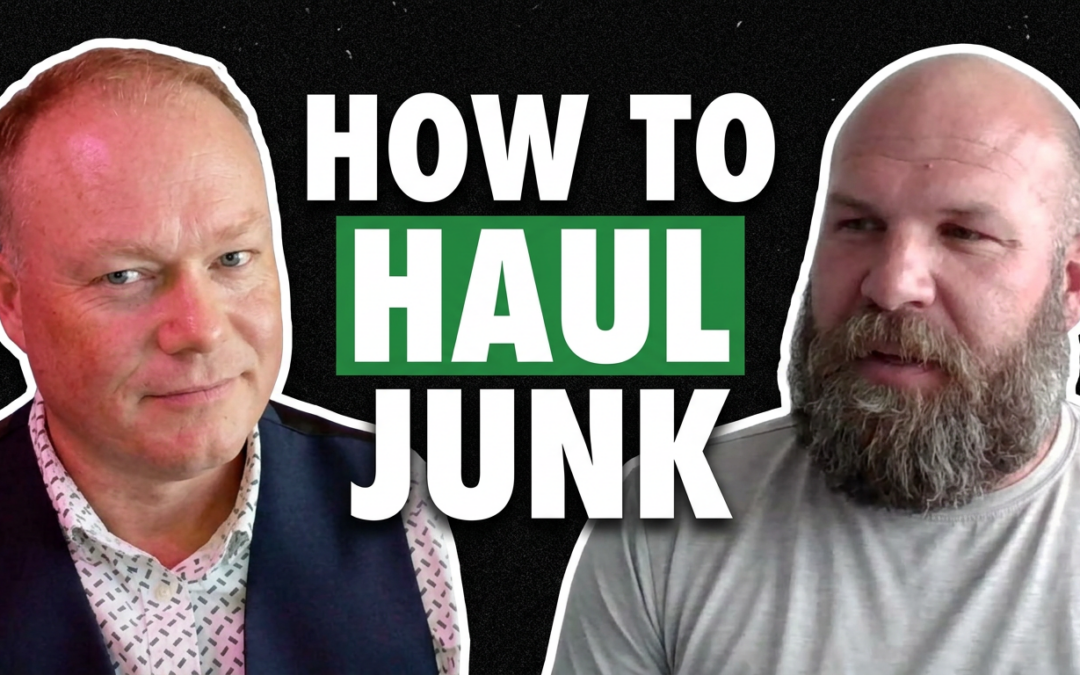
DJ Neuville – Haul It All
On the Best Skill an Employee Can Have: “The biggest asset in this job is, can you show up? Can you show up? Can you show up on time?.”
Discover Hidden Savings in Commercial Real Estate
Everyone has junk. Whether the stuff that collects as we live our lives and store stuff in a someday pile, or a house move that brings the option of either moving it and storing it again or just trashing it, we all have junk.
DJ Neuville started out in real estate and graduated to building his junk hauling empire. DJ details how he came across this industry and what has helped his business grow.
Listen as DJ explains what it took to start and what he has done to grow his junk hauling business.
Enjoy!
Visit DJ at: https://callhaulitall.com
Sponsors:
Calls On Call Extraordinary Answering Service, phone answering for small businesses: https://callsoncall.com
Some videos have been recorded with Riverside: https://www.riverside.fm/?utm_campaign=campaign_5&utm_medium=affiliate&utm_source=rewardful&via=james-kademan

Podcast Overview:
00:00 Partnering with a longtime friend
10:16 Early morning routine and challenges
16:07 Challenges with billing and payments
20:43 Expanding into commercial real estate
23:50 Choosing the right job opportunities
31:28 Doing hoarder cleanouts
35:45 Hiring and adapting work culture
38:40 Adapting to flexible work hours
47:06 Owning and communicating mistakes
50:45 Working with donation centers
55:55 Addressing employee hygiene concerns
Podcast Transcription:
DJ Neuville [00:00:00]:
someone sells a house, you pretty much guarantee there is a junk removal opportunity on every, almost every single house. Almost everybody’s got old paint in their house, in the basement that they don’t want, that the next buyer doesn’t want. They might think the next buyer wants it. They don’t want it. They might have a few things left. They might have a full house. It might be a full estate. I mean, that’s just the key.
James Kademan [00:00:22]:
You have found Authentic Business Adventures, the business program that brings you the struggle stories, And triumphant successes of business owners across the land. Downloadable audio episodes can be found in the podcast link found at drawincustomers.com. We’re locally underwritten by the Bank of Sun Prairie, Calls On Call Extraordinary Answering Service, as well as the Bold Business Book. And today we’re welcoming slash preparing to learn from DJ Newville of Haul It All. And DJ, I believe we’re talking junk today. So how is the junk hauling business?
DJ Neuville [00:00:55]:
It is great. Everybody’s got junk.
James Kademan [00:00:58]:
Turns out, it turns out. So tell me, let’s just start from the very foundation here. When did you get into the junk hauling business?
DJ Neuville [00:01:05]:
When I was selling real estate, he had a house for sale by owner. He had a hard time selling his house. He ended up listing the house with me. I sold it to him for him. And he said, hey, I do junk removal if you ever are looking for side cash. And I go, what? What the heck is junk removal? He’s like, well, people pay me to get rid of stuff. I’m like, people pay you to get rid of stuff? I didn’t know it ever existed.
James Kademan [00:01:29]:
Yeah.
DJ Neuville [00:01:30]:
I said, sure. I like making cash. So whenever you want to call me. And I ended up working with him. Shoot, ended up going pretty much full-time working with him. And then he said, hey, in a few years I’m going to retire. So just start your own business. We’ll work together.
DJ Neuville [00:01:45]:
We’ll partner together. And if that doesn’t work out, you just split off on your own and do your own thing. So 2019 in December, how it all was started. And we partnered for directly for about a year and we butt heads a lot because we’re, we’re both about similar stuff. So we decided partner is not a good way to go. And it was really kind of like a, like de facto, not even like a formal partnership. Just say, I have a job, come work with me. We’ll split it kind of thing.
DJ Neuville [00:02:16]:
And then Then we just kind of went back to being friends. Still at breakfast with him yesterday. He’s been a great mentor to me and he’s pretty much retired. And I mean, business just took off from there. We started with a flatbed trailer and a truck, and then in 2021 I upgraded to a dump trailer. And in 2023 we got rid of the truck and trailer model and we went to box trucks and we started renting U-Hauls.
James Kademan [00:02:45]:
box trucks.
DJ Neuville [00:02:46]:
And then 2026, January this year, we bought 2 of our own box trucks. So now we use, we have 2 22-foot box trucks and then we use U-Hauls as an overflow if we need more than that.
James Kademan [00:02:59]:
All right. I love this, DJ, cuz we interviewed you, or I interviewed you, whatever, in late ’22. So you’ve been, would’ve been using the trailer and at, at that point in late 2022, I mean, we’re talking the tail end of the pandemic-ish. Um, what, how many employees did you have back then?
DJ Neuville [00:03:20]:
Uh, I was pretty much sole operator. I had one guy that was pretty much full-time, but like full-time, part-time, one guy.
James Kademan [00:03:29]:
Okay.
DJ Neuville [00:03:30]:
Now we have, now there’s, I have 8 guys. There’s 10 of us total.
James Kademan [00:03:36]:
Wow. That’s incredible.
DJ Neuville [00:03:37]:
In just a few years. I hired a CFO. In January. I’m the CEO now. I’m not just an operator. And then I have, uh, 3 truck leads and then labor guy, labor guys.
James Kademan [00:03:50]:
All right. So let’s talk employees from essentially the hierarchy here. How did you find your CFO?
DJ Neuville [00:03:57]:
He found me. I went to college with him. I’ve known him for many years. He invested in real estate and he actually used to be part owner of Harker Heaton and Kuhling. And he sold his shares, I think it was 8 years ago or so, and just got into real estate and different avenues. And then, and I’ve always just stayed good friends with him. And he came to me in January and, well, late December, early January and said, hey, I’m looking for a new avenue and I thought of you and are you ready to just take this to a whole nother level? And we put together a plan. He bought into the company and Here we are.
James Kademan [00:04:36]:
All right. You’re talking January this year?
DJ Neuville [00:04:38]:
This year.
James Kademan [00:04:39]:
Yes. Okay.
DJ Neuville [00:04:40]:
Yes.
James Kademan [00:04:41]:
So tell me about that conversation when he first comes to you and he’s like, hey, I want to take this to the next level. Were you like, what does this mean? Or what is next level? Or I got this, or this guy’s pretty sharp. Let me see what’s going on. What was your first reaction?
DJ Neuville [00:04:55]:
No, I’ve known that he’s always been, everything he’s touched for investments have done really well. So. That’s why we’ve always stayed in touch and contact. I did have lots of questions, a lot of skepticalism. I was skeptical about a lot of things because I’ve always been owner-operator, full control of everything. And he said, hey, if you’re interested in not being an owner-operator, then I’m interested. If you want to stay as operating on the truck all the time, And stay small potatoes, no problem. You’ll— I know you’ll make good money doing that, but that’s not what I’m interested in.
DJ Neuville [00:05:31]:
I’m interested in if we want to build this into something big, like the big franchise competitors and go for that competition. If you’re interested, I’m interested. And I did a lot of soul searching. I’m 44 years old. I, I know that my shelf life is limited on when I can be on the truck all the time. I love being on the truck all the time. So it’s a difficult transition. But I know that when I’m 50, I’m not gonna love being on the truck all the time.
DJ Neuville [00:06:00]:
And I get hurt all— my guys all have a running joke. I’m the one that gets hurt the most cuz I always move faster than my brain catches me. So it’s really easy to truly tell a new employee, there’s nothing you can do that I haven’t done cuz I probably have hurt myself. So just be careful. Safety. And when I say safety is my Number one key. It is here, but everybody laughs because I’m the one that would wreck the days since the last injury board.
James Kademan [00:06:28]:
Funny.
DJ Neuville [00:06:30]:
Um, so yeah, that’s, that was our focus has been now of obviously it’s a transition. You can’t just go from the truck into the office. So we’ve been transitioning me completely off the truck. I think it’s been almost a month since I’ve been on an actual job site. Maybe not 3 weeks ago, but it’s more now of just training. If I go out and do like a small demo or like when we cut up hot tubs, it’s training the new guys of, hey, here’s how you do it. So I’m not allowed to go out on a job site by myself. Has to be with someone that’s learning.
DJ Neuville [00:07:03]:
So I’m handing it off. All right.
James Kademan [00:07:05]:
No, is that a rule that you made or is it my—
DJ Neuville [00:07:09]:
Well, both, both my So my CFO is Luke Hyer. It’s both of ours. It’s both of our commitment of, hey, you’re not gonna get off of the— we can’t scale the business with me being on the truck. It’s just, it’s hard to do.
James Kademan [00:07:23]:
Oh.
DJ Neuville [00:07:24]:
I’m making that commitment. It’s difficult mentally. I don’t like sitting in front of a— thankfully I have a laptop ’cause I can’t just sit in one spot. Um, I love, I love just grabbing my laptop and going anywhere. And doing what I need to do. But yeah, I like the physical labor. That’s one of the reasons I got into the job. So there’s still always, there’ll be some avenues where I’m like, hey, okay, for half a day, I’m going out to help with the guys.
DJ Neuville [00:07:50]:
And I think it, I know for my guys, it builds a lot of trust and respect when I can say to them, hey, I promise you there’s nothing that you are seeing today that I haven’t done. And if it gets bad enough, I’ll be out there and I’ll come help you. Like we had 4 freezers today. And thankfully, originally 2 of them were going to be full and they were dead for several months, the person said, and they were outside.
James Kademan [00:08:18]:
Oh.
DJ Neuville [00:08:18]:
And I said, well, that’s hazard pay. So I can tell you what the price would be for those. And thankfully they said, no, we’re going to clean them out, which is awesome. But had they had said, no, we’re going to pay you, more than likely I’d be out there with a respirator. Helping them because I, I will take on the worst of the worst.
James Kademan [00:08:38]:
All right. You know what’s interesting? I guess you and I probably have a similar mindset. I used to be a mechanic and I still miss that some days because now I’m at a computer way more than I want to be. ‘Cause I enjoy that physical work with your hands and doing the things, fixing the stuff, moving and shaking, but In the, in the industry, as you grow your business, you end up staring at spreadsheets and talking to people, employees and stuff like that, more than actually going out and moving your body, which this year, there’s 2 opposing ideals because your body’s like, let’s go on front lines. And the other part’s like, well, you want to scale this thing? You got to look at some spreadsheets.
DJ Neuville [00:09:23]:
Yeah.
James Kademan [00:09:24]:
So tell me a story. How, it sounds like that transition has been fairly recent.
DJ Neuville [00:09:28]:
Yeah.
James Kademan [00:09:29]:
Since January. Yep. How has that transition gone?
DJ Neuville [00:09:33]:
It’s going really well. And actually, I mean, to be fair to myself, I did try to slowly scale myself off of the truck last year. I just wasn’t really good at it. Now I’m committed where it’s, we have to. So when I have to and, and I realize the The value of getting all the bookwork done the same day or the same week, as opposed to, hey, it’s the end of the quarter or it’s the end of the year and we have 6 weeks of stuff to do. This is way better. Even if it’s short-term pain of, hey, I’m in. And the nice thing, like, so I’m pretty much still physical every day with the guys because like in the morning, I’m, I’m an early riser.
DJ Neuville [00:10:16]:
I’m up by 5, 5:30 every morning and I usually get here. to the shop before anybody, and I’ll start working on the trucks of getting ’em ready for the day. So eventually that role’s gonna go away too. But being a small business, we can’t just hire everything out. So I’m still the scheduler and I’m still trying to help coordinate the trucks to, if we can consolidate trucks, it keeps us from going the 2 trucks to the landfill. So I’m doing a lot of that and I think that’s what’s helping with the transition. Because if you just took me and threw me in an office somewhere and said, you’re stuck here. I’d probably just say, no, I’d rather go flip burgers at McDonald’s because at least I can move around.
James Kademan [00:10:56]:
In 2 weeks, you’ll be a billionaire.
DJ Neuville [00:10:57]:
No, that’s not the case, but still, you get the idea. If you just, if you literally just put me in a cage and said, you can’t leave, I don’t think I could do it.
James Kademan [00:11:06]:
All right.
DJ Neuville [00:11:06]:
All right. I tried that before. I don’t think I can do that.
James Kademan [00:11:10]:
Well, you let us know and Calls on Call can help you, DJ.
DJ Neuville [00:11:14]:
We’re gonna get there.
James Kademan [00:11:15]:
That’s, uh, there’s a psychology test that, uh, I forget who brought it up to me, but it was something like, if you imagine yourself in a solid white room with no windows and no doors and you’re just put there, how do you feel? And I remember doing that exercise with somebody else and this The person I was with is like, I feel so peaceful and calm. And I’m raging out, trying to figure out a way to break out of that room.
DJ Neuville [00:11:47]:
My anxiety level went up just you asking the question. Not even, obviously I’m not even facing that. My anxiety level goes up. I would try to find a way to crawl through that, run right through that white room.
James Kademan [00:11:57]:
Yeah. It’s so interesting. I’m like, how is that a psychology test? That’s prison. You just described Solitary confinement.
DJ Neuville [00:12:07]:
Yep.
James Kademan [00:12:07]:
That was so funny listening to this person. I feel zen. I feel so at peace. I have no worries. What about oxygen? So, so interesting. So the CFO comes on and CFO says, hey man, let me see what, what does he look at first?
DJ Neuville [00:12:28]:
Um, Well, from a purely now 6-year before this year, 6 or 7-year operating standpoint, books. We gotta start looking at books and getting way more organized in books than we have. We went to a new computer system. We went away from QuickBooks. So happy to get away from QuickBooks.
James Kademan [00:12:49]:
Congratulations.
DJ Neuville [00:12:51]:
We’re in the Aptura world. Shout out to the Little small business in Kansas City, great service industry system that does everything. It’s archaic, but it’s like perfect to what every, everybody needs. It’s awesome. And their fam, you call there and they’ll answer the phone and they’ll get your solution fixed. It’s not, nothing’s outsourced. They’re, they’re a great company.
James Kademan [00:13:16]:
All right.
DJ Neuville [00:13:16]:
What is it?
James Kademan [00:13:17]:
What’s the name of the company?
DJ Neuville [00:13:18]:
I never pronounce it correctly. It’s I think it’s Aptura.
James Kademan [00:13:22]:
Okay.
DJ Neuville [00:13:22]:
I could—
James Kademan [00:13:23]:
would it be easier to spell it?
DJ Neuville [00:13:25]:
Uh, if I knew the spelling.
James Kademan [00:13:28]:
We’ll throw a link in the, in the description here.
DJ Neuville [00:13:31]:
Yeah, I’ll send you a link. They’re a great company. All right. Super, super good.
James Kademan [00:13:34]:
Anything that gets rid of QuickBooks, I feel is a move in the right direction.
DJ Neuville [00:13:38]:
They, the great thing about it, I mean, it’s tailored to the service industry. The reason why I know about it is Luke used it at Higher, at, uh, Higher Quality or Harker Heating and Cooling. Sorry, Harker Heating and Cooling. And it’s just tailored perfect for anybody. If you, if you have a, like I go in and put a work order in and my truck leads can click a link and punch into the, to the work order. And when it’s done, it’ll punch out to the work order, comes to me. I just approve the work order, approve the hours, create a sale off of it, creates a receipt. I put the, I approve their time and it’s all done one, one in one system.
DJ Neuville [00:14:15]:
There is no, I mean, QuickBooks is, was helpful, but it just pieced out different stuff and they’d be like, oh yeah, we sort of do that.
James Kademan [00:14:26]:
Yeah.
DJ Neuville [00:14:26]:
This literally does it. And it’s all in one and it’s one system and it has a scheduling board and everything, which is super, super helpful, especially as we try to scale and get more and more trucks.
James Kademan [00:14:37]:
That’s awesome. Yeah. So CFO initially, he looked at your books and he is like, hey, We gotta sort some stuff out cuz there’s a little bit of chaos here, or maybe just stuff is slipping through the cracks. Is that the idea?
DJ Neuville [00:14:50]:
Yeah. Well, I just do a terrible job of recording anything. Like, self-admit, totally admit, I’m a quarterly, yearly kind of person with, but I don’t like being in front of a computer. So if it’s easier to just put it in a shoebox and we’ll do it later.
James Kademan [00:15:05]:
Right on. Does that include billing?
DJ Neuville [00:15:08]:
Sometimes. And stuff falls in the cracks that way, or our AR would get behind because, hey, they didn’t get a bill or they didn’t get it right. Yeah. So way more organized on that, on all that.
James Kademan [00:15:20]:
That is awesome. I can remember back when I had my copier repair company, I had a client call and they’re like, hey, are you going to send me an invoice? And I was like, that’s a terrible phone call to get.
DJ Neuville [00:15:32]:
Terrible phone call. I’ve gotten those as well too.
James Kademan [00:15:34]:
I should have sent that invoice right away, but it’s like, hey, I’ll get to it. Whatever. I got other stuff to do. Or you just keep doing other jobs that would bring money if you sent them an invoice. But it was one of those wake-up calls. You’re like, okay, that’s probably not good. We should fix that.
DJ Neuville [00:15:51]:
It’s kind of really fascinating, especially on owner-operator level. If people really looked at, okay, why are your accounts receivable high? I would say probably at least 50% of the time is because of the owner-operator.
James Kademan [00:16:06]:
All right.
DJ Neuville [00:16:07]:
Because you didn’t put a bill in on time. Because if you have, like us too, we have customers that are net 30. Well, they net 30 when they get the bill, not when we do the work. So if they don’t get the bill, well, depending on which ones, you know, if I, if I take 2 weeks to send them a bill, I’m not gonna net 30 them in 15 days. I hope they paid in, in those 15 days, but if I don’t send them a bill, that’s really on me that it took me 2 weeks to get it to them. And I think that’s, Oh, way overlooked on a lot of owner operators. I mean, it is always just easier. Hey, let’s go get more work.
DJ Neuville [00:16:38]:
Let’s go get more work. Let’s go get more work.
James Kademan [00:16:41]:
Also, sales does not always—
DJ Neuville [00:16:43]:
you want to get paid, right?
James Kademan [00:16:46]:
Totally want to get paid.
DJ Neuville [00:16:47]:
Yeah.
James Kademan [00:16:48]:
Sales, more sales does not always necessarily solve all the problems. Tell me, uh, next steps the CFO did. I imagine he looked at your equipment and stuff like that and said, hey, we’re bleeding money here. We could use money here kind of thing, or what happened there?
DJ Neuville [00:17:02]:
Yeah. So that’s when we made the decision to go from U-Haul rentals. We were spending a ton of money on U-Haul rentals. And the nice thing was if we had a slow week, we didn’t have a U-Haul rental. The terrible thing was we were way overpaying for U-Haul rentals. We could have bought trucks, had ’em paid for already. So we bought trucks. All right.
James Kademan [00:17:22]:
You’re talking maintenance and all that kind of stuff.
DJ Neuville [00:17:24]:
Yeah. Yeah. When we really figured out, so that was kind of the lie I always told myself was, okay, you have a U-Haul or a lease truck, wherever it doesn’t have to be U-Haul. It’s great. All your maintenance is done in, a lot of your insurance is covered in it. Great. It’s all in one. Your truck breaks down, you call and get another truck.
DJ Neuville [00:17:43]:
Wonderful. You pay for that experience and you don’t realize how much you pay for that experience. So Now, obviously we still have those things. We have maintenance and we have all that, but if you put it on a reg— a regular schedule and you just keep track of it, it is cheaper to own than it is to rent, especially in this industry where if you’re using a truck all the time, constantly needing it, there’s tons of benefits. We got our trucks lettered, which is like, I mean, they’re literally, they’re billboards.
James Kademan [00:18:15]:
Mm-hmm.
DJ Neuville [00:18:15]:
We actually don’t have a sign at our shop because Our trucks are our billboards. We park ’em right out front. That’s our billboard. And I think we’ve gotten, we just got ’em, the trucks done. The second one just got done. We’ve had over $1,000 in jobs already just from in a month and a half from the trucks being parked in front of the shop.
James Kademan [00:18:34]:
It is so interesting you mentioned the, the lettering on the trucks here, cuz I, I had, have had vehicles lettered up for different businesses and depending upon the industry, it was either really good. Or sometimes when I had, I had a truck that was lettered up for Calls on Call and I had an office that was above a bar. And so I had somebody tell me, they’re like, you must be drinking all the time.
DJ Neuville [00:18:58]:
Yeah.
James Kademan [00:18:58]:
And I was like, what are you talking about? And I didn’t realize that I’m parking in front of this bar 6 hours a day, 8 hours a day. So like a lot, very often. And I was like, oh, you don’t know that I’m in an office above the bar. You don’t even know what that building is. There’s no signage. You just know I’m in front of a bar.
DJ Neuville [00:19:16]:
I’m at the bar. I’m in front of the bar. Yeah. Yeah. I bet I was warned that actually as a realtor, um, my broker at the time told me the same thing. ‘Cause if you get a truck letter, just so you know, everybody knows where you are all the time. So if you’re a type that goes to a bar all the time, people will notice and they will say something.
James Kademan [00:19:31]:
Get a, get another vehicle or something like that. Yeah. For our particular industry, it didn’t make sense. For printer repair, it did well. I imagine for junk hauling. ‘Cause someone’s like, oh, they’re behind you at a red light. I totally got junk, whatever.
DJ Neuville [00:19:46]:
I actually had somebody take a picture. Well, they asked me first, thankfully, of the back of my shirt at Menards a couple times, 2 times now.
James Kademan [00:19:53]:
Oh, that’s awesome.
DJ Neuville [00:19:54]:
Well, Menards and Hy-Vee. They said, hey, I need junk removed and I see on the back of your shirt you do junk removal. And they took a picture of my shirt for the phone number. I was like, well, I can hand you a card. That’s cool. Take a picture.
James Kademan [00:20:08]:
Yeah, that’s awesome. That is awesome. Tell me, so CFO, did CFO dig in any other stuff yet or still too soon to tell?
DJ Neuville [00:20:16]:
Um, well, we’re, we’re working on marketing more. We actually redid our website. We had Powder Keg redo our website. I’m sure you know what Powder Keg is in Madison. Um, they did a really good job and Yeah. I mean, we’re just, we’re just brainstorming to, we know we don’t need to reinvent anything in the industry. There’s people that need junk removal. We’re just trying to find those people.
DJ Neuville [00:20:43]:
We do a really good job at the residential part. We’re trying to find the commercial aspect and more so commercial. Like, I know what we need to do. Like one of our main targets is realtors because that’s why I started this was because of real estate. So we’re making a huge push of reinvesting with our, or reinvesting our relationships with realtors, because whenever someone sells a house, you pretty much guarantee there is a junk removal opportunity on every, almost every single house. Almost everybody’s got old paint in their house, in the basement that they don’t want, that the next buyer doesn’t want. They might think the next buyer wants it. They don’t want it.
DJ Neuville [00:21:26]:
They might have a few things left. They might have a full house. It might be a full estate. I mean, that’s just the key. And we’ve kind of forgotten that that’s our key. So now we’re refocused on realtors are our key. They’re our friends. And we’re actually going live with a new thing that if you don’t want to, if you can’t pay or don’t want to pay before closing, we’ll wait 60 days to get paid from a residential customer.
DJ Neuville [00:21:52]:
And I don’t know of any other. I’m sure there’s other companies that offer that. I don’t know of anybody that upfront offers it, and we’re upfront offering. Hey, if you need sixty days to pay, great. We’ll we’ll we’ll be partnering with a realtor. We know you’re through a title company. We’re good. After sixty days, we’ll figure it out.
DJ Neuville [00:22:11]:
We’re not going to charge you a late fee. You will owe us, but you know, but we’re doing that to help people because there’s a lot of people that are. They have a lot of equity in their house. They don’t have the cash flow, but they still need a solution. And then they think my only solution is I have to go rent a truck or I have to go do this myself. And they’re overwhelmed and selling, buying and selling a house is like the biggest purchase of your entire life. Sometimes a $1,000 job can bring so much relief. And like I had a lady the other day that said, well, this job isn’t big.
DJ Neuville [00:22:43]:
It’s only like $1,000. And I said, well, we do all the big jobs, little jobs. We do $100 jobs. We do every kind of job because we know that little one thing might be the thing that really pushes you over the edge or helps you, you know, relieve you. Or it could be a $10,000 job that, geez, I don’t even know. You walk in and I didn’t know grandma was keeping 4,000 square feet of Christmas decorations.
James Kademan [00:23:08]:
So true. That’s so funny. You remind me of this guy, this insurance person that I know just in the circles. And he’s one of those people that I see him, he’s hustling and all that kind of stuff, but I will never use him for insurance because I asked him about this one thing and he told me straight up, I’m not gonna make enough money on that.
DJ Neuville [00:23:27]:
Oof. No.
James Kademan [00:23:29]:
And I’m like, okay, right? I find another insurance person that does. Now I got my insurance stuff with them. I’m paying many thousands of dollars every year with that person. But because that dude was just like, oh, you’re not, you’re not big enough for me.
DJ Neuville [00:23:42]:
You’re not big enough for me. We really try not.
James Kademan [00:23:46]:
Yeah. I don’t know if he knows this or not, but there’s other insurance people around.
DJ Neuville [00:23:50]:
Yeah, exactly. He could have just said, hey, this is a better suited for this thing. Um, here’s a better suited person for you. And you might’ve gone back to that guy again. But yeah, I, we really try not to push the arrogance of stuff like that because Literally what that one thing might be. And same thing, that one thing for that one job, they could, it could open your door to a ton of things. And I’ve had, I have had plenty of pain in the industry of saying when I said no to a job, I actually said no to one estimate once. And thankfully he did call me back for a different job because it was the first estimate was, hey, do you pick up scrap metal for free.
DJ Neuville [00:24:33]:
And I just said right away, what I used to say right away is, no, no way. We don’t do anything for free. Well, it was a lot more complicated than that. It was an entire industrial building full of all kinds of metal that needed to be cleaned out. And all I just hastily said was no. So our new model, pretty much since that day, Was we’re not going to just say no. We’re going to ask a little more questions before we say no. Oh, had I just asked a few more questions, I would have known.
DJ Neuville [00:25:07]:
And then he’d call me back a few months later and same property, had a barn he needed to clean out. And I went out there. I’m like, hey, I feel really bad about the metal thing. And he’s like, yeah, I ended up having my guys do it because he runs an asphalt company. And he’s like, yeah, we did like $3,000 or $4,000 in scrap metal. I was like, Okay. That, that hurts. And then what tipped that even more is he referred me to a real estate, a realtor in the area that has done, I would say we’ve done like $20,000 in business with her since then.
DJ Neuville [00:25:41]:
So that could have been a huge miss that I wouldn’t have even known just because I said no rudely. And thankfully he still called me back when he had junk removal. So—
James Kademan [00:25:52]:
I imagine, I mean, in your defense, right? You’re probably getting a bunch of calls or people like, hey, I got whatever, a loose screw. Will you come pick it up for free? ‘Cause you can sell it to the metal place or whatever.
DJ Neuville [00:26:02]:
Right. Yeah. And we do get that a lot. And that, like I said, it doesn’t mean we go do it, but at least we try to be, hey, let’s not be quite as rigid and at least ask some questions before you just say no. And it, cause it was, it was just a quick, no, we don’t do free junk pickup. No, never.
James Kademan [00:26:18]:
That’s a huge, that’s a huge point about the value, lifetime value of a client and the referrals that they get. Like one good connection can net an incredible amount.
DJ Neuville [00:26:30]:
Yes. Yeah. Yeah. It was, I think it was like a $1,000 barn clean out and led to, I mean, we still do tons of work for the, for Same realtor.
James Kademan [00:26:41]:
That’s awesome. And I imagine when it comes to junk, correct me if I’m wrong, if somebody calls you for junk one time, it’s not like, well, that’s all the junk I’m ever going to collect in my entire life.
DJ Neuville [00:26:51]:
Not usually.
James Kademan [00:26:53]:
I’m going to collect junk. I’m going to keep collecting junk. And after you take this junk, I’m going to start over and I’m going to get more junk and I’m going to have you on speed dial at some point.
DJ Neuville [00:27:03]:
Yeah, we do get, we get a lot of repeat business. I mean, a lot of what our business is are people moving and they’re not in the area, but not only that, I mean, I can’t tell you how many times, hey, I’m moving out of the area, or they moved out of the area and they still refer people to you in that area because they’re still friends. I mean, this day and age, social media, you’re staying connected with everybody forever. If you’re friends with one person on Facebook, it’s like you never get rid of them. Kind of like junk.
James Kademan [00:27:30]:
Yeah. Tell me a story about the, the rest of your crew beyond your CFO. You gotta have drivers and stuff like this. Is it— do you need CDL or are these trucks small enough, no air brakes, you don’t have to worry about it?
DJ Neuville [00:27:42]:
We do not need CDLs.
James Kademan [00:27:44]:
Okay.
DJ Neuville [00:27:44]:
We do not need CDLs. We’re under 26,000 pounds. So.
James Kademan [00:27:47]:
All right. But I imagine you do have to have people that don’t have bad driving records or SR-22 stuff or DUIs, all that.
DJ Neuville [00:27:55]:
Yep, we do. Uh, we have to do a DOT Um, physical and all that. And we have to do a road test and yeah, there’s certain things that we have to, that we have to be compliant with. Um, especially because we go to Illinois too. So we’re interstate travel.
James Kademan [00:28:11]:
Okay.
DJ Neuville [00:28:13]:
So we have to log hours. We have a log and all basically all the fun stuff that we have to do for regulations, the yearly check on the truck.
James Kademan [00:28:22]:
Right on. And is that tough to find? As far as people go?
DJ Neuville [00:28:27]:
It is more challenging. Um, cuz you have the big thing, like for insurance, you have to be over 21. If you’re under 21, insurance rates are just astronomical, even if you have perfect driving record. So yeah, that makes it a little more complicated. Um, you have to be over 21, but the nice, the, the good and the bad of the industry is It doesn’t take a lot of skill knowledge in the industry. That’s the good. That’s also the bad. Because, you know, people say, well, anybody can do it.
James Kademan [00:29:01]:
Okay.
DJ Neuville [00:29:01]:
Well, that’s true. Not everybody can do it right. Not everybody can do it efficiently. I tell customers all the time, okay, that’s great. We’re not the cheapest. Pretend to be the cheapest and never will be the cheapest. But I just will warn you, whoever you hire to do it, make sure they’re insured. You know, you’re saving $100, but if you get your wall nicked and they say, well, we don’t have insurance, too bad.
DJ Neuville [00:29:22]:
Now you’re going to spend a lot more than $100. Somebody gets hurt. I mean, there’s a lot of pretenders in our industry. A lot of people that are just, hey, I’m grabbing stuff and throwing it on a pickup truck. It’s that easy. And I’m going to the dump. Not knocking anybody. They can get away with that.
James Kademan [00:29:39]:
Great.
DJ Neuville [00:29:39]:
More power to them. But to me, there’s a lot of value in, okay, we’re professional. We’re gonna properly recycle everything. We’re not throwing stuff in ditches. Because what people don’t understand is if you do get, if, if they hire me as junk removal and I take a bunch of their stuff and I throw it in a ditch and it says their number and name, like in a paper or something, the cops are gonna call them. It’s gonna all flow back to them first. And then you have to find that, find that company. Okay.
DJ Neuville [00:30:09]:
Did you do this and whatever? They may not be around anymore.
James Kademan [00:30:11]:
Yeah.
DJ Neuville [00:30:12]:
So, um, yeah, the, the hard thing is finding people that are willing to, to work and learn a trade that they think, well, this can’t be that hard to do. Yeah, you’re right. It isn’t that hard to do, but it is still a trade because there is some skill to it. It, there are quite a few tricks of our trade that make things a lot easier that people don’t realize. Well, just throwing junk in the truck. No, it’s, Not quite that easy. And anytime someone says, hey, that sounds really easy, I say, when can you start?
James Kademan [00:30:50]:
That sounds perfect. Yeah. Come on up.
DJ Neuville [00:30:52]:
Come on. We’ll show you. There are some days it is easy. That’s for sure. There are a lot of days that is not easy.
James Kademan [00:31:00]:
I imagine junk is such a broad term that that could be anything, right?
DJ Neuville [00:31:04]:
If I have to go pick up 2 couches in a garage, sure. That sounds easy. If I have to go pick up 2 couches in a basement that your grandma had 5 cats all over, a lot more difficult. Fair. Fair. Junk is a wide term. I mean, like I said, we do everything big, small, other. $4,000 or 4,000 square feet estate cleanouts we’ve had that are stacked to the ceiling.
DJ Neuville [00:31:28]:
We do the full, we’ve done the full-on hoarder cleanouts. Not our favorite thing to do. Hard to get guys motivated to do. But I tell you, I will say those jobs are not my favorite, but sometimes are the most rewarding because you can really change lives. Um, a lot of times in a hoarding situation, the hoarder’s not there anymore. They passed away or whatever, but you literally could be changing the lives of those kids or whoever that’s left that’s facing the daunting task of what am I going to do? You know, there’s so many people out there that are like, well, just walk away, just walk away from it. Okay. How are you just going to walk away from a house? Someone still has to deal with it.
DJ Neuville [00:32:14]:
And, you know, thankfully there are people that still care that don’t say, well, I’m not going to let a bank deal with it. I’m not going to let a landlord deal with it. Because the reality is that they walk away, it’s not going to probably change my outlook because it’s probably going to be the landlord who calls me and says, uh, Look what they walked away from.
James Kademan [00:32:30]:
The junk is still there.
DJ Neuville [00:32:32]:
Still there. Someone’s got to do it.
James Kademan [00:32:35]:
Tell me a story. I got a couple of questions for you about logistics here. I had a company that back when I had that other business with the printers and copiers, we’d get rid of machines when you sell new ones, whatever. These guys would collect them and they pull out the precious metals and all that kind of stuff. But they would have a lot of stuff on their trailer because we were just One stop in their, in their multiple stops. They had this trailer full of everything, washers, dryers, freezers, computers, whatever. And they were telling, this guy was telling me that people would follow them on the road really close, hoping that something would fall off so that they could make this insurance claim. Is that a thing that you’ve seen?
DJ Neuville [00:33:14]:
That’s a thing. Yes. Okay. I don’t know if I’ve personally seen it happen, but I’ve heard of it happening many times. And I’ve told other, other junk removal companies and operators who started out, they ask me advice. And first thing I tell them is get really good insurance. And that’s why, because same thing with like our trucks. I’ve told our guys, hey, our name is all over it.
DJ Neuville [00:33:37]:
We are now a literal target because people are like, well, that’s a business. That’s not just a, just a guy with his truck anymore. So yeah. I’ve literally seen it where, but yeah, when, and that’s why I’ve always been about safety when we had trailers. Hey, strap everything down. I don’t care. Overstrap it, tarp it. I don’t want anything flying off in someone’s windshield.
DJ Neuville [00:34:02]:
I don’t want them getting hurt for one. For two, I don’t want to have a lawsuit. But yeah, that is, I, I have heard of that being a thing where people are basically chasing lawsuits. Yeah.
James Kademan [00:34:13]:
All right. Yeah. It’s a sad world when, when that’s it. Yeah. I see a trailer full of stuff and I give ’em some distance cuz it’s one thing to hold a business accountable.
DJ Neuville [00:34:21]:
I’m all for that. If something falls off and, and sure, and accidents happen, I’m all for that. But yeah, going to look for it, that’s, that’s something special.
James Kademan [00:34:32]:
I can remember I had a rock come into my windshield from a dump truck or something like that. It, it was actually a conveyor. A concrete conveyor. And I got the whole dash cam, the video and stuff like that. And I reached out and I was so upset, not because the rock hit my windshield, but like, now I gotta take the time to call and I gotta dink around with the windshield people. I’m like, I just wanna move on with my life and do my thing. So I called up and they’re like, oh yeah, how do you know it was us? I sent them the video. They got it taken care of.
James Kademan [00:35:00]:
It was fine, but it was just time outta my day that I can’t imagine someone being like, oh.
DJ Neuville [00:35:05]:
Yeah.
James Kademan [00:35:05]:
I want to get a new car because I can blame you for whatever. Like, who has that kind of time? Right.
DJ Neuville [00:35:12]:
I wouldn’t want to go through the lawsuit, the court system to deal with that.
James Kademan [00:35:16]:
But it turns out, I feel like a lot of people do. They’re just looking for that easy buck. Not an honest buck, just an easy one. Like, ugh, get out of here.
DJ Neuville [00:35:25]:
It’s out there.
James Kademan [00:35:27]:
Yep. Yeah. Anyways, tell me a story also about employees, because you got to find people that are local. People that are willing to lift some weight, people that are willing to deal with a couch that’s had some cats hanging out on it for longer than you want. Tell me, how does the interview process go?
DJ Neuville [00:35:45]:
So I’m super laid back. Um, it’s really actually, hey, are you willing to lift stuff? Are you willing to listen? Um, It’s a lot of our employees so far have been referrals from other employees, which has really helped because they know what they’re getting into. Um, I will say the challenge I think that every business owner has and has had to adapt is that I, I don’t like blaming the culture, but it is the culture of not as hard of people wanting to work. But there’s 2 ways you can approach that. You can throw up your arms and say, I can’t find anybody to work and not have employees, or you can adapt. And, you know, it’s mentally tough to adapt because in my mind, what I’ve always was taught was, hey, you work 30, 40 hours a week. That’s just what you do. That’s full-time.
DJ Neuville [00:36:45]:
That is just not the case anymore. Like we did, we were talking about earlier. Um, Yeah. Sometimes people want a day off so they can be ready for a weekend.
James Kademan [00:36:55]:
I want that work-life balance. I want the paycheck from work, but I just want to live my life. That’s the balance, right?
DJ Neuville [00:37:03]:
Yeah. And I mean, how we combat that is we tend to overhire. We hire a lot of part-time guys and I just tell them, hey, if you want more hours, you have to be more willing. You have to be more willing to work more days. You have to be willing to work the days you don’t want to work. If you start off the week by telling me you want a day off and you complain by Friday, you didn’t make enough money. I got nothing to, I got no way to help you. If you work 4 days and I tell you I don’t have work for the 5th day and you want to work, that’s on me.
DJ Neuville [00:37:34]:
And I’ll find, I will literally find work for you. So, um, but that’s going to—
James Kademan [00:37:38]:
I love that you said that. Yeah. I love that you said that.
DJ Neuville [00:37:39]:
And then the other balance is obviously it’s a very physical job. And I think a lot of people underestimate how physical it is when they first start. They’re like, oh, I can do this. And we just laugh because I’m like, yes, you can. But day after day, 8 to 10 hours a day, it can really wear you out, especially in the heat. Like this week, we’re, we’re lower on our jobs. We don’t say no to jobs. We don’t say no to work in heat, but we try to creatively work around the heat.
DJ Neuville [00:38:09]:
We’re not working outside on demo jobs this week. Um, unless it’s an emergency or total time Stamp. We try to just be creative to it. And a lot of times most customers, unless they’re in a hurry, they completely understand. They don’t want to be out in the heat either. So if the shed that’s been needed to be knocked down for 2 years, it can wait another week. And there’s so much driven and not just our industry of, it’s just our lifestyle of, oh, well, I need it done today. I want it done today.
DJ Neuville [00:38:40]:
When you start asking questions, a lot of times you can schedule something and it Makes it easier for everybody. But yeah, the, the, the work thing, I mean, you just have to adapt. I mean, that’s the way I think a lot of business owners have figured it out. The successful ones, if you want people working, you might only get ’em for 30 hours and you gotta get the best you can out of ’em for 30 hours. And that’s why we keep our pool. We’re actually actively hiring again to get our pool up again on guys and, um, But yeah, I mean, our biggest thing is, can you listen? Can you show— the biggest asset in this job is, can you show up? Can you show up? Can you show up on time? Yeah.
James Kademan [00:39:18]:
Oh, that’s a big ask.
DJ Neuville [00:39:20]:
Isn’t that the greatest? I mean, it’s crazy, but I tell people, you know, that sometimes their biggest asset, if you can show up and show up on time.
James Kademan [00:39:29]:
And show up on time, show up sober. Like, whoa, that is way big trifecta here. How about we pick 2 out of 3?
DJ Neuville [00:39:36]:
Yeah.
James Kademan [00:39:39]:
Tell me a story, the worst employee that you’ve ever had, maybe without a name, but—
DJ Neuville [00:39:51]:
I’ve been really lucky. All right. It’s probably going to be hard to think of.
James Kademan [00:39:58]:
Or how about worst or maybe dumbest thing that an employee has ever done? Sooner or later, even the best employees are gonna do something brain dead. But I mean, we do, right?
DJ Neuville [00:40:07]:
I do dumb things all the time.
James Kademan [00:40:09]:
So yeah. No joke. No joke. It hurts more when it’s somebody you’re paying. That’s for sure. When you do it, you’re like, we make mistakes. When they do it, you’re like, I’m paying you. Right?
DJ Neuville [00:40:21]:
Um, man, I, I’m drawing a blank. Let’s come back to that. Give me a little, let me marinate on that a little bit.
James Kademan [00:40:29]:
Let’s flip it. How about the best employee you’ve ever had?
DJ Neuville [00:40:33]:
Uh, that’d be Brad. He’s been with me for 6 years and he literally—
James Kademan [00:40:37]:
6 years?
DJ Neuville [00:40:38]:
5 years, 6 years. Yeah. 5 years for sure. Yeah. And he will do anything I ask him to do. He’s, he’s my number one guy.
James Kademan [00:40:47]:
Shows up, listens. What else we got?
DJ Neuville [00:40:50]:
Shows up, listens, adapts, um, is proactive. He’ll, I mean, you, He’s really good with he trains my other guys. He’s really good at being helping hold them accountable. You know, we just a few months ago had brand new tools and a bunch of tools are missing. And he said to me, “Hey, we got to come up with a new system because tools are missing and guys aren’t being held accountable.” Hey, I agree with you. In the past, I would just keep buying more tools and spinning my wheels. And you know, we just. Little things like that of, hey, I know this drives you crazy, so let’s try to find a different solution.
DJ Neuville [00:41:26]:
So he helps me find solutions.
James Kademan [00:41:27]:
All right. What did you do for the tool thing?
DJ Neuville [00:41:29]:
Uh, we check them in and out. There’s, so 2 of our 3 managers check in tools in the morning. I don’t like that process because I don’t like to feel like a babysitter, but we snap pictures with our cell phone and it’s real easy with a cell phone. Snap pictures to start the day. At the end of the day, you snap pictures to check out the tools. And it just sounds minor. And I told them, I said, it sounds minor and petty until you get to a job and then in the middle of taking apart a bed and you don’t have the right Allen wrench, it’s not petty anymore. Now I’ve got to send someone to go leave the job.
DJ Neuville [00:42:02]:
It’s unprofessional. And we can’t just have 4 sets of tools in the truck and we’re not going to do that because then we’ll have 4 of the same Allen wrenches missing and that won’t solve the problem.
James Kademan [00:42:12]:
Where’s the 10 millimeter?
DJ Neuville [00:42:13]:
Right, exactly.
James Kademan [00:42:16]:
You know, it’s so interesting. I love that you said that about that you don’t like it because we’ve got the same thing, right? We got Big Brother software for our crew that, that works from home. I hate, hate that we have to have that, but I just had to let go of a woman today because she’s watching Twitch videos instead of doing her job. And it’s one of those things where like, if we didn’t have that Big Brother software, We wouldn’t really know what was going on and we would just have to trust that, oh, maybe she’s doing some training or something and she could have milked that system for way longer.
DJ Neuville [00:42:49]:
Yeah.
James Kademan [00:42:49]:
In the end, she milked it for a few weeks, which was a few weeks too long, but I feel like employees don’t necessarily know that that’s the pool of payroll that she is robbing from.
DJ Neuville [00:42:59]:
Yeah.
James Kademan [00:42:59]:
We weren’t able to pay you more because part of the money went to pay her to just watch Twitch videos.
DJ Neuville [00:43:06]:
Yeah.
James Kademan [00:43:06]:
Which is, I mean, that’s, that’s stealing. So we have to have these systems that suck that we need them. It would be super awesome if people were just honest and did their job.
DJ Neuville [00:43:15]:
Yeah.
James Kademan [00:43:15]:
But in the end, yeah, a lot of people aren’t.
DJ Neuville [00:43:18]:
Right.
James Kademan [00:43:18]:
So in order to weed those out so that we can pay you more and perform better and do better for our clients, blah, blah, blah, blah, blah, all the things we gotta do this thing. It sucks, but. That’s where we are. So, yeah. Tell me a story as far as employees go with, uh, communicating with clients, because they’re going to people’s houses or businesses and they got to be nice, but they also got to haul junk. And usually, or often, I can tell you when I used to go to the junkyards for parts and stuff like that, the people that you talk to at the junkyard weren’t always the nicest people in the world. They’re just gruff. They don’t have any customer service demeanor, but you, you got a business.
James Kademan [00:44:01]:
Customer service demeanor is a big deal. How do you train or hire for that?
DJ Neuville [00:44:07]:
So I pretty much tell all my workers that you have to treat every house you walk into like you’re walking into your grandma’s house. Now I’ve had to adjust that a little bit because some grandmas don’t care anymore now if you go in there and start cussing and swearing. But as, so I tell them, let’s pretend you’re walking into my grandma’s house and my grandma does care if you’re doing this or that. Um, it’s just a respect thing. And I think we’re huge on customer service. It’s such a dying part of every industry. It’s sickening. It’s sickening when you go out to eat and you think, okay, I’m going to get one or two things here, probably at this restaurant.
DJ Neuville [00:44:48]:
I’m either going to get good food or good customer service. If I get both, I’m coming back here once a month. Same thing. It’s nothing any different than junk removal. And yeah, I remind my guys, it’s hot. We had a big team meeting at the beginning of the week. It’s hot. It’s nasty.
DJ Neuville [00:45:03]:
We’re going to be extra crabby. Customers are going to be extra crabby. Just consider your— just try to dial it down and consider that everybody’s crabby. It’s hot and nasty outside. No one’s happy about it. Yeah. So we just try to make it a conscious effort and talk about it often. Oh, we overcommunicate to every customer.
DJ Neuville [00:45:24]:
We, I always, I always joke with people, hey, we’re not the cable company. So we give you at least a 2-hour window when we’re coming and we try to tell you when we’re 30 minutes away. So you don’t have to literally sit here and wonder, are they actually going to show up today? Um, but that’s our biggest thing is I’d rather overcommunicate. I’d rather somebody tell me, hey, don’t text me anymore.
James Kademan [00:45:43]:
Yeah.
DJ Neuville [00:45:44]:
Okay, I can do that. Then, man, they never even told me they were 5 minutes late or whatever. So we’re huge on communication. And I think it makes a huge difference to customers. And yes, we, we are professional and we try to teach people, hey, treat it like you’re at someone’s grandma’s house because you probably are at someone’s grandma’s house.
James Kademan [00:46:07]:
Fair. Totally fair. It’s interesting cuz I kind of lump the junk removal with the construction-ish industry. Yeah. And the construction-ish industry is terrible at customer service. They won’t tell you when they’re showing up. I’ve had guys when we had some work being done that showed up at 6 in the morning and so we’re like, fuck, man, I’m still in the shower. Like, yeah, I didn’t know when they were expecting to be there.
James Kademan [00:46:33]:
And they just nonchalantly is just like, this is when we start.
DJ Neuville [00:46:36]:
Yeah.
James Kademan [00:46:37]:
We didn’t communicate that with you. And then there’s other times when they, they just don’t show up and like, oh, we got a different job. We gotta finish that up. Well, just, just let me know, man. Right.
DJ Neuville [00:46:47]:
And that’s, that’s the biggest thing. Like we had a, we had an example today. I forgot to put a, put a customer on a schedule board. It was totally my mistake. She called me and said, hey, when are you coming today?
James Kademan [00:46:58]:
Crap.
DJ Neuville [00:46:59]:
We’re coming. Don’t worry. We’re coming. It was my mistake. She’s like, oh, you’re not coming? Oh no, we’re coming. Don’t worry. I screwed up, but we’re still coming. We’ll figure it out.
DJ Neuville [00:47:06]:
I figured it out and we own our mistakes. I mean, every company makes mistakes. I would say shoot almost daily, something’s not perfect, but customers respect when you make mistakes or yeah, when you just say, hey, look, it’s going to be a week or 2. What works best for you? Or we’re going to do it in the morning. Or, hey, we got to switch off to this other job because it’s raining. As long as you communicate, most people are totally fine with it. And same thing, I just try to think of, okay, so what would I, what would I want if someone was doing junk removal or redoing my roof? How would I want them to communicate? And that’s how I try to treat everybody.
James Kademan [00:47:47]:
Yeah, that’s reasonable. I have a, a question for my crew that I want them to constantly ask. And the question is, does the customer know? Does the client know? Does the caller know? So it’s like we’re in the middle of the calendar, so we just assume everybody can see this. They can’t. They got 50 million other things going on in their life. And this particular thing is only important if you’re not there when you say you’re going to be there. And then all of a sudden, 5-alarm fire, right? So does the customer know? Just let them know.
DJ Neuville [00:48:17]:
That’s a great question. That’s a great question for customers. Does the customer know? Because they need to know.
James Kademan [00:48:24]:
True. Tell me about your shop. Tell me about your shop. ‘Cause you, you’ve expanded, I believe, since we, at least adding trucks and stuff like that.
DJ Neuville [00:48:32]:
Yeah, we have a physical, we actually have, well, one physical location that I’m here at every day in Beloit that, um, that’s where we park our trucks. Um, that’s where we repurpose items. Anything that people throw out that we think we can sell, we sell ’em on Marketplace. And then we have a warehouse in Stoughton that Serves as our big sale place that we have sales. We had one sale last month. We’re going to have another sale next weekend. Um, where we just, it’s 5,000 square feet of stuff that we can repurpose and sell.
James Kademan [00:49:03]:
And is this just, this is junk that you’ve collected?
DJ Neuville [00:49:06]:
Yes.
James Kademan [00:49:07]:
You’re just like, hey, this is more value. It’s better in somebody else’s hands than in a landfill. So it’s basically a huge garage sale.
DJ Neuville [00:49:14]:
Yes. Huge garage sale. When we do ’em, we never set prices. We don’t sit down, just way too much stuff. And I sometimes, I know people don’t like that, but once they start realizing, man, they’re selling stuff super cheap, they really like it. ‘Cause I always tell people, the more you buy it, the better deals you get. We just want to get, we just, I just want to keep this stuff out of the landfill, make some extra money. We’ve already been paid to get rid of it.
DJ Neuville [00:49:43]:
But the big thing is keep it outta the landfill. I mean, so many companies are, okay, well, this is what we do. We collect junk, we throw it in the landfill. That’s what we’re supposed to do. I don’t believe in that model. I believe that we are still supposed to be responsible. And if you can donate it, take the extra 5 minutes and stop at a donation place and donate it. We don’t, I mean, we— Donate probably close to twice as much to what we throw away and resell.
DJ Neuville [00:50:15]:
We donate a ton. All the donation places in Madison know us.
James Kademan [00:50:20]:
All right.
DJ Neuville [00:50:21]:
Yeah.
James Kademan [00:50:21]:
Do they ever see your truck and they’re like, ah, or are they in awe of it?
DJ Neuville [00:50:27]:
Yes, both. Okay. I think there’s times they get overwhelmed with us, but they’ve come to realize we usually aren’t bringing an entire full load to them. Okay. Usually.
James Kademan [00:50:38]:
And I imagine you’re, you’re picky about what’s good, what gets donated versus tossed. Like we’re not giving you a broken alarm clock or something.
DJ Neuville [00:50:45]:
We know which place takes stuff and yeah, we, we are super, I mean, I, I will tell everyone, every place we go to, hey, I don’t want you stuck with junk. I’m not trying to give you junk. If we start unloading, it looks, you don’t want it anymore, throw it back on the truck. No harm, no foul. I’m not gonna make you a And I, that just comes with respect of these, of these places too. You know, like some of them, they’re using underprivileged and underskilled labor. Their managers don’t want to come out and see that you took advantage of them and you have 4 mattresses laying there that they know that they can’t take. I mean, all, pretty much all the managers at the donation places, they know us.
DJ Neuville [00:51:22]:
They like us. As far as I know.
James Kademan [00:51:26]:
You treat them well, they treat you well.
DJ Neuville [00:51:28]:
Yeah.
James Kademan [00:51:28]:
Yeah, I get it. I get it. Tell me a story about the, the landfill stuff. When you do have to dispose of stuff, how big of a deal is that to go to the landfill and get rid of this junk?
DJ Neuville [00:51:41]:
I mean, the Dane County landfill is super easy, except for it’s always busy. But it’s, it’s, I mean, it’s a super easy system. They’re easier than Rock County. We do, we go to both of them. So Madison’s easier because it has a 2-way scale. So you go in, everyone goes in one way and goes out a different way. Very handy. Janesville’s not Rock County, or Janesville, which is Rock County landfill, is not that way, but they’re not as busy as, as well.
DJ Neuville [00:52:10]:
But I don’t know, there, it’s, it’s a pretty easy process. I, I always was kind of stuck on the, hey, we really liked using dump trailers because it takes 2 minutes to hit a button to dump it. When we really started figuring out almost at the same time, we can clear out a box truck. It’s really quick to clear out a box truck. A little bit longer, but the asset there, the bonuses of like a box truck are we can put a lot more in it. Even basically a box truck versus like an MPR dumpster truck. We can put a lot more in a box truck. It’s secure.
DJ Neuville [00:52:48]:
I don’t have to worry about it blowing out, hitting anybody. Even if you have the best tarp system.
James Kademan [00:52:53]:
Yeah.
DJ Neuville [00:52:54]:
Stuff can still blow out, hit somebody, hit their car. If it’s raining, I don’t have to worry about good stuff being wrecked. I don’t have to worry about nasty stuff getting nastier. Because whenever you have a dump trailer, you’re always thinking, well, if it’s snowing or raining and I got 4 mattresses, now you have 600-pound mattresses versus 10-pound mattresses. And you pay at the landfill by weight. You know, makes a difference there too.
James Kademan [00:53:22]:
I bet. I bet.
DJ Neuville [00:53:23]:
So when you— more of a convenience and more of, it’s more of nasty convenience inconvenience. I mean, in winter, if you have a, if you have a dump trailer or open trailer, everything freezes to it. So, you know, you don’t think of that stuff when you have a box truck. It’s in the truck, it’s covered. You’re good.
James Kademan [00:53:38]:
Yeah.
DJ Neuville [00:53:39]:
Long, as long as you don’t put a hole in the truck. And now I’m back to the, one of the things. You asked me about employees that did dumb things. Throwing an item carelessly in the truck and hitting this, the roof of a brand new truck and putting a hole in the truck. No. And then not telling me about it. And I have to find the hole in the truck. Wasn’t a good day.
James Kademan [00:54:06]:
Yeah. So was that replace the whole roof or just slap some duct tape on it?
DJ Neuville [00:54:10]:
No, it was a small, it’s a small hole. We just, we were able to patch it thankfully. 2,000 miles on the truck.
James Kademan [00:54:16]:
Oh yeah. Oof. That is rough. How did that conversation go?
DJ Neuville [00:54:24]:
Um, not so great, but not terri— I mean, I, I, I try not to be a yeller. I try not to get totally up and totally down. The biggest part of the conversation was, hey, I have literally done everything. I’ve screwed up everything. But you have to own it and just tell me, I screwed something up. That’s just the better route. Because if I find it on my own, especially when you knew you did it, that makes me mad.
James Kademan [00:54:52]:
Mm-hmm.
DJ Neuville [00:54:53]:
I’d rather, I, because there are times that stuff happens where truthfully people don’t even know that they broke something or whatever. That, that’s a little different too. But when you know, I just tell ’em, just tell me, please just tell me, save me the headache. At least I can go smash my head against the wall. Right away. I don’t have to have a delayed smash my head against the wall.
James Kademan [00:55:11]:
Or do it in front of employees. Like, I didn’t want you to see me punch that thing. So we gotta keep this sane here, or at least the illusion of sanity. Yep.
DJ Neuville [00:55:23]:
I knew something would come to me. That’s why I said, let’s let that marinate a little bit.
James Kademan [00:55:27]:
Yeah. So in that case, did you find out because it rained one day and you’re like, why am I getting wet inside this truck?
DJ Neuville [00:55:33]:
No, I was just at me unloading it. At me unloading it, looked up and I’m like, can see daylight. So that’s not good. You’re not supposed to be able to see daylight in these trucks. And it really wasn’t bad. It was more of like a scrape and just a tiny little puncture hole, but all right. Could have been worse.
James Kademan [00:55:50]:
Can’t we have nice things?
DJ Neuville [00:55:52]:
No, no, we can’t.
James Kademan [00:55:55]:
Tell me, I’m gonna ask you a question. I don’t mean to be mean or anything like that, but I imagine especially on a day like today. It’s 90-whatever degrees out and humid. Towards the end of the day, employees are gonna have a funk to ’em, but they still gotta go to a job. And I don’t know if any of your employees smoke or anything like that, but what do you do or what can you do to prevent people, your employees, from having a funk when they go to a new client, new customer who doesn’t care about any of the other jobs that that person’s just been to?
DJ Neuville [00:56:24]:
That’s a great question. We don’t really have a system, but we probably should come up with a system.
James Kademan [00:56:29]:
All right. All right.
DJ Neuville [00:56:30]:
But I know, I know, I know myself because I’m a heavy sweater. Like I will sweat in winter. I’m, I’m actually, I’m in 70-degree shop, not moving right now. And I have a little bit of sweat because I just sweat all the time. And I personally bring deodorant and another shirt, but then we never really totally have always talked about that. So it’s a good point. I have one guy that loves to wear sweatshirts. Last summer or summer.
DJ Neuville [00:56:56]:
He’s not today, but last summer we did a deck removal and it was 80 degrees out, direct sunlight, and he was wearing a sweatshirt. And I’m like, dude, really? Can you, I said, can you just, can I just ask you why? He said, well, I don’t know. Just, I like to sweat. I like that. I’m like, you’re killing me. I, I’m literally sweating thinking of how hot you are. He did take it off. He had long sleeves underneath, but he did take it off.
DJ Neuville [00:57:23]:
Yeah.
James Kademan [00:57:24]:
Oh my gosh. Not enough warm-up.
DJ Neuville [00:57:26]:
I kind of wonder about what his, uh, you kind of wonder if person’s psychotic, if you can be 80 degrees and working and tearing a deck off and you don’t have any clothing. No.
James Kademan [00:57:37]:
He’s trying to cut weight for a boxing match he’s got going or something.
DJ Neuville [00:57:41]:
Yeah.
James Kademan [00:57:41]:
So you raised an interesting point. I want to ask you about that before we jump outta here. You don’t just have the junk waiting in the driveway or something like that. Sometimes you gotta actually disassemble stuff. Tell me about that.
DJ Neuville [00:57:51]:
Yeah, we, yeah, we knock down sheds, we cut up hot tubs. We have, like, we used to, we used to haul away hot tubs. I’d get 3 or 4 guys, a small trailer, and we’d haul ’em away. We actually had a guy almost die doing that. He had a seizure and fell and the hot tub almost fell on top of him. We had to hold it up. And kind of just hope that he made it. He made it.
DJ Neuville [00:58:14]:
Thankfully, we were doing 3 hot tubs that day. That was the second one. So now we have a different model. We cut up hot tubs. We take a Sawzall. It takes about 1 to 2 hours. It’s a little bit of a mess, but we clean up really well and it’s safer. Um, but yeah, we cut down sheds.
DJ Neuville [00:58:30]:
I think we’ve done like 10 sheds so far this year. I think we’re on like 15 or 16 hot tubs. I mean, we do a lot of them. A lot.
James Kademan [00:58:40]:
Is that a common thing? People get the hot tub, they’re all excited, and then they don’t use it and it just gets old and nasty.
DJ Neuville [00:58:46]:
It’s common that, yeah, I mean, it’s, it’s common that like in 5 to 10 years people get rid of them, especially when they sell their house. When people buy another house, buy a house with a hot tub, either they just don’t want to deal with it or they can just tell that it’s not in good shape. Or so we get a lot of them. We get calls for a lot of them. And I think it’s because we do a lot of them that people just keep referring us to do a lot of them. Huh.
James Kademan [00:59:09]:
That is so interesting. I would’ve never, I mean, it makes sense, right? But—
DJ Neuville [00:59:14]:
Pianos. Boy, we just love pianos.
James Kademan [00:59:17]:
All right. Do you have to cut those apart or do you just take ’em as—
DJ Neuville [00:59:21]:
No, we, we have, we just have it done, a system done with our carts done really well that thankfully we don’t do, we’ve only done a couple of ones with stairs. Usually we don’t have to do too many of those.
James Kademan [00:59:33]:
All right. Well, somebody had to get it down there, so.
DJ Neuville [00:59:36]:
Yeah, that’s it. That’s the thing I always tell my guys. It got in here. So unless they built walls around it, there’s a way to get it out. Now, there are times where they built their own walls around it and it has to still come out some way or another. You’re going to have to cut it or something. But yeah, we’ve had situations where, sorry, they, you guys built stuff where we can’t get it out now.
James Kademan [00:59:59]:
I remember one of the houses. that I bought, uh, on the day of closing, we show up to move in and there’s a black couch that’s all in pieces at the curb. And I’m like, that was the black couch that they had in the basement. Why did they cut it up? And then I realized they finished the basement around that couch because we ended up with the couch to move into the basement. And we were on the stairwell like, there’s no way this can get in there. That’s why they had it cut up.
DJ Neuville [01:00:28]:
Yep.
James Kademan [01:00:29]:
Like, now we gotta go get a sectional or something like that. That was a great, great way to find out when you’re like this.
DJ Neuville [01:00:37]:
Yeah. Yeah. It’s not the time to figure it out. No. We’ve been in those situations many times where we’re like, why didn’t we measure before we got halfway up the stairs?
James Kademan [01:00:49]:
That’s part of the fun, right? Yeah.
DJ Neuville [01:00:51]:
The fun. Oh my, guys love it when I say, hey, we’re gonna have some fun today. Whenever I say that, they all know it’s not gonna be fun today.
James Kademan [01:00:59]:
Oh, that’s awesome. That’s awesome. Well, DJ, tell us the story. Where can people find you?
DJ Neuville [01:01:04]:
Where can people find me? You can find me on our new website. Well, same, same address, our redone website, https://callhaulitall.com. You find us on social media, on Facebook. I think we’re under, I don’t remember what our name is. You’ll have to post a link.
James Kademan [01:01:23]:
All right.
DJ Neuville [01:01:24]:
You can call us at 608-490-0205. You can show up at our shop, 3464 Riverside Drive. I may or may not be here. You can find our phone number. Yeah.
James Kademan [01:01:39]:
Follow a truck. Take a picture of your t-shirt, right?
DJ Neuville [01:01:42]:
What’s that? Or you can take a picture of my t-shirt. Yes.
James Kademan [01:01:45]:
That’s awesome. Well, DJ, I appreciate you being on the show. I assume it’ll be—
DJ Neuville [01:01:53]:
I appreciate you having us on the show. We love being, I love being on the show. I love, I love, I’d come back anytime. I mean, I always have stories.
James Kademan [01:02:01]:
Nice. I love it. We’ll get you back on here. This has been Authentic Business Adventures, the business program that brings you the struggle stories and triumphant successes of business owners across the land. My name is James Kademian and Authentic Business Adventures is brought to you by Calls on Call. Offering call answering and receptionist services for service businesses across the country, on the web at callsoncall.com. And of course, The Bold Business Book, a book for the entrepreneur in all of us, available wherever fine books are sold. If you’re listening or watching this on the web, if you could do us a huge favor, give us a big old thumbs up, subscribe, and share it with your entrepreneurial friends and those friends who probably have some junk, which, let’s just be honest, it’s pretty much everyone.
James Kademan [01:02:43]:
We’d like to thank you, our wonderful guests, as well as our listeners here. DJ Neuville of Haul It All. DJ, can you tell us that website one more time?
DJ Neuville [01:02:52]:
It’s https://callhaulitall.com.
James Kademan [01:02:55]:
callhaulitall.com. I love it. Past episodes can be found morning, noon, and night at the podcast link found at drawincustomers.com. Thank you for joining us. We will see you next week. I want you to stay awesome, and if you do nothing else, Enjoy your business.