Podcast: Play in new window | Download (Duration: 58:48 — 26.9MB)
Subscribe: Apple Podcasts | Spotify | Amazon Music | iHeartRadio | Email | RSS | More
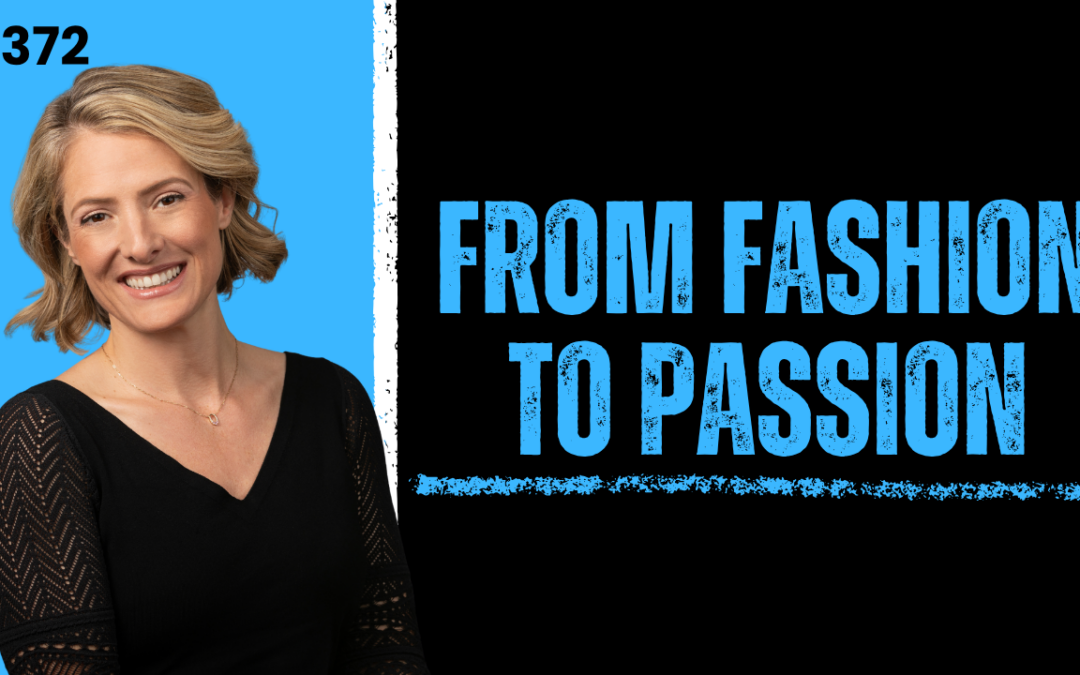
Melodie van der Baan – Max Retail
On the Success Secret: “You have to be so obsessed with the problem you’re solving because it is going to be so freaking hard that you must have the wherewithal to continue going when it gets tough, when you hit dead ends.”
Melodie van der Baan has seen some things. As an experienced entrepreneur in the clothing and retail space, she has learned what to do, what not to do and what new thing should be done.
That new thing is Max Retail. You see, clothing stores and retailers have products on their shelves. those products need to move, from shelf, to customers arms, through the checkout and out the door. If that doesn’t happen, something has to give. So if a product isn’t moving, it has to go.
But where should that non-moving inventory go? Melodie has united the masses of retailers to allow them to buy and sell excess inventory so they aren’t losing money and they are gaining value. This genius business came from the mind of someone that learned through first hand retail experience.
Listen as Melodie details how she brought Max Retail to life and how it has helped countless retailers.
Enjoy!
Visit Melodie at: https://maxretail.com/
Sponsors:
Calls On Call Extraordinary Answering Service, phone answering for small businesses: https://callsoncall.com

Some videos have been recorded with Riverside: https://www.riverside.fm/?utm_campaign=campaign_5&utm_medium=affiliate&utm_source=rewardful&via=james-kademan

Podcast Overview:
00:00 Retail markdown strategies
04:38 Challenges of retail inventory turnover
07:27 Starting out with no funds
12:30 Adapting to Modern Retail Challenges
16:48 Discovering the art of inventory planning
18:44 How planners manage excess stock
24:03 How MAX Retail data matching works
27:01 Starting Swap Retail in 2016
30:32 Trying e-commerce partnerships
32:58 Rebranding to Max Retail
35:15 Navigating economic ups and downs
38:48 Challenges of starting a retail store
44:44 Sales as a team sport
46:27 Selling seasonal inventory efficiently
51:21 Managing sales team performance
55:16 Pizza Friday gatherings explained
Podcast Transcription:
Speaker B:
What I have learned is that there is nothing more powerful than being human. And when you are human and you treat people like they are people and not a transaction, you will always win. If you chase the American dream in air quotation marks, which says you have to live in a fancy house and you have to drive a fancy car, you will never live the life you want to live. You will be a prisoner to the comparison of others. And if you don’t love your dream more than you desire the accolades of others, just don’t even bother. There’s always going to be someone with more than you. That would probably be my second piece of advice, is instead of keeping up with the Joneses, why don’t you make everybody else desire to have the joy and the peace that you have?
Speaker B:
So instead of going for an object, You’re going for a feeling.
Speaker A:
That’s right.
Speaker B:
And a feeling of wholeness, completeness, happiness.
Speaker A:
Times are hard. Things will be challenging, but you will always be able to know who you are and, uh, and separate it.
Speaker B:
You have found Authentic Business Adventures, the business program that brings you the struggle stories and triumph and successes of business owners across the land. Downloadable audio episodes can be found in the podcast link found at drawincustomers.com. We are locally underwritten by the Bank of Sun Prairie, Calls On Call Extraordinary Answering Service, as well as The Bold Business Book. And today we’re welcoming slash preparing to learn from Melody of Max Retail. And Melody, uh, let’s just start with what is Max Retail?
Speaker A:
Max Retail is a retail tech platform that helps independent retailers get their cost back on that past season unsold inventory by easily selling it online. Love this.
Speaker B:
Now, I was so excited when you reached out because I was thinking, uh, so I’m in Wisconsin and Wisconsin stores are very seasonal, and it seems to be the season before the actual season. So if it’s January and you want a winter coat, you’re a month late. Or if it’s, let’s say, August and you want a swimsuit, you’re a month late. So I always wonder, like, what did they do with all the winter coats? It’s August, but they didn’t just burn them. So what do retailers typically do with them versus what you offer them to do?
Speaker A:
Sure. Well, you know, most people assume that an independent retailer is going to just drop it off at TJ Maxx or Marshalls and liquidate it. But that’s actually not true at all. Because For the independent retailer, first off, they don’t know those guys. And secondly, the money that TJ Maxx or Marshalls would pay the retailer is pennies on the dollar. So for this particular dress that I’m wearing today, let’s say it was, you know, $220 retail. Someone like TJ Maxx or Marshalls would probably give me about $7 to $10 for it at most, at most.
Speaker B:
Wow. All right.
Speaker A:
So for an independent retailer, we have to pay our vendors, we have to bring in new shipment, we have rent and payroll. So to get rid of a sale rack for pennies on the dollar doesn’t make you whole in any way, shape, or form to where you can actually bring in new shipment or run your business. So instead, what retailers do is they mark down that inventory. So this is going to go from $220 to, you know, maybe $180, Then down to $150 and $120 and, you know, $100. And, you know, if it still doesn’t go by then, maybe they’re going to take it to the sidewalk sale and maybe sell it for like $50 or $80. Still better than, you know, $7 or $10, but still not great. And if it doesn’t sell at that warehouse sale, they’re going to put it in a box and they’re going to put it in the basement. And then next season, When it’s warm again, they’re going to pull this dress out again and they’re going to try to sell it again.
Speaker A:
But the problem with markdowns that take a long time, or even boxing and bringing out next season, is that you lose time. So in retail, we make money by how many times we can buy and sell inventory in a given time period. So let’s say I buy this dress today and I’m a retailer. I buy it today for $100. I sell it tomorrow for $200. Okay, great. What am I gonna do? I’m gonna pocket $100 profit and I’m gonna reinvest the next $100. Now let’s say the next day goes by and I’m gonna do it again.
Speaker A:
I’m gonna buy another one, sell another one, buy it, sell it, buy it, sell it. 10 days goes by. I’ve made $900 profit off of my $100 investment. But if I buy this dress today for $100 and I don’t sell it tomorrow or the next day or the next day or the next day or the next day, and I get to day 10, and on day 10 I sell it for $100, well, did I really win? I got my cost back, but I made no money and I lost time, which is why it is so important. that if something isn’t performing well in a store, that retailers have a way to have more distribution, more eyeballs on those amazing products. Because James, the truth is there’s nothing wrong with this merchandise. It just needs more people to see it.
Speaker B:
So how did you get into this? I guess we’d call it, would it be a reseller market or what would you call a market like this?
Speaker A:
You know, it’s interesting. I mean, I call us an excess inventory solution. It’s probably like the easiest way to, to describe it. And I, and I speak about this problem because I was a retailer for 9 years.
Speaker B:
All right.
Speaker A:
So I had my independent retail store in South Florida. I carried apparel and footwear. And before that, I was a distributor. And a distributor is just a nice word for a young girl in her 20s who had a Sprinter van full of clothes. And I drove from South Florida up to Boston, over to Chicago, down to San Antonio, and everywhere in between, selling to the independent retailers like the one I would become.
Speaker B:
How did you get into that?
Speaker A:
Just, I was just really passionate about, about fashion. And funny enough, it all started, if I had to go back to the very beginning, is, uh, I spent 6 months in Israel.
Speaker B:
Okay.
Speaker A:
And while I was walking down a street called Bugra Shov, they had boutiques. And I walked into these boutiques and the fashion was amazing. I must— James, I must have been 19 years old at the time, 20 at most. And I looked around and I was so blown away and I said, where can I buy this in the US? And they said, well, we’re not sold in the US. How would we get there? And I was so naive. Obviously, I didn’t have any fashion background. James, I didn’t even go to college. But I had this naive thought and I said, gosh, if only I could help designers get to the United States so that they could be discovered.
Speaker A:
So I said to myself, I’m going to make an e-commerce site and I’m going to make a place where people can discover this inventory and buy it. And this is at the time of Net-a-Porter and ASOS. And I came up with this whole business plan and I spent about 6 months on it. And then I said, oh geez, you know what? I don’t have any money. How would I ever pull this off? So then I said, well, maybe I can place them in stores for a commission. So I went to the local art institute and I found some graduate designers who had nothing to lose. And I said, hey, listen, why don’t you let me try to get your collections in store? And they said, oh, sure, why not? I’ll pay you based on what you can sell. And so, I just started by sitting at my kitchen table and I picked up the phone and I said, hi, it’s Melody calling from JuJu Costa.
Speaker A:
Can I show you the collection? And the person on the other side of the phone would say, what are the price points? And I’d say, I’ll call you right back. So I’d hang up and I’d, and I’d look up what is a price point. I’d pick up the phone and make the next call. Hey, it’s Melody calling from JuJu Costa. Price points are $69 to $129 wholesale. Can I show you the collection? And they’d say, what are the delivery dates? I’d say, I’ll call you right back. And I learned this industry one call at a time. And if I may say so, one mistake at a time.
Speaker A:
And from there, I built a pretty big business servicing over 500 independent retailers with my mobile showroom, had 2 of these showrooms on the road in various territories. And I loved it. I absolutely loved it.
Speaker B:
So what it sounds like you— I’m going to use the word graduated from that, right? You graduated from that to build this. What was the shift or what caused the shift?
Speaker A:
Every time I would go into one of these boutiques, The retailers would point out what didn’t sell from the season before, and they would say to me, Melody, what are you going to do about it? Now, if I did nothing, they were going to write a smaller order or no order at all. Brands did not want to take back the merchandise because inventory is a hot potato. The retailers had placed the orders. They expected them to keep their inventory. And, and yet I was in the middle. So I began to pay attention to what retailers were doing well with products in other areas of the country. So if I was in Baltimore and a retailer was sitting on a size run of striped dresses, I could call a retailer in Birmingham and say, hey, Leah, you know those dresses you’re blowing out of? Well, I got more of them. They’re not coming from the brand.
Speaker A:
They’re coming from a retailer. But how about I send them your way? And she’d say, send them on over. It was completely unscalable, James, and it was happening every single day. And so I was helping and seeing that this problem existed, and my husband finally said, Mel, this is not a you problem. This is an industry problem. It’s a lack of a network that needs to exist, and you should create it. But at this point in time, James, Point of sale was server-based, not cloud-based. Shopify was not what it is today.
Speaker A:
Consumers were not shopping online like they are today. This was 2009, 2010, 2011. But in 2012, when I opened my retail store, suddenly I had a sale rack and no one was helping me.
Speaker B:
Aha. Okay. There it is.
Speaker A:
Yep. And that was when I realized it wasn’t $2,000 of unsold dresses. It was $100,000 of financial losses each year that I was experiencing in my 1,000-square-foot store.
Speaker B:
Let’s shift gears a little bit to the retail store, because that is always interesting to me about— I mean, like, retail is tough, right? You got the property, you got to deal with the lease and all that kind of stuff. You got the fixtures, You got the landlords you have to deal with if you don’t own the building. You have to figure out traffic and all that kind of stuff. It just seems like a huge undertaking. So I love hearing the stories about what people learned, good or bad, about retail. So let’s talk about how you got into that and some of the mistakes and good things that happened with that.
Speaker A:
Absolutely. So it’s interesting because today I support over 3,500 retailers across all 50 states with Max Retail. And the number one pain point they bring up to me is always staffing. Because when you go to open a retail store, generally speaking, you have an eye. You are a merchandiser to your core, right? And I will say the greatest talent our retailers have is knowing how to spot the next best brand before it is even that. So, when you shop in a boutique, not only are you supporting the businesses that underpin your community, these boutiques are the ones that give to your local fundraiser. They give to your child’s school. They’re the ones who are going to be there for you.
Speaker A:
It’s not Neiman’s and Nordstrom’s, right? Like, sorry. So you have to, first off, that’s my shout out, support local so that there is local to support. Now, as a retailer, you used to be able to be successful by being a great buyer, being a great merchandiser, and giving excellent customer service. But the world has changed, has changed a lot, James, in the last 7 to 10 years, we had to now have a website. We had to now have a Facebook page, an Instagram page, and now even a TikTok. Today, independent retailers spend nearly half of their time or a full-time hire creating content because it is so competitive to stay in front of your customer. The customer that used to just walk in on her own after she did drop-off is now scrolling on her phone and you have to make sure you show up there so she remembers you. There were not direct-to-consumer brands like there are today 10 years ago.
Speaker A:
And so, as retail continues to evolve, marketing has become almost the number one role, which is crazy. So, in my business, I can share with you how I built mine. I believed that community was the most important thing to lean into. And so anytime someone entered my store and said, can I have a donation for the Lung Association, the Heart Association, the foster care organization? Yes, yes, yes. I didn’t just say yes to the donation. I signed up to be on the committee. You know, it’s one thing to give—
Speaker B:
A lot of yeses.
Speaker A:
Right. It’s one thing to give your money. It’s another thing to give your time.
Speaker B:
Huge.
Speaker A:
Some of the other things I did was I stayed open an hour earlier than all the other stores around me in my plaza, and I stayed open 1 hour later. And while everybody else was still sleeping or going home for dinner, that produced for my business another $100,000 a year.
Speaker B:
All right.
Speaker A:
So those are some of the things that I did right. Some of the things that I did wrong, I would say buying things that I loved But that weren’t right for the store. And you can get caught up in that. You can be very emotional in the role of a buyer. And yet, then you must deal with it when you’re staring at it for months and months and months. Again, that inventory turnover I told you, it ain’t happening. Getting your money back, nope. And I didn’t have a max retail, right? When I was a retailer, there was no solution.
Speaker A:
So I had to really stare at it for a long time until one day it finally went away, or I would turn to my associate and say, Kelsey, take this home to your mother. I can’t look at it anymore. So I would say some of the hardest mistakes I made was in terms of figuring out how to use self-control in buying things that were practical, not just falling in love with. I would say timing of my shipments because you mentioned there’s high seasons, there’s low seasons, and in South Florida, South Florida especially. So I needed to time my cash flow to make sure that I could make it through that 6-7 month drought that was the summer while still bringing in new merchandise. And that took me probably about 5 years to get right.
Speaker B:
I get— that’s completely reasonable. I can totally see how that happens. It’s interesting because I have a friend that has a retail shop on State Street in Madison, which is a The College to Capitol Street. They used to have lots of shops. It’s not so much anymore. It’s mostly bars and restaurants. But it’s very interesting talking to her about how cyclical retail business is, that you thrive before Christmas. And there’s, I want to say in springtime, maybe early summer, there’s a peak.
Speaker B:
And then outside of that, you’re just maintaining until the next peak.
Speaker A:
Yeah, absolutely. It’s, it’s really a balancing act. And I would say I really shifted from being a boutique owner to being a true retailer when I finally hired a planner in my 7th year of business.
Speaker B:
Oh, tell me about that.
Speaker A:
So I thought I had a strategy. I was like, oh, I’m so smart about this. I look at how much I spent on a brand, how much I sold in a brand, how much I have on hand, and then I decide how much of that brand I’m going to buy again when I would go to market. Now, that’s more than most retailers do. But what a planner does is they look at all of your data, and they help you know by category, the right inventory to have on hand at the right time to sell fast. And it’s fascinating. The art of planning is to say, Melody, you need $30,000 of woven dresses on hand and you need $20,000 of knit dresses. And if you don’t have this amount of this category on hand, you’re not going to hit your sales goal.
Speaker A:
And so the crazy thing about planning is it’s actually not about foot traffic all the time, James. It’s about having the right thing. And there is data to provide that. And that changed my business in one year. I improved my inventory turnover from 1.6 times a year, which is a sheer and utter embarrassing amount to say, especially on the air like this, to 2.6 times a year.
Speaker B:
Say it please, Charity, it’s not good.
Speaker A:
You know, it was just, it was really bad, super seasonal. I wasn’t parting with my inventory. I wasn’t marking it down. I never wanted to sell it below what I paid for it. And you know what the result was? I didn’t have turnover. So when I started working with a planner and they encouraged me, hey, be mindful, you’ve had this in store 90 days, you’ve got to get rid of it. I increased my turnover to 2.6 times a year, and with half as much inventory on hand, I was producing the same top-line numbers.
Speaker B:
Wow, that is impressive. So does the plan— what does the planner know, or where do they get their education from?
Speaker A:
That’s a great question. I don’t know, I just know a lot of them. Okay, you know, I know a lot of planners, because you can imagine at max retail, a planner can tell a retailer, hey, you’ve got to get rid of this, but a planner doesn’t get rid of it for them. So the planner will refer them to us to say, hey, listen, I have a client. She’s got way too much past season stock, help her get her inventory listed. You know, she wants to get as much money back as she possibly can, which, James, that goes into what exactly we do. We actually are as easy to work with as a click of a button. In the retailer’s point of sale, let’s say it’s Shopify, Lightspeed, Square, they click a button when they notice they’ve had too much inventory for too long, and they keep the inventory in store where they can still try to sell it to their local customers, but it sends a data feed to Max Retail.
Speaker A:
On our platform, we’re going to cleanse and enhance this data. What do I mean by that? Well, let’s say a retailer is sitting on a pair of Levi’s. And they tag that item, I get the data feed on our side, it comes to us with very basic information. We’re talking brand, you know, product name, color, size, quantity, wholesale, retail, that’s it. But that’s not enough information to sell a product online. And so what our technology does is we add fit, rise, inseam, Country of origin, composition, more images, all the things that you as a consumer want to know before you buy something online. And then we distribute data feeds to various e-commerce sites and resale marketplaces where people like you, James, who say, oh my gosh, I just ripped my favorite pair of Levi’s jeans. They don’t make it anymore.
Speaker A:
It’s last season’s model. Let me see if I can find it on Poshmark or eBay or anywhere else on the internet. When you search for it, you’re going to find it and buy it. And when you do, that order goes back through Max Retail and that retailer is going to get a text message that says, great news, your Levi’s sold. They’re going to hit approve order, get a prepaid label, take it off of their sale rack and ship it directly to you. Wow.
Speaker B:
So you don’t actually have to warehouse anything. It’s up to the retailer, essentially.
Speaker A:
Yes. And it works great for them because they’re able to still make the sale in store. If somebody walks in and loves those Levi’s, they can sell it to them and it instantly comes off of our platform. But instead of being limited to their local audience, they get an extra 400 million eyeballs on it through Max Retail’s audience.
Speaker B:
That is genius. I love that. You know, it’s so interesting chatting with you because I was trying to figure out before we started talking, how does this work? Are you buying all this stuff and then it’s your problem to get rid of? But essentially sharing and spreading the word, sharing that. Yeah, that is amazing.
Speaker A:
Yeah, it’s really rewarding because what I’ll see retailers do is, you know, when you mentioned the season changes and the new merchandise is on the floor. So when, when spring ships, you want to have spring on the floor and you want to be able to put last season in the back. Now guaranteed, I certainly don’t want it in the basement waiting for next spring. But what I love is when retailers pull that past season inventory, put it in the back, and they are selling it on max retail from the back room while selling all that new merchandise to their local customers on the main floor. It just keeps the inventory clean and gives them an extra revenue stream.
Speaker B:
That is clever. I love it. Tell me a story about the data. Somebody says, hey, we got this pair of Levi’s, it’s whatever size, this is the minimal information that we have on it. Are there pictures or anything like that that they’re sending you so that you know how to upload— or I’m sorry, create the rest of the video?
Speaker A:
Yes. Yeah, sometimes yes, sometimes no. Okay, we can get, we can get lots of products. I would say half of them don’t if it’s through Shopify. We have half of our retailers on Shopify. When those come through, we do get an image, we’ll probably still upgrade the image to something higher quality using AI, because it just presents better across our different partner channels. And then half of the products don’t have any image because they’re coming directly from a point of sale, which generally speaking, you’re not putting an image in, but our system is still able to dictate which product goes with which image pretty well in our system.
Speaker B:
And is that with a barcode or UPC code or something like that, or how does it know?
Speaker A:
Mainly through just that basic product information, like a style number, a product name, a combination of the both. And if we need any extra verification, we’ll just kick it back to the retailer and say, hey, listen, we couldn’t find enough info. Can you please fill in the gaps here?
Speaker B:
Gotcha. Let’s just take your dress as an example. I’m not a fashion connoisseur, so I don’t know. But let’s just say your dress. What kind of information would a retailer give you about that dress? And then what— where would you find the rest of that information? Because to me, a typical retail store with all kinds of clothing, I see an inventory nightmare because I’m like, you got sizes, you got styles, you got fabrics, there’s manufacturers. Oh my gosh, right? So there’s many options and a lot of variables. So help me understand that.
Speaker A:
You know what’s so cool about MAX Retail? It’s actually my favorite thing about MAX Retail is these are not random retailers selling completely different products. Our retailers that sell with us are anything from a contemporary apparel retailer, designer retailer, what’s called a mid-tier retailer. These are products that can range between like, you know, $50 to $100, athletic footwear stores, but they’re— they have a lot in common with one another. And so let’s say this dress was listed, and it comes from a point of sale with just that basic information of brand, product name, color, right? Let’s say it’s like the purple print, Aurora dress by the— this dress today that I’m wearing is from Amanda Uprichard. What you would do, what would happen first in Max Retail is we’re going to see if it’s already listed by another retailer. Does this product already exist in our system? And because we are a community of like-minded retailers, most the time it is, James. So it’s like this, this shared data is what happens first. We call it matching.
Speaker A:
And so let’s say the retailer who listed it first had it coming from Shopify. Maybe we got an image, couple more product attributes, and let’s say we needed to supplement through web scraping to fill in the rest. Okay, now that product is complete. Every time another retailer lists, it becomes another size available in the same dress. So if there was a medium listed initially and another retailer comes on and lists a small and an extra small, and another retailer comes on and lists a medium and a large, well, guess what? Because of all of our retailers, we now have a size run once again. And that is far more powerful than a unit on its own.
Speaker B:
That is incredible. That is amazing. Very well played. I love that. Tell me a story about the software itself, because it sounds like a lot of backend building. And was that some— are you coding that, or who is coding this?
Speaker A:
You know, I think that’s the hardest thing. My first business I built by being super scrappy and driven. I just needed to be myself at a kitchen table and pound the phones and give good customer service and be willing to work 14 hours a day. My second business, I needed to juggle a lot more operationally. Now I had rent, I had far more employees, I had a, a real marketing motion that I had to do both online and offline, extremely different than being a distributor. But none of that compared to how hard this has been.
Speaker B:
Oh. Interesting.
Speaker A:
Because with, with Max Retail, and especially when I started working on this in the back room of my boutique with my co-founder Morgan, we didn’t have any idea about technology, right? We just knew there was a problem. And James, for anyone who’s thinking about starting their own business or taking risk, you have to be so obsessed with the problem you’re solving because it is going to be so freaking hard that you must have the wherewithal to continue going when it gets tough, when you hit dead ends. And Morgan and I continued to go down this labyrinth of experimentation as to how we were going to solve this problem. It wasn’t 2016 in the back of my store and we said, Gee, we’re gonna make this incredible dropship platform for independent retailers and consumers are gonna buy across a variety of websites. Oh no, no. The first version of our platform, the idea was called Swap Retail. And it was a platform for retailers to sell, buy, and swap inventory with one another.
Speaker B:
Interesting. Okay.
Speaker A:
And so we spent the first couple years doing these swaps manually between retailers. While we roped in a technical co-founder to build this platform for us. And we launched it the spring of 2020 and COVID hit. And now every retailer across the country was closed.
Speaker B:
Ooh.
Speaker A:
So, you know, we had some trying times and, you know, here I am having 2 children under 2, Morgan as well, having 1 child under 2. We had 2 boutiques at the time and a startup. And when you throw a pandemic on top of it, when people ask me, are you really stressed out? I go, oh, you don’t know what stressed is. 2020 was stressed. Everything else, it’s gonna be hard to compare with that. But what we saw was that retailers were willing to list inventory on our platform, but nobody was buying it, James, because the marketplace we built, the buyers were the same as the sellers. And this was a pandemic. Everyone was closed.
Speaker A:
Everyone was freaking out. So then we get to the end of 2020 and I say, okay, stores are reopening. Maybe now they’ll buy, sell, and swap with one another. And it didn’t really change. And so as I was talking to these retailers, I said, what’s going on? And they said, Mel, I don’t want to buy. I already have orders on file. I don’t want to swap. I got enough inventory.
Speaker A:
I just need money. I just need to sell. And so I said, okay, I need to keep looking for another solution. So James, bear in mind, we now spent 3 years developing the first platform, a year with Swap Retail’s platform, and now I am on to our 5th year trying to figure this out. And that is why you should never start your own business unless it is the burning desire of your heart that you are willing to go through perilous years without making any money and keep going. You know, because it didn’t feel like 4 years. It didn’t feel like 5 years. I just knew the problem had not gone away.
Speaker A:
And no one else had solved it. And so the 5th year, this is now around 2021, and Gilt Groupe says, oh, you can get your hands on brand name inventory, get it to us at a price that we want, and we’ll buy it from you. So I’m like, okay, retailers want to sell, Gilt wants to buy, let’s see if this is a thing. But really, it was still liquidation payouts like I described to you of the Marshalls and TJ Maxx sort. So even though there was interest from this amazing, amazing e-commerce player. The retailers did a couple transactions through Max Retail or through Swap Retail, I should say. And they just said, Mel, it’s not for us. We didn’t get enough money back.
Speaker A:
I still can’t pay my vendors. I still can’t bring in shipment. It’s not helping me pay rent. Did it once, got rid of COVID goods, never want to do it again. So we continued to look. And then finally, Poshmark came to us at the end of 2021 and they said, Melody, I understand you have access to dropship inventory, brand name. You have past season inventory? We always have past season inventory. You have single units? No problem.
Speaker A:
We always have single units. Your inventory is new with tags. Our inventory is normally worn. You have a premium product. Give us a product feed. And I said, well, I got nothing to lose, everything to gain. And so that was the first time that we exported products from our system, uploaded them in Poshmark, and for the first time started seeing sales, right? It was amazing.
Speaker B:
Yeah.
Speaker A:
And you might ask yourself, why doesn’t a retailer just sell on Poshmark themselves then? Well, it’s a lot of work, James, creating every listing, people lowballing you with offers. It’s a lot to even manage your inventory. If you sell it in store and you don’t take it off of Poshmark, that’s a really bad experience and a big problem. So it can be extremely stressful. So Max Retail doesn’t just give a retailer access to Poshmark, we give them access to Poshmark and 10 other channels with the click of a button in the point of sale. So you can see it’s just far more easier because as mentioned, those independent retailers already have marketing as a full-time job. To sell their new inventory. They don’t want to spend hours on selling their past season unsold inventory.
Speaker A:
But really, that was the first step into us moving along and realizing, hey, third-party marketplaces give us a way to get unsold inventory in front of people who love those brands. And so from 2022, we rebranded to Max Retail. And since then, we’ve been launching various marketplaces as partners, including our own e-commerce site, which is snagged and bagged. It’s super fun. It’s kind of like if Revolve and Nordstrom Rack had a baby. It kind of really shows the personality of our culture in a hilarious way, and yet extremely fashionable. So that’s been fun to be our last pivot, James, right? It’s like we were third-party marketplaces from 2022 to 2024. And now having our own channel for the last 2 years, And the one thing I can be certain of is our how will always change, but our who and our why will not.
Speaker B:
I was just gonna ask you about the— you said your last pivot, and I’m like, last, like most recent or last?
Speaker A:
Yeah, 2022 is the most recent, I would say.
Speaker B:
Most recent. Okay.
Speaker A:
I’m sorry, 2024. Forgive me. Most recent pivot, 2024, having an owned channel. That was never, that was never a thought of mine, James. I was, I was like, I’m just gonna sell another channel. We’re never gonna do that. But what we saw is other channels weren’t selling everything. And that’s why we’re like, if we launch our own channel, we can dedicate ad spend to helping the most unsold products finally get over the line, finally get in the hands of consumers.
Speaker A:
And, and that’s been working really effectively.
Speaker B:
That is cool. I love seeing this. So it’s interesting, I guess, from my point of view, is you’ve been in the, the retail clothing space for 20 years. 20 years. Okay, that’s a while. So 20 years, that means that you have your, your finger on the pulse of retail clothing purchases. And that includes 2008 and the rocky time that the economy had. That includes pandemic.
Speaker B:
So I would bet that you have a good inkling as to how an economy is doing based on what’s being bought and how much is being bought. Is that safe to say?
Speaker A:
You know, it’s interesting because for a business like Max Retail, when the economy experiences uncertainty, people purchase merchandise that is on sale. They don’t want to spend as much as they normally do. If confidence is low, they’re going to spend less. But generally speaking, they’re going to try to get the biggest bang they can for their buck, which is why we end up being successful even in a downturned economy. So in a strong and thriving economy, we win because people buy more. But even in a downturned economy, we’re still winning. And so I think for me, the biggest thing is making sure that Max Retail is in The toolkit of every independent retailer, because that’s not true for them. If you’re that small store in Holland, Michigan, for instance, and the economy is tanking and you only have that local audience, you are at risk.
Speaker A:
You’re at risk for your sales. You’re at risk for your turnover. And I gotta tell you, James, a lot of times it’s just like a quarter or 2. that the retailer needs to pull through. I hear this all the time from our retailers. A couple months back, I was at a footwear show and a retailer walked up to me and said, I just want you to know that you saved my business last summer.
Speaker B:
Oh, that’s good, good feedback.
Speaker A:
I was like, what do you mean? They said, we had a really tough season. We were closing one store, but the other store was really suffering at the time. And we found out about Max Retail and we signed up and every day we would walk into $500 of orders and you carried us through that season. And then the customers came back and we were fine again and we’re healthy once more. And so really, James, this is not about downturned economies being permanent. There’s seasons, like you said, there’s cycles. And sometimes we need a little more help during certain times than others. I will say most of our retailers use us weekly just to keep their inventories clean.
Speaker A:
Seasonal ones might even pause us during high season and use us during off-season. I’ve seen a lot of different use cases. But yes, I think, you know, I just, for me, it’s making sure that retailers know they have something because I didn’t. And I was able to sell my business, right? I sold my store in South Florida when this business started growing. And that was a wonderful, wonderful experience to, to pass on the legacy of my store to someone else. But that’s not the case for a lot of retailers, and I want it to be.
Speaker B:
That is very true. We see retailers come and go. I mean, it’s pretty often. I don’t know what the, what the average timeline is, but I would guess it’s in the neighborhood of 2 to 3 years.
Speaker A:
Oh, wait, way longer than that. No retailers. We have retailers that have legacy. We’re talking generational retailers. You would be surprised. So when it comes—
Speaker B:
I probably would. Yeah. I’m thinking when I drive past the strip mall in a given town, and then you drive past that strip mall a year or 2 or 5 later, how many of those same businesses are still there? Or have grown into a bigger business somewhere else?
Speaker A:
Exactly. So I think it’s a couple of things. What’s brutal about retail is today, the way it’s done, it’s this person like me who’s walking down the street and they see that empty space and they say, I’m going to open up shop there. Now, I had the benefit of being a rep before being a retailer, but most people who decide to open a retail store don’t have that background. They just see the space and they say, here’s my spot. From there, they have to figure out what to buy, where to buy, what is a markup, what is a markdown. Then it’s almost like a rite of passage that you’re going to go to a trade show, you’re going to get completely taken advantage of by all the reps because you don’t know how much to buy and they know you’re new at it. It’s like being a freshman in college or even high school.
Speaker A:
Right? There’s a lot of parallels. And the truth is, James, if you’re lucky, you figure it out and you make it. I believe that it shouldn’t be that challenging. I believe that there should be absolutely ways for retailers to start up and be successful and know what they need to know from the get-go. And there’s great associations that do training. As a matter of fact, you guys have one in Michigan called Whizbang, Whizbang Retail. It’s all education for retailers and people who want to be retailers. There’s Boutique Hub.
Speaker A:
There’s a lot of different amazing associations that can bring young entrepreneurs, old entrepreneurs, anyone up to speed on how to successfully run a retail business. And James, the people who sink their teeth into education become longtime retailers. We have so many customers on Max Retail who have been in business for hundreds of years, 50 years, at least 20 years. At least 10 years. There are people that we serve today on Max Retail that I sold product to as a rep, and there’s nothing that makes me happier.
Speaker B:
Wow, that’s awesome. How cool is that?
Speaker A:
You—
Speaker B:
this is a perfect segue here because I want to ask you about sales. So when you first started, you’re 19 years old, super green. I don’t know how much sales experience you had when you were that young. Versus what have you learned? What have you gone through the iterations in your sales process from then And then through to now?
Speaker A:
Oh my gosh, thank you for asking. I love to share this, this information. So I got a little bit of a head start. I’ve been knocking on doors since I was 8 years old.
Speaker B:
That’s a while. All right.
Speaker A:
I’ve probably been selling more than long— longer than I’ve been doing anything else that I do. My mother never told me no. She worked 3 jobs while I was growing up. She always said, go figure it out. Mom, I want to be in the beauty pageant. She said, great, go knock on every door in the neighborhood and see who will sponsor you. So little Melody took the little piece of paper and went and knocked on the doors, and I raised enough money to be in the beauty pageant, get the dress. I got third place.
Speaker B:
Nice.
Speaker A:
I like to call that the first of my success Now, if you want to think of a success spiral, it’s a tiny little dot in the middle that starts with faith. You believe you can. Now, the next little curve on the spiral is drive. You can have faith that you can, but hope alone is not a strategy. You have to drive. I had to go knock on those doors, right? From there, you get evidence, and that’s what completes your first loop. And the spiral gets bigger. Got to the pageant, won 3rd place.
Speaker A:
I knew I could and I did. So then the next one came. Hey, Mom, I want to go on the ski trip. She said, great, go figure it out. This time I washed cars. Faith, drive, went on the ski trip, had the time of my life. And it built this, this motion in me. That every time I wanted something, I could have it.
Speaker A:
I could figure it out. Now, guaranteed, there’s a lot of defiance that goes with this personality you’re looking at here, James, but that comes with it as well. And yet I had enough laps by the time I was 19 that it didn’t seem audacious to me to say, well, gee, I believe I can place designers in stores. I’m gonna go figure it out because I had enough evidence that I was capable. So how was— how has that evolved over the years?
Speaker B:
Yeah.
Speaker A:
Mentors. Mentors is how it has evolved. What I have learned is that there is nothing more powerful than being human. And when you are human and you treat people like they are people and not a transaction, you will always win. When someone would tell me no, I never really heard it. I heard not now.
Speaker B:
Hmm.
Speaker A:
And I would say, I’m so happy to know you. Can I keep calling you? And the ability to look at someone as a human being past what they can do for you or give to you or buy from you is so incredibly powerful. And, you know, it’s funny when people start working for us, the first thing I say is, I’m going to need you to be a lot less professional.
Speaker B:
Wow.
Speaker A:
Okay. I’m like, that is not how deals get done.
Speaker B:
Tell me more.
Speaker A:
All right. So, James, if I were to sell you something right now, let’s say you have a boutique. I’m not going to say to you, James, I would like you to use Max Retail. Let me show you how the platform works. I’m going to say, James, I’ve been in your store. We have got to get this inventory moving. I want that for you. Let me show you how easy it is.
Speaker A:
Now, here’s what I’m envisioning in my head as I’m talking with you. Imagine tennis. In tennis, I could be on one side of the court and you would be on the other. Never are you doing that in sales. In sales, James, my first mentor taught me that you and I are standing on the same side of the court together. And we are playing doubles against the problem, which is on the other side of the net. So you and I are playing doubles against unsold inventory when I’m talking to you. And I want us to win.
Speaker B:
Love it.
Speaker A:
And when you envision that in your mind, when you’re speaking to someone, that they are your partner and the problem is on the other side, not them, it shifts everything in how you speak. And I always say lead with love. Right? At Max Retail, we give people the FLU. F-L-U. FOMO, love, and urgency. James, we can’t delay. Let’s do it now together. We’re not gonna punt this.
Speaker A:
I’m not gonna circle back. If someone says circle back, I’m gonna punch them in their kneecaps. Like, no, don’t circle back. Do not circle back anywhere with me, right? Like, no, I care about you. I want to help you today. Let’s do it together now so you can get on with your life and you can start seeing results.
Speaker B:
So if somebody says, because that’s not uncommon, right? I want to circle back on this, I want to sleep on it, blah, blah, blah, blah, blah, right? What do you, what do you say to that? Because although punching them is something that you wouldn’t probably want to do, can’t say—
Speaker A:
No, no, I mean like the phrase circle back. Like any, any corporate jargon like drives me nuts because I’m— I’ve never been corporate, I will never be corporate.
Speaker B:
Fair.
Speaker A:
And I will always just aim to be human. If someone says, I have to think about it, I will say, you, you can think about it. Absolutely. Just remember that today, that unsold inventory is going to be sold a lot faster because it’s still weather relevant. Your leftover spring inventory. That you brought in in January and February that has been in store over 120 days and you need the money for your fall shipments. If you list it now, we can sell it now in the next 45-day period faster and at a higher price. If you want to wait until October to list your sandals, they’re going to take a lot longer to sell and you’re probably going to have to even lower your price again, and I don’t want that for you.
Speaker A:
I want you to have hangers. I want you to have floor space, and I want you to have cash flow. So why don’t we do it right now, James?
Speaker B:
Man, I’m sold, and I don’t even have a retail store. That’s amazing.
Speaker A:
But it’s true. You’re gonna have the money today, or honestly, you might have less tomorrow, or, or a slower drip of it later. Like, right now, you know? And I, I’m someone who’s just like, always take care of what you can take care of immediately, because there’s always going to be more to do. If you can Just chip something off the list. And if someone’s willing to help you, take the help. I mean, that’s one thing retailers, it’s kind of hard for us to do. We kind of like to be in control of everything.
Speaker B:
We can do it all.
Speaker A:
We can do it all, right? But the truth is we have to, we have to allow people to help us. We have to trust them. And that can be hard as a small business owner, no matter what your business is.
Speaker B:
No doubt. Melody, you’re doing great with these segues because I want to ask you about employees. Okay, tell me about your first employee.
Speaker A:
Oh my goodness, my first employee. I was 26 and she was— oh gosh, was I even 26? No, I was 24 and she was 22. And I did not know much about managing. I knew about selling, right? And I only had myself as a point of reference. So I trained her on, on sales, trained her on customer service, and all those sorts of things, and really enjoyed watching her grow. She ended up then having her own line of brands that she represented and her own mobile showroom going forth. And I think she might still be doing that today. I’m not sure.
Speaker B:
Wow.
Speaker A:
But I can say When I look back on it now that I’ve had, I think I’ve probably employed about 60 or 70 people over the course of the last few years. The difference that I would say now is really helping someone understand what they’re accountable for and making sure that there are goals that are being delivered. Now, I understand leading indicators and lagging indicators. And I’m happy to explain that if you’d like, James.
Speaker B:
Please. Yeah, yeah, yeah.
Speaker A:
Because I realized with that first hire, first, I didn’t know what it was, so I sure as hell didn’t have it in place. So, I’ll explain it with our bodies because it’s most easily understood that way. So, let’s say I want to lose 10 pounds. Losing 10 pounds, like dropping a pound in whatever frequency, is actually a lagging indicator. A leading indicator Of, of that goal of losing 10 pounds would be how many times am I working out a week? How many glasses of water am I drinking a day? How many calories am I consuming a day? Right? It would be things like that. And so every single day, if you’re tracking your water intake, your exercise, and your calories, and maybe it’s like miles walked, or something like that. Let’s like throw that in as like an extra measure because I’m doing that too. I’m thinking of my own self right now.
Speaker A:
If I don’t do these things, I’m not going to lose the weight. And so, if all you do is look at your financial goal, which is to say, I want to make, I don’t know, whatever, like I want my business to do $500,000 a year in business. Let’s say you’re a small retail business. You’re not just going to hit that number because you set that number. You have to figure out what exactly your leading indicators are so that you can know you’re doing the work. John Maxwell says, focus on planting seeds and the harvest will take care of itself.
Speaker B:
Mm-hmm.
Speaker A:
And so today at Max Retail, how that translates is looking at, okay, If we have X amount of retailers that are inbounding to us a month, how many salespeople do I need to have on the floor? And how many calls do they need to make a day? And how many demos do they need to do? And how many demos do they need to convert to make sure it all fits together to the total number of sellers that we want to onboard a month? So the number of sellers that we onboard a month is my lagging indicator. If the sales team isn’t hitting call volume, we’re not going to get there. If the sales team isn’t hitting conversion, we’re not going to get there. For us, there’s a thing called a one-call close where a seller’s up and selling in 15 minutes. If we’re not seeing a lot of one-call closes where retailers don’t have to do another call, I know it’s going to be an effect on the lagging indicator of the number of sellers a month. I didn’t know any of that in my first business. But The truth is when you understand what your leading indicators are, it allows the people who work for you to know exactly what they’re accountable for and deliver it and feel good about it. And then, you can see that result play out on the other side.
Speaker B:
That’s awesome. I love it. I love it. Melody, before we take off here because I know you got other places to be, tell me really quick what advice you would give for an entrepreneur that was looking to just get in a business, broadly speaking, doesn’t necessarily have to be in retail or clothing. But 20 years in, you’ve made some mistakes, learned some things, and there’s probably something— let’s just say a niece, nephew, something like that said, Melanie, I want to start a business. What’s the advice you would give them?
Speaker A:
Live in a paid-off house, drive a paid-off car.
Speaker B:
Oh, that’s awesome, because then you don’t have to worry about that. One less thing.
Speaker A:
If you chase the American dream in air quotation marks, which says you have to live in a fancy house and you have to drive a fancy car, you will never live the life you want to live. You will be a prisoner to the comparison of others.
Speaker B:
That may be the best answer I’ve ever heard.
Speaker A:
And if You don’t love your dream more than you desire the accolades of others, just don’t even bother. Because I can tell you, I have been able to pursue this company and grow it to the size that it is now, and we are just getting started in a lot of ways, while having 2 children. And I can still sleep at night because I live very humbly and happily while doing so.
Speaker B:
That is amazing. I love that on so many levels. But it’s interesting. It’s very timely because I was talking to my employees earlier this morning about the different sale prices and things like that. I sent them a little math quiz I send them every week. And it was interesting because that triggered a conversation about shopping and essentially keeping up with the Joneses and stuff. stuff like that. I was like, oh, that’s a game you cannot win.
Speaker A:
No, there’s always going to be someone with more than you. But I can tell you, and this is what I love in my little tiny house, my husband opens it up every Friday night. He makes homemade pizza for anyone who wants to show up. And yeah, in the 1,800-square-foot home that we have, we’ll host somewhere between 20 and 40 people every week. And there are people who come to our house on a Friday night and they live in $20 million houses. They leave their $20 million house. They’re not going to a fancy restaurant on a Friday night. They’re going to my house.
Speaker A:
Do you know why? Because they’re going to feel love. They’re going to feel acceptance. They’re going to have fun and they’re going to eat the best pizza of their lives. And there can be people at Pizza Friday who don’t have anything and they’re struggling to pay rent and they’re there too. Because the other thing about being an entrepreneur is you must always separate what you build from who you are. You are not— Yeah, you’re not what you build. What you build is great, but that Friday allows everyone to come together on a level playing field, and no one on Friday night cares what I do for a living, James. They just want to be present and have a great time.
Speaker A:
And so that would probably be my second piece of advice is instead of keeping up with the Joneses, why don’t you make everybody else desire to have the joy and the peace that you have?
Speaker B:
That is cool. I love that. So instead of going for an object, you’re going for a feeling.
Speaker A:
That’s right.
Speaker B:
And a feeling of wholeness, completeness, happiness.
Speaker A:
Absolutely.
Speaker B:
You can’t necessarily put a price on that. Nope.
Speaker A:
And it pulls you through. It pulls you through because times are hard. Things will be challenging, but you will always be able to know who you are and, uh, and separate it.
Speaker B:
That is cool. I love that. I feel like that’s a great spot to end here, Melanie. That’s amazing. What an inspiration. Before we do duck out of here, what is the website where people can find you?
Speaker A:
MaxRetail.com.
Speaker B:
Easy enough. That’s M-A-X, then retail, R-E-T-A-I-L.com.
Speaker A:
That’s right.
Speaker B:
I didn’t think I’d have a spelling test, but hopefully I passed that. Melody, thank you so much for being on the show.
Speaker A:
My pleasure. Thank you, James.
Speaker B:
Thank you. This has been Authentic Business Adventures, the business program that brings you the struggle stories and triumphant successes of business owners across the land. My name is James Kademian, and Authentic Business Adventures is brought to you by Calls On Call, offering call answering and receptionist services for service businesses across the country, on the web at callsoncall.com. And of course, The Bold Business Book, a book for the entrepreneur in all of us, available wherever fine books are sold. If you are listening or watching this on the web, if you could do us a huge favor, give us a big old thumbs up, subscribe, and of course, share with your entrepreneurial friends. Especially those, those friends that, uh, what do we got here, like fashion, uh, are considering starting a business, and I’m daring to say enjoy pizza. Is that safe to say, Melody?
Speaker A:
There you go.
Speaker B:
There we go. Uh, let’s see here. Past episodes can be found morning, noon, night at the podcast link found at drawincustomers.com. Melody, can you tell us that website one more time?
Speaker A:
Max retail.com. M-A-X-R-E-T-A-I-L.com.
Speaker B:
Perfect. And then you had one other one. What was the other, um, the other website you have?
Speaker A:
snaggedandbagged.com.
Speaker B:
Snagged and Bagged. I love that name. Past episodes can be found morning, noon, and night at the podcast link found at drawtoncustomers.com. Thank you for joining us. We will see you next week. I want you to stay awesome. And if you do nothing else, enjoy your business.