Podcast: Play in new window | Download (Duration: 41:17 — 94.5MB)
Subscribe: Apple Podcasts | Spotify | Amazon Music | iHeartRadio | Email | RSS | More
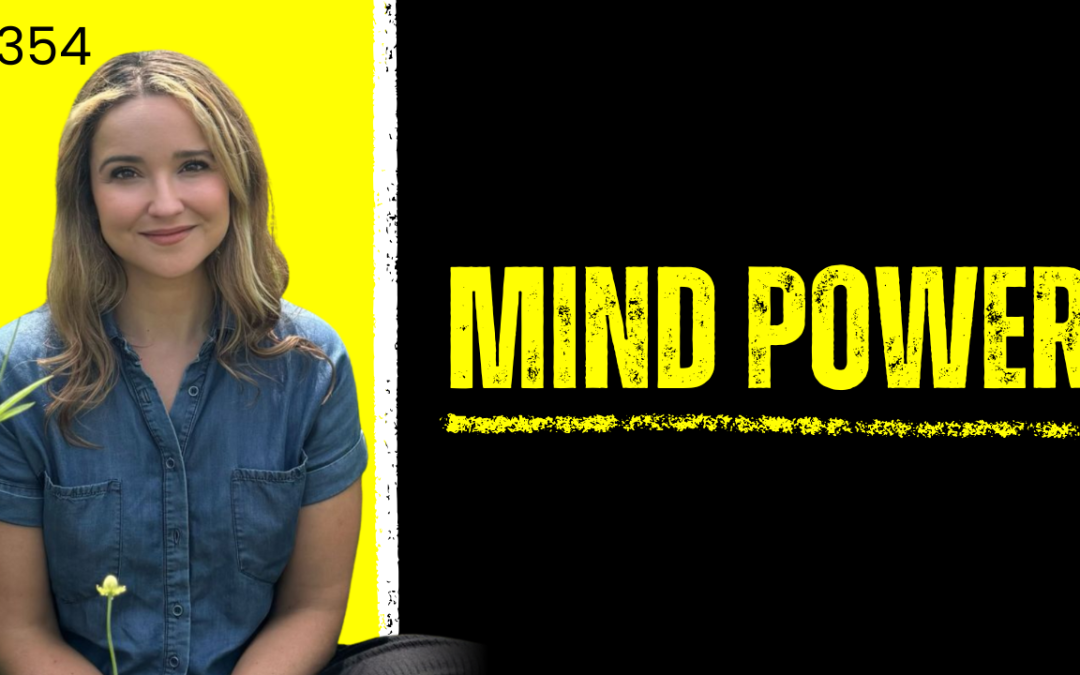
Annie – The Garden Mind Body
On the Figuring Out That it is All Connected: “”I was so skeptical because I was like, how is working with my mind going to change what my body’s doing?”
Pain seems to be everywhere. In our bodies, often we have the aches or headaches that seem to have no real reason for existing other than to feel like misplaced karma.
But what if the aches in the body were due to issues in the mind? What if you realized that everything in the body is connected to the mind and vice versa. Through many challenges and illnesses and a lack of progress from typical doctor visits, Annie Kubena has researched and discovered what should be common knowledge, but isn’t. Our thoughts and our bodies live and work together, essentially as one. Sometimes there messages are delivered by using pain as an esoteric way to inform your mind that your subconscious mind has some issues it needs you to deal with.
Annie discovered this and this has led her to become a holistic mind-body coach. She is helping others find relief from anxiety, chronic pain, and even the lingering effects of COVID through nervous system regulation, brain rewiring, and tools like somatic parts work and EFT tapping. Annie Kubena details the ins and outs of her methods, and why tending to our “inner garden” is essential for lasting health.
Listen as Annie explains how you can get the relief you need from the pain that may be slowing you down.
Enjoy!
Visit Annie at: https://www.thegardenmindbody.com/
Sponsors:
Live Video chat with our customers here with LiveSwitch: https://join.liveswitch.com/gfj3m6hnmguz
Some videos have been recorded with Riverside: https://www.riverside.fm/?utm_campaign=campaign_5&utm_medium=affiliate&utm_source=rewardful&via=james-kademan

Podcast Overview:
00:00 Listening to My Body
04:43 Listening to My Body
08:36 Long COVID’s Lingering Body Effects
11:05 “Building Resilience Through Reflection”
15:53 Homeopathy and Nervous System Rewiring
18:32 Understanding People One-on-One
21:08 “Overcoming Functional Freeze Patterns”
26:24 “Vagus Nerve Healing Commitment”
27:08 “Everyone Has Their Baggage”
30:42 “Remote Coaching Works Well”
34:36 Mind-Body Connection and Pain
37:51 Surgical Collaboration Insight
Podcast Transcription:
Annie Kubena [00:00:00]:
And also I always prioritized like work and school over what my body was asking for. So I learned how to like tune in more to what my body is really asking me for, tune in more to like impulses. I was the kind of person that would like sit at my desk for so many hours without moving, without going to the bathroom when I needed to, like anything. I was just like, I would like settle into my work and just focus and push through. And so this was really having to train myself out of that and more into like, what’s my body asking me for today?
James [00:00:37]:
You have found Authentic Business Adventures, the business program that brings you the struggle stories and triumphant successes of business owners across the land. Downloadable audio episodes can be found in the podcast link found at drawincustomers.com. We are locally underwritten by the Bank of Sunbury, and today we’re welcoming/preparing to learn from Annie Kubena. Of The Garden Mind Body Wellness. So Annie, how is it going today?
Annie Kubena [00:01:01]:
It’s going great today. Thanks so much for having me.
James [00:01:03]:
Yeah, thanks for being on the show. Tell us the story. What is The Garden Mind Body Wellness?
Annie Kubena [00:01:08]:
Um, I am a holistic mind-body coach and I help people with anxiety, chronic illness, chronic pain, um, recover or prevent those things too through the power of the nervous system.
James [00:01:21]:
All right. And how do you get in there?
Annie Kubena [00:01:25]:
It’s really a passion I have because of my own decades-long health journey.
James [00:01:32]:
Decades?
Annie Kubena [00:01:33]:
Decades long, yeah.
James [00:01:34]:
All right.
Annie Kubena [00:01:35]:
I struggled for a really long time with my health and just being a highly sensitive person in the world.
James [00:01:43]:
Okay. You’re talking emotionally, physically, both?
Annie Kubena [00:01:46]:
Both. Yeah. Yeah. I’ve always been just really sensitive since I was a little kid.
James [00:01:51]:
Okay.
Annie Kubena [00:01:53]:
Yeah, I really struggled with my health for a very long time. I got into a lot of holistic health approaches to help myself, and then I did a 1-year-long nervous system and brain rewiring program.
James [00:02:09]:
Okay.
Annie Kubena [00:02:10]:
Just because I was like really desperate. I was like, I’m doing everything right. Like, why am I— why am I having— I kept having these cycles of like, pushing really hard when I felt well and then crashing and getting really sick. Oh, um, and I think that happens to a lot of people with chronic illness. But I did this nervous system program and realized, wow, like, I’ve almost never in my life just been like calm and centered on a consistent basis.
James [00:02:37]:
Is that an option?
Annie Kubena [00:02:40]:
It is, yeah. And it’s what your body needs to really heal and digest food and absorb nutrients and turn over cells and all different kinds of things. So So I got into this because I’m so passionate about it and I think it’s so needed in our world right now. I think people are chronically stressed and really struggling with their health, and I’m hoping that I can get to people before they have these like debilitating crashes like what I was having.
James [00:03:12]:
So now where are you at now, I guess, with your health?
Annie Kubena [00:03:15]:
Are you tip-top or I’m I’m probably realistically like at 80%, but I have all these tools where I’m like, oh, I’m starting to push too hard now. Oh. And I know when to pull back. I’m someone who just, I wanna do everything. I’m so driven and then my body kind of fights against me with that. So I have all these tools now for taking much better care of my nervous system that go really well with all the great food and movement things that I was doing. So I think it, it might take me a while. I was really sick when I was a kid and then I got diagnosed with an autoimmune disease when I was in college.
Annie Kubena [00:04:00]:
So, but I, I feel so much stronger now because I have this more holistic approach to taking care of myself.
James [00:04:10]:
Okay.
Annie Kubena [00:04:11]:
Yeah.
James [00:04:12]:
Tell me about the, you said nervous system rewiring.
Annie Kubena [00:04:15]:
Yeah.
James [00:04:15]:
I’ve never heard of that. So tell me what that is.
Annie Kubena [00:04:18]:
Yeah. Well, I think for most of my life I ran on adrenaline. I motivated myself with stress and I really had to change my way of being to one where I could say I can do, I can do life and do everything I want from a more centered, relaxed place.
James [00:04:41]:
Okay.
Annie Kubena [00:04:43]:
And also I always prioritized work and school before, like over what my body was asking for. So I learned how to tune in more to what my body is really asking me for, tune in more to impulses. I was the kind of person that would sit at my desk for so many hours without moving, without going to the bathroom when I needed to, like anything. I was just like, I would settle into my work and just focus and push through. And so this was really, having to train myself out of that and more into like, what’s my body asking me for today? How can I prioritize like grounding before I like just dive into my work or dive into the day or taking care of other people or other things? So that was part of it. Another part of it was just training my nervous system not to react to everything. So I had a point in my health where I was like reacting to almost every food I ate.
James [00:05:47]:
Like physically rash type stuff?
Annie Kubena [00:05:49]:
Yeah, just like all different kinds of reactions. Okay. But some, sometimes it would just be a stomachache or a headache. Sometimes it would be a rash, but I was down to like barely being able to eat anything without like feeling sick.
James [00:05:59]:
Oh.
Annie Kubena [00:06:00]:
Because my nervous system was in such a, such an activated state all the time that it can start just tagging a lot of things in your environment as dangerous.
James [00:06:12]:
Oh.
Annie Kubena [00:06:13]:
It’s like, oh, you’re in a state of fight or flight and you are eating a strawberry. You must be allergic to, you know, the strawberry must be dangerous. And so it just, our nervous systems were never meant to be in that state like all the time. So anyway, part of the program was exposing yourself to things that you’re reacting to and like staying really calm, just small amounts at a time. So I started eating like small amounts of the foods I was reacting to. I started, listen, like sounds were something that really bothered me. So I started like exposing myself to louder sounds and then keeping myself calm so that my body could learn that the world is a safe place again and stop reacting to everything.
James [00:07:01]:
All right.
Annie Kubena [00:07:01]:
Yeah.
James [00:07:02]:
And was this a program you went through or is this something you did on your own?
Annie Kubena [00:07:06]:
Yeah, it was a program I went through. It’s called Primal Trust. It’s a nervous system regulation and brain retraining program. I did a lot of my own stuff too. I learned a lot about somatic parts work, which is, um, it’s a therapy style called Internal Family Systems where it’s like the movie Inside Out.
James [00:07:26]:
Okay.
Annie Kubena [00:07:27]:
You kind of work with your anxious part or your angry part or— yeah. So you really like learn a lot. Um, through that I really learned a lot about parts that were reacting and why. And usually it’s related to like an event in the past or a situation from the past, and then they just keep reacting to the rest of life in that lens of whatever happened.
James [00:07:51]:
That is so interesting. So it sounds to me, correct me if I’m wrong, that your subconscious is almost associating a thing, a food or something like that, as a negative thing because it was being used or consumed during a flight, a stressful time.
Annie Kubena [00:08:06]:
Yeah. Yeah.
James [00:08:08]:
Interesting. I’ve never heard that.
Annie Kubena [00:08:09]:
Yeah. Yeah. It can happen. Um, I think it’s, we’re understanding a lot more about it now because more people it happened to more people because of the COVID virus. Like, a lot of people went through this, like, mast cell activation, it’s called.
James [00:08:27]:
So let me ask you, was that because of the virus itself or society’s reaction to the virus? So that brought on more stress?
Annie Kubena [00:08:36]:
Um, I’m not a doctor, so I’m not really exactly sure, but for whatever reason, people— there were people who stayed in this state of long COVID and are like just really sensitive now to a lot of different things. Their food, nervous system, their immune system kind of got flared up and then never came back down, which is normal when you get a pathogen for— you can get a nervous system flare-up or an immune flare-up. Of course you get an immune flare-up to fight the pathogen, but when it stays stuck, it’s like a lot of different things can go haywire in the body.
James [00:09:16]:
Interesting.
Annie Kubena [00:09:17]:
Yeah.
James [00:09:18]:
All right, so let’s shift gears to your business.
Annie Kubena [00:09:20]:
Yeah.
James [00:09:20]:
So you’re helping people essentially do this, is that right?
Annie Kubena [00:09:23]:
Yes.
James [00:09:24]:
Okay. And is that— do you get trained, or how do you figure out how to do it?
Annie Kubena [00:09:29]:
Um, well, I changed— I trained first as a holistic health coach because I wanted the coaching. I wanted the coaching skills. And then after that, I took a training program in somatic parts work. So I— it’s integrating the mind-body stuff with the IFS, the Internal Family Systems style of therapy that I really, I just feel like it’s so helpful for people to separate themselves from those things. So it’s like easier to work on.
James [00:09:59]:
Sure.
Annie Kubena [00:10:00]:
So yeah, though those are the two things I trained in. I’m also trained in EFT tapping, which is a modality where you tap on different acupressure points that send a calming signal to the nervous system while you talk through the things that are stressful. Or if if you have phobias or chronic pain or, um, trauma, anything that’s like activating your system, you can talk through it while you’re sending this signal to your body that you’re safe, and then you sort of unpair the activation and you like, um, desensitize it.
James [00:10:38]:
Oh, interesting.
Annie Kubena [00:10:39]:
Yeah.
James [00:10:40]:
So you’re tapping on points that acupuncture would— yeah, this would essentially poke, I suppose.
Annie Kubena [00:10:47]:
Yeah, okay. Yeah, it’s the same— it’s the same points that they use in Chinese medicine.
James [00:10:51]:
Is there a rhythm, or you just one time, or—
Annie Kubena [00:10:54]:
there’s sort of a pattern that you go through.
James [00:10:57]:
Okay.
Annie Kubena [00:10:58]:
Um, and then there’s different steps. Um, like, you first kind of talk through the negative side of things.
James [00:11:04]:
Okay.
Annie Kubena [00:11:05]:
And then you talk through, like, what you’re feeling for a while, and then After you go through like feeling all the kind of like difficult feelings and stuff, then you can end it with like a positive spin or you can go to a safe space like in your mind, you can sort of meditate on something that makes you feel better. And then it’s sort of like holding the negative with the positive. And that’s something that just can really build resilience in all of the rest of life.
James [00:11:36]:
All right. I’m just picturing you being at a grocery store line. Someone’s having a bad day in the line in front of you, and you’re just tapping them on the shoulder, and all of a sudden they’re like, oh, I feel way better.
Annie Kubena [00:11:48]:
I don’t know. I think I might get in trouble for that, but it is a— it would be a weird thing to do in public. But there are points, we have points on our fingers that we can, that we can squeeze or tap if we’re like in public and feeling—
James [00:12:03]:
so you tapping on yourself?
Annie Kubena [00:12:05]:
Yeah.
James [00:12:05]:
Okay, so you can tap on yourself?
Annie Kubena [00:12:07]:
Yeah, I don’t tap on people. I just show them where the points are, and then I can help them with talking through things. And then after I teach someone that skill, they just have that.
James [00:12:19]:
So you teach them how to tap?
Annie Kubena [00:12:22]:
Yeah.
James [00:12:23]:
All right.
Annie Kubena [00:12:24]:
Yeah, it’s, it’s also really nice to do with another person or with a facilitator because it just keeps you focused and on track. And also it, it always just helps to be more in the moment with it and more embodied with it if you have like a guide.
James [00:12:40]:
So, so you can focus. That makes sense. Yeah. Huh.
Annie Kubena [00:12:43]:
Oh, cool.
James [00:12:45]:
Tell me, how did you end up starting your own business instead of just getting yourself healed and then moving on with your life as a job or with a job, something like that?
Annie Kubena [00:12:54]:
Oh gosh. I, This is the honest truth, but when I—
James [00:13:01]:
Best place is the authentic part, right?
Annie Kubena [00:13:04]:
I mean, I always felt really called to help others because of what I’ve been through and how much I’ve just fought through. I feel like I’ve fought through so many really difficult times in my life with my health. But there was a moment where I was at my sickest and I was like not sure if I was gonna make it. And I, I said like, who, whoever’s up there, if there’s anybody up there listening, if I get through this, I promise I’ll help other people.
James [00:13:38]:
All right.
Annie Kubena [00:13:39]:
Yeah.
James [00:13:40]:
All right. So how long ago was that?
Annie Kubena [00:13:43]:
That was maybe like 3 or 4 years ago.
James [00:13:46]:
Well, it’s not that long ago.
Annie Kubena [00:13:47]:
I know.
James [00:13:48]:
Oh, wow. That was your sickest?
Annie Kubena [00:13:51]:
Yeah. After COVID, I really had a hard time with COVID Okay. Yeah.
James [00:13:55]:
Getting COVID or just dealing with the COVID stuff?
Annie Kubena [00:13:59]:
I got COVID and I just kind of never fully got back to where I was.
James [00:14:06]:
Wow.
Annie Kubena [00:14:06]:
Before.
James [00:14:07]:
Okay.
Annie Kubena [00:14:07]:
Before it. And right before the pandemic, I had gotten probably the most healthy I’d ever been in my life. And I was like, this is it. Like, I’m, I’m, I’m, I’m done with this. Why am I here? You know? And, And yeah, it wasn’t, I don’t even know if I was super scared about the pandemic. You know, I didn’t feel like I didn’t, I just, I, I’ve had like immune system stuff for my whole life, but I wasn’t super, super scared of it. But then after I, it was probably like, I just sort of kind of was like nosediving for like a whole year after I had it and just, I kept trying to get back to where I was. Yeah.
Annie Kubena [00:14:51]:
And I kept just kind of slowly getting worse. And then I, I got really bad and found out, um, it like activated chronic Lyme disease and Epstein-Barr virus.
James [00:15:02]:
Wow.
Annie Kubena [00:15:03]:
But that was a huge aha for me because, um, now they’ve actually linked the— I was diagnosed with lupus in college, and they have actually linked Epstein-Barr virus and lupus in a really recent study that just came out. So I was like, Oh, this is, this is interesting and amazing. And like, this might be, you know, the thing, but those are all viruses that really affect the nervous system. So I really had to— that, that nervous system rehab that I did was really powerful.
James [00:15:34]:
So then did you get into that again to get that, to help fix that? Or how did you get out of that, that lull?
Annie Kubena [00:15:42]:
That, I mean, that was— I, so I found a treatment that worked really well for these pathogens.
James [00:15:48]:
Okay. You’re talking medication? Of some kind?
Annie Kubena [00:15:51]:
I did homeopathy.
James [00:15:52]:
Okay.
Annie Kubena [00:15:53]:
Because I, I’m super sensitive to everything, so I didn’t want to do like massive amounts of antibiotics and medications and stuff for it, right? So I found a homeopathic approach that really worked well and helped me. It’s also something that I’m in training for right now because that’s one of the things I want to help— like, really sensitive people respond really well to homeopathy, and that’s something I want to provide for them. So also training in that, uh, TBD. I’ll be ready But, um, yeah, so I did that, but I noticed that when I came out of that and, you know, we were all— the pathogens were calmed down and everything, um, I still had this like nervous system activation that was really kind of affecting my life. I was still just like super sensitive to everything. So that’s when I found the nervous system rewiring program. I read about it in a book about Lyme disease, and I was like, okay, I’ll try this. And I, I didn’t really even— I was like so skeptical because I was like, how is working with my mind going to change what my body’s doing? You know, I just felt like, oh, I don’t know, but I’ll try.
Annie Kubena [00:17:02]:
I was like, I’ll give it a try. And, um, it was really profound.
James [00:17:06]:
So yeah, it’s all connected, right?
Annie Kubena [00:17:08]:
Yeah, it’s all connected. It really— once that clicks, you’re like, wow, it’s just our bodies are so amazing in what they can do in either direction.
James [00:17:20]:
Yeah, right.
Annie Kubena [00:17:21]:
Yeah.
James [00:17:21]:
They don’t come with instructions, but yeah.
Annie Kubena [00:17:23]:
Yeah.
James [00:17:24]:
Interesting. Tell me about the name, the Garden Mind Body Wellness.
Annie Kubena [00:17:28]:
Yeah. Well, I’m a gardener. I’m an avid gardener. I love growing things. I grow flowers and I’m super into like native, like prairies, restoration, and my dad does prairie restoration, and someone in my band does it. So I love that. And I also started gardening a few years ago, and it was like this kind of peaceful thing for me to do, to really be in the moment. And then there’s the garden of the mind, and it’s like, what do we want to weed and what do we want to keep? Oh, tend to the garden of our mind and our body.
James [00:18:10]:
That’s an excellent analogy. I like that.
Annie Kubena [00:18:12]:
And the rewiring, like the brain rewiring process, is really, um, a process of weeding out kind of what’s not working and planting more of what is working.
James [00:18:23]:
All right. How do you learn with one of your clients? How do you learn what is not working?
Annie Kubena [00:18:30]:
Just by talking to them. Yeah.
James [00:18:31]:
Okay.
Annie Kubena [00:18:32]:
Just I love working with people one-on-one and really getting to know them, getting to know what makes them tick, what their history is, childhood. Knowing about people’s childhood is extremely revealing. It really shows you a lot about how they’re approaching life and thinking about things. And if their parents were wired really Um, you know, really activated all the time, chances there that that’s just what their nervous system learned was to just be activated all the time. So, um, yeah, I just, I just listen and try to learn as much as I can from people. And that really helps me figure out what’s going to work best for them. Like knowing how they learn, knowing what motivates them, that kind of thing.
James [00:19:22]:
So a client of yours, is it a one-time meeting? Like one and done, we’re all fixed. Or is it— I don’t know.
Annie Kubena [00:19:32]:
I wish, I wish it was that easy, but our brains love our old patterns and it can really take multiple steps.
James [00:19:40]:
Okay.
Annie Kubena [00:19:41]:
So if someone is super activated and really in that stress response and they’ve been there for a while, there’s an easing out process that needs to take, that needs to take place. It’s, you can’t just bring the body out of that fast. It, it won’t work. It won’t, it won’t stick. So it’s really, it’s geological time when it comes to the brain and the nervous system. Although it does take a lot of steps and a long time for people to get sick. And if it takes a year to start really getting better and feeling like 80, 90%, I mean, that’s just not that much time to compare compared to like a lifetime of doing things that—
James [00:20:24]:
sure, decades to the buildup kind of thing. Okay. So out of the clients that you’ve worked with, what are some success stories that you have for us?
Annie Kubena [00:20:33]:
Um, I can’t— it’s really— I, without permission, or even let’s just say, what is the specifics? But I’ve worked with so many interesting people that don’t even have chronic pain or chronic illness.
James [00:20:49]:
Okay.
Annie Kubena [00:20:50]:
Um, so beyond working with chronic pain, anxiety, and chronic illness. I’ve worked with people who are struggling with addiction, and it’s a really similar situation where they’re coping with a nervous system that is dysregulated by using a substance.
James [00:21:08]:
Okay.
Annie Kubena [00:21:08]:
To help them sleep, to help them unwind after work, whatever it is. It’s really the root is like they are— they’ve been in a state of activation for a really long time, and that’s their only tool for getting out of it. I’ve also worked people who have a lot of ADHD, brain fog, like trouble just cognitively, which is kind of a sign of a freeze response. Same with like motivation, just struggling to like get out there and do what they know they love to do, but something’s like holding them back. So parts work and nervous system rewiring work is really effective for resistance and free— and that like functional freeze that some people end up getting stuck Functional freeze, help me with it. That’s where you’re like, you’re doing all the things you need to do. You’re going to work, you’re, you’re, you’re doing life, but you don’t really feel alive.
James [00:22:11]:
Oh, okay.
Annie Kubena [00:22:12]:
You know, you’re not really, they call that, they call, they also call rest and digest, social engagement is another word for that. Place we, uh, that nervous system state. Um, because it’s when we’re, we feel alive, we’re like with our friends or with our coworkers and we can have a conversation. Um, and sometimes when people get stuck in freeze, they’re just not, they’re there, but they’re not really, they’re not there.
James [00:22:43]:
All right. Interesting. I’ve never heard that, but I guess I can relate some points.
Annie Kubena [00:22:48]:
Yeah.
James [00:22:49]:
My life over that. Tell me about the ADHD, right? Asking for a friend. Tell me about that.
Annie Kubena [00:22:56]:
Yeah, well, so for some people, I, I’ve heard some doctors and, and, um, therapy and psychologists talk about how, uh, ADHD can be a trauma response, um, if we had situations when we were a kid or even as an adult where we couldn’t like fully face it, um, a way of would be to just keep switching your attention to different things. So real divided attention, and then you don’t have to focus on something that might be causing you pain or uncomfortable. It’s really like a way of avoiding fully engaging in something that could be traumatizing or dangerous or uncomfortable.
James [00:23:44]:
Oh, interesting.
Annie Kubena [00:23:46]:
With IFS parts work, I would help the person separate from the part that keeps pulling their attention away and distracting them as a, as like a safety, as a protective mechanism. And we would work to try to understand that part. We would work to show that part that paying attention to life, like most of the time, is actually gonna get us more of what we need in life and things like that. So it’d just be like really trying to understand what that part is trying to protect us from.
James [00:24:23]:
Interesting. So I have a coach and my coach gave me the assignment today of essentially focusing on one thing. And I’m like, this may be the hardest assignment I’ve ever gotten since that one-story problem in 7th grade kind of thing. Focus on one thing? Like you got multiple monitors, 57,000 tabs open. How am I supposed to focus on one thing? That seems— Crazy.
Annie Kubena [00:24:50]:
It gets harder and harder for the way that we get information and how much we get interrupted throughout the day. I really think that’s a huge part of it too. So training your attention, forcing yourself to like set a timer and just pay attention to one thing for even 5 minutes or a half hour.
James [00:25:08]:
Huh.
Annie Kubena [00:25:09]:
Because we’re just getting untrained from that all the time with like how we get, we just, we were getting pinged everywhere all the time, all day.
James [00:25:19]:
Sure. It’s interesting.
Annie Kubena [00:25:20]:
It’s a real struggle.
James [00:25:21]:
For it to be, you mentioned it as a trauma response, because I’m thinking like, man, I feel like it served me quite a bit. But on the counter to that, I don’t know that it has. Maybe it hasn’t because I haven’t been able to focus that much. Right.
Annie Kubena [00:25:36]:
I mean, the other thing it can be is for people who are really intelligent, who weren’t given the opportunity to use their brain enough in school, they gave themselves their own challenges to kind of go off and think about and daydream about.
James [00:25:50]:
Let’s choose that one. Sure.
Annie Kubena [00:25:52]:
Yeah. I mean, that, that’s, that one’s real too.
James [00:25:55]:
All right.
Annie Kubena [00:25:55]:
I think for a lot of people.
James [00:25:57]:
Interesting. So when you see people out and about in the world, I imagine there’s not one person that you meet that you’re not like, oh, I could help you a little bit.
Annie Kubena [00:26:09]:
Yeah, I feel like right now everybody needs a little bit of nervous system help, and it’s hard because people really have to want to make the time to do it, and it does take some extra time.
James [00:26:23]:
Fair.
Annie Kubena [00:26:24]:
If you don’t want to get up an extra 15 minutes early to like sit and do some vagus nerve exercises or you know, whatever it is, then it’s like, well, you got what you got. But the people that do wanna make time for that and do really wanna feel better, yes, I’m just like, yes, please let me, like, you let me help you because I just love it so much. And when I see people shift and grow, when I see people start experiencing the world differently,, and changing old patterns that don’t work for them anymore. It’s so, it’s like the best.
James [00:27:06]:
Yeah, I bet.
Annie Kubena [00:27:07]:
It’s like the best thing ever.
James [00:27:08]:
I bet it’s going to be a good feeling. Yeah. It’s interesting because when I was younger, right, way back in the day, I felt like you knew people or you heard about people that either went to, they went to therapy of some kind, whatever it was. And you’re like, oh, the rest of us are normal. And these few people that go to therapy, they’re the ones that have a problem. And then as you get older, you realize, nah, everybody’s got some baggage. Everybody’s got something going on. Like there’s no normal versus the few that are not normal.
James [00:27:38]:
It’s almost like the normal is broken, for lack of a better word. I don’t necessarily know if that’s the right word, but everybody’s got these challenges, right? And the great majority of us don’t even address them or don’t want to address them. Or for fear of like, well, if I admit I have a problem, then, then that means I have a problem.
Annie Kubena [00:28:01]:
Right.
James [00:28:01]:
What if I just say, nah, I’m cool. No problem. Right. It doesn’t exist. Sweep it under the rug where it belongs.
Annie Kubena [00:28:07]:
Yeah. Just ignore it.
James [00:28:09]:
Yeah. So it’s interesting, I guess, cause I look at the evolution of where we are as a society, right? Think 50 years ago. Stuff like what you’re doing probably didn’t exist, or if it did exist, it was way outskirts. Yeah. And as it gets more and more acceptable, or more and more people start practicing it, then it becomes more common, and then it’s not so rare, and then more people do it. Yeah. It makes me wonder where we’re going to be in 50 years.
Annie Kubena [00:28:40]:
Everybody’s, everybody’s going to be in therapy. I hope. I mean, if we think of this as Earth school, like, therapy is something that can help us learn more, you know, on a— I just think like on a soul level, if we, if we think we’re here to like learn something and become better people, like why not get all the help you can doing that?
James [00:29:04]:
Tell me about Earth School. You said that. What does that mean?
Annie Kubena [00:29:06]:
Earth School? Oh, I always just, um, um, a lot of my experiences in this life I’ve had to sort of look at as learning experiences, so I don’t get super negative or down about them, you know, just seeing things as a learning experience and trying to take away the gold from it, like mining the gold of that hard work. So yeah, I don’t know, I kind of see Earth as like a school.
James [00:29:37]:
That’s fair. That’s fair. I get that. I get that. That’s you succeed or you learn. What doesn’t kill you makes you stronger. So I like that.
Annie Kubena [00:29:44]:
Yeah, we’re all just here practicing.
James [00:29:47]:
I love it. All right. Interesting. So tell me, when you do therapy, would you call it therapy?
Annie Kubena [00:29:53]:
Um, I call it coaching.
James [00:29:55]:
Coaching. Okay. When you do coaching with someone, is it in person? Is it remote? Tell me more about the logistics.
Annie Kubena [00:30:03]:
Both. Um, yeah, for a while I only met with people on Zoom, but now I’m meeting with people in person as well. If they’re in the area, um, meeting remotely is great because you can be anywhere and it saves a lot of time, I think, for people. So yeah.
James [00:30:20]:
It’s interesting, I guess, tell me about your perspective working with someone remote versus in person. Yeah. Because I feel in person is light years ahead of remote, but that said, you don’t have to get on a plane to do remote. So maybe there’s, there’s value in that. So tell me about your experience remote coaching versus in-person coaching.
Annie Kubena [00:30:42]:
Um, honestly, I, when I first started doing the coaching, I was like, oh, it’s a drag to like meet with people on Zoom. I would so much rather just meet with people in person. And it, it’s been just as good meeting with people remotely. Like, okay, people are still having results. We still can connect, um, really well. And I still like meeting in person better, but Meeting with Zoom works on— works for so many people. And I don’t just work with people here in Madison. I’m working with people all over the country.
Annie Kubena [00:31:21]:
So, um, I’m really grateful that I can work with people anywhere.
James [00:31:26]:
That’s yeah, I suppose that’s one of the good things that came out of the pandemic, right? Is Zoom and things like it really figured stuff out. Can you hear me? Tell me, let’s shift gears into marketing. Yeah. So you go through your health stuff, you learn, you decide you’re going to help people. How do you get the word out that you actually offer the service?
Annie Kubena [00:31:51]:
Yeah. Um, so I’m also a creative person, so I feel like I did a really good job with all of my branding and I feel like I did a great job with my website. And now I’m kind of like thinking more about marketing because I I know that I want to reach the people that need my work. So, my approach to this stuff is usually to just kind of follow my instincts.
James [00:32:18]:
All right.
Annie Kubena [00:32:19]:
All right. So, I’ve been doing a lot of just like in-person networking and trying to meet as many people as I can and talk about what I do to as many people as will listen to me. Right.
James [00:32:32]:
Awareness.
Annie Kubena [00:32:33]:
Makes sense. And then I’ve been posting on Instagram, just things that are helpful. Okay. I just like want to post things that will help people in their everyday lives. And then if they want more, they know where to find me. Right.
James [00:32:50]:
So has that worked?
Annie Kubena [00:32:51]:
That’s kind of what I’ve been doing so far. Okay. It’s working okay. Okay. It’s, um, I definitely want to reach more people, but I just started this business that—
James [00:33:05]:
this sweet podcast has tens of listeners, so you can reach a very broad audience, the intelligent audience here.
Annie Kubena [00:33:14]:
Yeah. I mean, my plan is when I get a little bit bigger to start hiring people to help me with, you know, people that— there’s so many smart people out there that know how to do the marketing stuff. Probably better than I do.
James [00:33:28]:
Gotcha. Okay. Other marketing help versus other coaches.
Annie Kubena [00:33:31]:
Yeah. Okay.
James [00:33:32]:
Marketing help. Got it.
Annie Kubena [00:33:33]:
Okay. No, I want to have the contact. You—
James [00:33:38]:
oh, that’s awesome. That’s awesome. You have a website? Yes. All right.
Annie Kubena [00:33:42]:
What’s the website?
James [00:33:45]:
thegardenmindbody.com. All right. thegardenmindbody.com. Tell me about the word mind-body.
Annie Kubena [00:33:49]:
Is that one? I use it as one word there.
James [00:33:54]:
I don’t know. It’s always, you know, it’s so interesting. I’ve been speaking English for a while. Yeah. I feel like I have, right? And you come across these words where you’re like, is that one or two? And I find myself having to search.
Annie Kubena [00:34:08]:
There’s a new field called mind-body medicine or mind-body therapy, which deals with how the subconscious is affecting physical sensations. Oh. Or physical symptoms. So one of the, um, one of the things I’ve read a lot about is— was started by Dr. John Sarno, I think, in the ’70s, but I might be wrong.
James [00:34:35]:
Okay.
Annie Kubena [00:34:36]:
He wrote a ton of books on back pain, and he was kind of the one that started this mind-body movement because he found that with most of his clients who had back pain who could not solve it with physical therapy and they didn’t have anything that would need surgery, it was just this unexplained back pain, he found for most of them, if they were able to access repressed fear or anger, their back pain would just go away. Oh wow. Yeah. It was like their bodies, um, created the back pain ’cause it was easier for them to deal with having like a something like a— like, I can do the exercises, I can go to my PT, you know. It’s like something easy to— easier to work on than like, whoa, I’m like mad because my baby keeps waking up all night every night, you know. Like, we can’t— we can’t like get mad at our baby, right? You know what I mean? So stuff like that gets repressed. Interesting. So that’s mind-body medicine, is really looking at like what might be under the surface that’s like either causing or exacerbating this pain.
Annie Kubena [00:35:48]:
Like you might have like a little bit of arthritis in your back, but then it’s like getting exacerbated because your nervous system is like trying to reroute this energy that you’re not letting yourself express.
James [00:36:03]:
So I read a book fairly recently called The Body Keeps the Score, which is an incredible book. A little freaky.
Annie Kubena [00:36:11]:
Yeah.
James [00:36:11]:
Uh, in that you I mean, me, the neanderthal, just assumes if you have a stomachache, that’s a stomach problem, but it’s maybe not.
Annie Kubena [00:36:21]:
We have really, really separated everything out in Western medicine. There’s a doctor for your stomach. There’s a doctor for your mind. There’s a doctor for your feet. You know, like everything has a different specialty. And yeah, we haven’t. Explored a lot how it all works together and how different, even different parts of our bodies affect different, different things.
James [00:36:48]:
So, yeah, that’s interesting cuz just, um, 2 days ago, a friend of mine’s wife went to surgery to get a tumor removed and it sounds like it was a pretty big tumor. Um, and they had to bring in like a heart doctor, a liver doctor, a kidney doctor, cancer doctor. And all the different doctors. And it made me think, wait a second, you went to school for how long? And you like, you’re the kidney guy or kidney woman, whatever, the kidney doctor.
Annie Kubena [00:37:17]:
Yeah.
James [00:37:18]:
And you don’t know about the liver. How do you, how are you so focused on that? Is there really that much in, I don’t know. Right. Is there really that much information on that one organ that doesn’t intersect with any other organ where you’re just like, ah, I don’t know that.
Annie Kubena [00:37:34]:
Right.
James [00:37:34]:
I don’t know about the liver or the heart. It seems bizarre to me.
Annie Kubena [00:37:40]:
Yeah. I mean, I want someone who’s going to operate on my kidney to have studied that one thing for a really long time. But yeah, it is weird.
James [00:37:51]:
I just feel like in my head, right? I don’t know because I wasn’t the one in the operating room or anything. And I’m certainly not a doctor, but it just seems like someone’s like, ‘Can I cut that?’ Like, ‘No, no, no, no, don’t cut that.’ Like, ‘Oh, what about here?’ ‘No, no, no, you want to cut over there.’ And then the other guy or doctor, whatever, is like, ‘Can I cut there?’ ‘No, what are you doing?’ Like, all these people that went to school for decades. Yeah. And they’re all like, ‘I don’t know what that organ does. I really know what this organ does.’ It just blew my mind that that was— that they were so focused in their vertical that they had to bring the pool of them. Yeah. To come together like that. I don’t know what is the alternative.
James [00:38:31]:
You go to school for 40 years as a doctor?
Annie Kubena [00:38:34]:
Well, our bodies are so amazing and so interconnected and so complicated. And think of, I just think of like what we knew about the body like 100 years ago and like what we know about it now. Like we’re just going to keep learning more.
James [00:38:47]:
Drill a hole in the skull to get a headache, right?
Annie Kubena [00:38:49]:
And just humans are also like, we’ve evolved to be so diverse too. And like everyone is like, of course we have basically like we have the same systems and they work similarly, but the way different people respond is so differently. I think that’s why we’ve been so like successful as a species because we’re so, we respond differently, but that just makes medicine like way more complicated.
James [00:39:15]:
Sure. Very challenging. Very challenging.
Annie Kubena [00:39:18]:
So I’m sure the field of medicine is going to change a lot in the next 100 years probably. I hope so.
James [00:39:25]:
I hope so. It’s— I wouldn’t call it ideal now, but I also just had a health insurance person on the show. A little bit of a mess all over. So, Annie, thank you so much for being on the show.
Annie Kubena [00:39:40]:
Thank you.
James [00:39:41]:
This has been Authentic Business Adventures, the business program that brings you the struggle stories and triumphant successes of business owners across the land. Past episodes can be found in the podcast link found at drawincustomers.com. Thank you for joining us. I should say we are locally unwritten by the Bank of Sun Prairie. If you’re listening or watching this on the web, if you could do us a huge favor, keep the algorithm happy, give us a big old thumbs up, subscribe, comment, and share with your entrepreneurial friends and those friends that may have some— what’d you call them— challenges, issues, concerns, health concerns, health concerns, stress, addiction, sleep, pain.
Annie Kubena [00:40:22]:
Anxiety, chronic symptoms.
James [00:40:23]:
All right, well, we checked the box for everyone there. Yeah. Oh, we’d like to thank your wonderful listeners as well as a guest, Annie Kubena of The Garden Mind Body Wellness.
Annie Kubena [00:40:31]:
Annie, can you tell us that website one more time?
James [00:40:35]:
https://Thegardenmindbody.com. Excellent. Past episodes can be found morning, noon, and night at the podcast link found at draughtoncustomers.com. Thank you for joining us. We will see you next week. I want you to stay awesome, and if you do nothing else, Enjoy your business. And Authentic Business Adventures is brought to you by Calls On Call, offering call answering and receptionist services for service businesses across the country, on the web at https://callsoncall.com. And of course, The Bold Business Book, a book for the entrepreneur and all of us, available wherever fine books are sold.